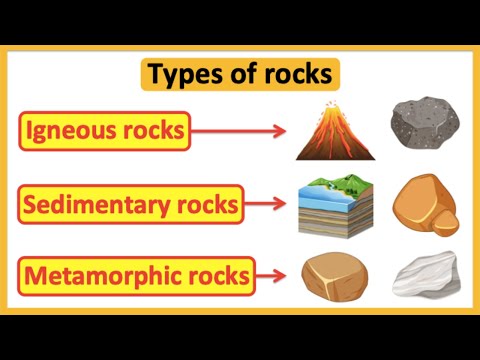
Did you know some rocks can be born from fire? Seriously, like, magma bubbling away deep inside the Earth and then bursting out as lava. It’s wild when you think about it!
You know, rocks aren’t just those boring things you see on the side of the road. They have personalities! Some are made in fiery volcanic explosions, while others form quietly under layers of dirt and sediment. And then there are the ones that get all fancy after being squeezed and heated over time.
So, whether you’re hiking a mountain or chilling at a beach, take a moment to look around. Those rocks you see tell stories from millions of years ago. They’re kind of like nature’s history books—just way cooler! Let’s check out some diverse examples of igneous, sedimentary, and metamorphic rocks—not your usual rock chat for sure!
Exploring Examples of Igneous, Metamorphic, and Sedimentary Rocks in Geology
Geology is all about the study of rocks, and there are three big types: igneous, metamorphic, and sedimentary. Each of them tells a story about how they formed. Let’s break this down.
Igneous rocks are actually born from molten magma or lava. Imagine a volcano erupting, right? That hot stuff cools down and hardens into rock. You’ve probably heard of two main types:
- Intrusive igneous rocks like granite, which form deep underground. They cool slowly, so they have huge crystals.
- Extrusive igneous rocks, such as basalt, that cool quickly on the Earth’s surface during a volcanic eruption. These tend to have tiny crystals.
What’s super interesting is how these formations can affect the landscape around them. For instance, granite often shapes mountains due to its durability.
Moving on to sedimentary rocks, these guys are formed from bits and pieces of other rocks that get worn down over time. Think of it like nature’s recycling! As layers pile up in places like riverbeds or ocean floors, they compress and stick together.
- Sandstone is a classic example here; it forms from sand grains compacted over millions of years.
- Limestone, made mostly of calcium carbonate, often contains fossils because it forms mainly in water where ancient sea creatures lived.
It’s kind of mind-blowing when you think about it! One minute you’re looking at a beach covered in sand, and fast-forward a few million years later—that sand could become sandstone!
Now onto metamorphic rocks. These can be seen as the middle child of the rock family—caught between igneous and sedimentary—or at least that’s how it starts! When existing rocks change due to heat or pressure without melting completely, they transform into something new.
- Slate comes from shale that’s been squeezed by tectonic forces; it’s smooth and great for roofing tiles.
- Marble, which many people adore for countertops and sculptures, comes from limestone that’s undergone intense pressure and heat.
Every time I encounter marble in a building or artwork, it’s kind of awe-inspiring to think about where it came from—millions of years packed into one beautiful slab!
So there you have it! From volcanic eruptions creating igneous rock to layer upon layer forming sedimentary rock, then changing under pressure into metamorphic rock—our planet has so many stories imprinted in its geology. And every time you pick up a rock outside or see one in your backyard—it might just be telling you part of Earth’s history!
Exploring the Diversity of Igneous Rocks: A Comprehensive Guide to Their Types and Formation Processes in Geology
Igneous rocks are pretty cool because they’re formed from hot molten rock, or magma, that cools and solidifies. You might think, “Magma? Sounds intense!” And you’d be right! This stuff is found beneath Earth’s surface and can erupt violently through volcanoes or just chill out in a magma chamber. So, let’s get into the nitty-gritty of igneous rocks and why they matter.
First off, there are two main types of igneous rocks: intrusive and extrusive. Intrusive rocks form when magma cools slowly underground. This slow cooling gives crystals enough time to grow large—think granite. You’ve probably seen granite countertops or stone benches. It’s hard and durable, which makes it super popular.
Now, on the flip side, we have extrusive igneous rocks. These guys form when magma reaches the Earth’s surface as lava and cools quickly. Since it doesn’t have as much time to crystalize, the crystals are usually much smaller. A great example is basalt, which you can find in volcanic islands like Hawaii! When lava flows into the ocean and cools rapidly, it creates this textured rock.
Then there’s the mineral composition that influences what kind of igneous rock we end up with. Rocks are often classified based on their silica content:
- Felsic: High in silica (about 70%). Rocks like granite fall into this category.
- Mafic: Lower in silica (around 50-60%). Basalt is a classic example.
- Intermediate: Falls between felsic and mafic (about 60-70%). An example would be diorite.
- Ultramafic: Very low in silica (around 40% or less). Peridotite is a prime example and is found deep within Earth’s mantle.
So how do these rocks come about? The process starts with partial melting, where high temperatures melt some minerals but not others in a rock body. This creates magma with a new mix of minerals.
Then there’s crystallization, where magma starts turning back into solid rock as it cools down. When it cools slowly underground, bigger crystals form—like those in granite we’ve talked about—but if it erupts onto the surface as lava? You get those tiny crystals found in basalt.
It’s not just about how they’re formed; it’s also where they end up! Think about the way different environmental factors shape these rocks over time. For instance, if an area has a lot of volcanic activity—or was shaped by tectonic movements—you’ll see more of these igneous features popping up.
And let me tell you a little story here: I once hiked up a volcanic mountain with my friends—it was tough work! But when we got to the top and looked around at that surreal landscape made of black basalt mixed with other colors from different minerals? My jaw dropped! It was a reminder of how powerful nature can be.
In summary, igneous rocks are fascinating because they tell us stories about Earth’s inner workings through their formation processes and compositions. Whether it’s intrusive granite or extrusive basalt, each type provides insights into geological history that’s literally written in stone! So next time you see some rock formations while out exploring nature or just chilling at home looking at geological pictures online? Take a moment to appreciate all that stuff beneath our feet—it’s more than just… well… dirt!
Exploring the Geochemical Properties and Applications of Limestone in Modern Science
So, let’s chat about limestone for a moment. It’s one of those rocks that might not get the spotlight like some of its flashier igneous cousins, but it totally deserves some love, you know? When we think about rocks, we often picture towering mountains or volcanic eruptions. But limestone is a major player in the world of sedimentary rocks, and it has some pretty cool geochemical properties that make it super useful in modern science.
Limestone forms from the accumulation of tiny marine organisms like corals and shellfish. Over time, their remains settle at the bottom of oceans or lakes, compacting and turning into rock. Now here’s where it gets interesting: limestone is primarily composed of calcium carbonate, which is a fancy way to say it’s packed with calcium and carbon. This simple composition has some big implications.
- Carbon Dioxide Absorption: Limestone reacts with carbon dioxide to form calcium carbonate, making it an essential part of natural processes like weathering. This absorption helps regulate climate by capturing CO2 from the atmosphere.
- Soil Health: Farmers love using crushed limestone as lime to improve soil quality. It balances acidity, making nutrients more available for plants. So next time you bite into a juicy apple, remember that limestone might’ve played a role!
- Cement Production: Most cement used in construction comes from heating up limestone to produce lime (calcium oxide). That heat breaks down the rock and releases CO2 once again—it’s kind of a vicious cycle!
- Water Purification: In water treatment plants, limestone helps soften water by binding with impurities. Think about all the places where clean water is crucial—hospitals, homes—this rock is working quietly behind the scenes.
But here’s something that really stood out to me: I once visited a cave system where stunning stalactites hung from the ceiling, dripping slowly over hundreds of years. That process? Yep! It’s all thanks to calcium carbonate dissolved in water filtering through limestone layers. This magical transformation creates beautiful formations while also reminding us how geological processes take time.
In terms of geology classification, you see how limestone fits into that sedimentary category along with sandstone or shale? But what sets it apart is its transformative nature—it can change under heat and pressure into marble! You know marble; it’s all fancy-looking in kitchen countertops or sculptures throughout history.
So while granite or basalt (those igneous rocks), might grab your attention with their fiery origins and shiny crystals, don’t overlook limestone! It plays an integral role in both nature and human industry. From cleaning our water to helping farmers grow food better, this humble sedimentary rock keeps on giving without much fanfare. And honestly? That makes it pretty remarkable if you ask me!
Rocks, like, tell a story of Earth’s history. Seriously, you can think of them as the pages in a book about our planet’s evolution. It’s pretty cool how there are three main types: igneous, sedimentary, and metamorphic rocks. They each have their own special vibes and tales.
So, igneous rocks? Those are formed from molten rock that cools down. You’ve probably heard of granite, which is just this fabulous combination of minerals that creates a speckled pattern. I remember hiking in the mountains once and stumbling upon this giant cliff made of granite. It felt like nature’s artistry just frozen in time. Isn’t it wild to picture that it all started as magma deep beneath the surface?
Then we’ve got sedimentary rocks, which form from particles settling under water or being compressed over time. Sandstone is a great example; it’s made from grains of sand cemented together – kind of like how people come together to build friendships! I once went to this beach where the sandstone cliffs were layered with different colors. Each layer told a story about the environment from millions of years ago; it was mesmerizing!
Now let’s not forget about metamorphic rocks, which start as either igneous or sedimentary but get transformed by heat and pressure over time—like nature’s very own makeover! Marble is one of my personal favorites here; it starts as limestone but gets transformed into something breathtakingly beautiful under intense conditions. I have this crazy memory of staring at marble sculptures in an art museum—they were so smooth and sleek!
So you see, each type has a unique origin story and character that reflects different conditions on Earth over millions of years. Thinking about them gives you a sense of connection to our planet’s past—a reminder that everything around us was shaped by forces beyond our control.
It’s fascinating to think that when you pick up a rock, you’re holding onto a tiny piece of history! Rocks might seem boring at first glance, but trust me—when you start looking closely at these diverse examples, they become incredibly captivating and full of life!