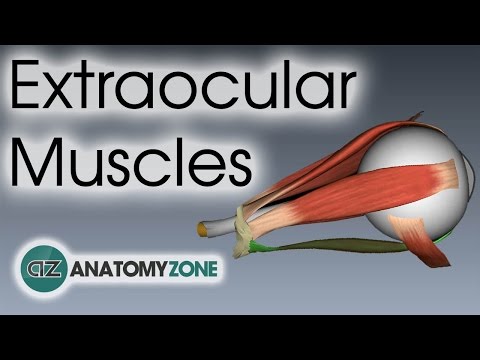
You ever notice how your eyes can totally dart all over the place? It’s like they have a mind of their own. Seriously, one minute you’re staring at your phone, and the next you’re checking out that cute dog across the street.
Well, that’s all thanks to some super cool muscles chilling out behind your eyeballs. I mean, who knew our peepers had workout routines?
These eye muscles help us track movement, focus on stuff, and make sure we don’t walk into walls because we’re too busy scrolling. Crazy, right?
So let’s take a peek—pun intended—at what makes these tiny but mighty muscles tick. You’ll be amazed at how much goes on in there!
Exploring the Scientific Anatomy of the Eye: Understanding Its Essential Components
So, let’s talk about the amazing world of the eye! You know, our eyes are like super sophisticated cameras, just hanging out in our heads. They do an incredible job of capturing light and turning it into images that we can understand. But what’s going on inside them? Let’s break it down.
First off, the **sclera** is the white part of your eye. It’s tough and protective—like a fortress wall for all the inner components. Beneath that, you’ve got the **choroid**, which is full of blood vessels and helps nourish your eye. It also prevents light from scattering inside your eye, kind of like a good blackout curtain!
Now, right at the front is the **cornea**, which is actually where light enters your eye. It bends light to help focus images on your retina. It’s a bit like a windowpane—you can see through it, but it plays a crucial role in how you see.
Behind that is the **iris**, which is what gives your eyes their color! It’s more than just pretty; it controls how much light comes in by adjusting the size of the **pupil** (the black circle in your eye). If you’re out in bright sunlight, your iris makes that pupil smaller to prevent too much light from flooding in.
Next up is the lens—it’s flexible and does some heavy lifting by changing shape to focus on things that are near or far away. Think of it as an adjustable camera focus! When you’re looking at something close up, like a book or something on your phone, this lens squishes together; when you’re looking at something far away, it flattens out.
So then we have the **retina**, which sits at the back of this whole setup. This part’s loaded with photoreceptor cells called rods and cones:
- Rods are super sensitive to light and help us see in dim conditions.
- Cones let us see color when there’s enough light.
These cells convert light into electrical signals that travel through the optic nerve to our brain—pretty wild, right? Our brain then gets busy interpreting those signals into what you actually see.
Now don’t forget about those little muscles that control movement! There are six muscles around each eyeball:
- The rectus muscles, four of them—super important for moving your eyes up, down, left, and right.
- The two oblique muscles help with tilting and rotating.
These babies work together so smoothly that you hardly even notice when you’re tracking movement or shifting focus between objects.
You know all these parts work together like a finely-tuned orchestra? If one component doesn’t do its job well—like if you’re missing some muscle control or if there’s an issue with the retina—it can really throw off your vision.
In summary: Our eyes are complex yet beautifully engineered organs made up of many parts working hand-in-hand to create our experience of sight. So next time you’re taking a peak at something interesting or gazing at a sunset, just think about how many cool structures are working behind-the-scenes for you!
Understanding the Anatomy of Eye Muscles: A Comprehensive Guide to Ocular Function and Structure
So, let’s talk about eye muscles. Yeah, they’re way more interesting than you might think! Your eyes aren’t just sitting there passively; they’re constantly moving, and it’s all thanks to some super cool muscles hiding around them.
First off, there are **six** main muscles that control eye movement. They work together to help you look around and focus on things without even thinking about it. These muscles are called the extraocular muscles, and you can find them wrapped around each eye.
Now, here’s a quick peek into those six muscles:
- Medial Rectus: This one pulls your eye inward towards your nose.
- Lateral Rectus: It does the opposite and pulls your eye outward.
- Superior Rectus: Imagine looking up – this muscle lifts your eye.
- Inferior Rectus: The counterpart that moves your eye downward.
- Superior Oblique: For those tricky diagonal movements, this muscle helps rotate the eye downwards and outwards.
- Inferior Oblique: This one lets you roll your eyes upwards and outwards.
Pretty neat, huh? But wait! There’s more to these little guys than just moving your eyeball around. They all work in harmony through something called **muscle coordination**. Like a well-rehearsed dance team, they pull together to ensure your gaze is smooth when tracking objects or scanning a scene.
Picture this: you’re at a concert trying to catch a glimpse of your friend across the crowd. Your medial rectus muscle kicks in to pull your left eye in while the lateral rectus on the right does its thing too. This teamwork keeps everything from looking weird or off-balance.
Want another fun fact? The **oculomotor nerve**, along with two other nerves – the trochlear and abducens nerves – controls these muscles. Seriously! It’s like there’s a mini-communication network on top of everything else going on inside our heads!
Looking even deeper into anatomy, these muscles have tendons that attach them to the eyeball itself which allows for precise movements. When you read or watch TV—any time you’re focusing—these tendons help adjust how much light enters so you can see clearly.
So why is understanding these muscles important? Well, if there’s a problem—like double vision or difficulty moving your eyes—it could point to issues in the brain or with these tiny but mighty muscles themselves!
In sum, those little muscles around our eyes work tirelessly day in and day out so we can enjoy all the visual wonders around us—like watching sunsets or finding Waldo in crowded scenes! So next time you look at someone and make those rapid movements with your eyes, remember it’s not just instinct; it’s anatomy doing its job!
Impact of Aging on Eye Muscle Function: Insights from Vision Science
Sure thing! Let’s talk about the impact of aging on our eye muscle function. You know, as we get older, those little muscles responsible for moving our eyes start to go through some changes. It’s kinda interesting how complex they are and how much they really do for us.
First off, you’ve got six muscles around each eye known as the **extraocular muscles**. They’re like little helpers that make sure our eyes can move up, down, left, and right. But here’s the kicker: with age, these muscles can lose some of their strength and flexibility. This means that simple tasks like reading or following a moving object might become a bit trickier.
One major hit comes from something called **muscle atrophy**, which is basically when muscles weaken over time. Think back to when you were a kid running around all day; those muscles were super strong and flexible. Fast forward some years, and if you’re not keeping them active or if there’s less nerve signaling going on—well, they can start to shrink! It’s like how your favorite old pair of shoes feels so comfy but is now a bit worn out.
Another thing to consider is how aging might bring about changes in **neuromuscular connections**. These connections are what allow our brain signals to tell our eye muscles what to do. As we age, this communication can slow down or even degrade a bit. Imagine trying to call a friend but getting the wrong number! Frustrating, right? That’s kind of what happens with those signals—confusion in movement.
Also, there’s this whole idea of **fine motor control** diminishing with age too. Our eye movements require precision to focus properly on objects both near and far. It’s kinda like having difficulty threading a needle; your hands still want to do it but just aren’t as steady anymore.
So let me throw in some effects of all these changes:
- Difficulty tracking moving objects: You might notice that catching a ball or following your grandkid at the park isn’t as easy.
- Increased risk of double vision: This could happen because those muscles aren’t working together as smoothly as they used to.
- Slower adjustments between light conditions: If you’ve ever had trouble transitioning from bright sun into a dim room, well—this is part of it.
Aging also brings along friends like **cataracts** or **glaucoma**, which can further complicate things for those poor eye muscles by making things feel foggy or applying pressure.
But wait—there’s good news! Regular eye check-ups are super important as we age because catching any issues early can make a difference in maintaining your vision health. Plus, exercises targeted specifically at eye movements exist out there; you might find them helpful!
In short, while aging does have an impact on eye muscle function due to factors like muscle atrophy and changes in neuromuscular connections, staying proactive through check-ups and exercises may help keep your peepers working better for longer! Isn’t it neat how much perspective we gain from understanding our bodies?
You know, I was staring out the window the other day, just watching the world go by. I noticed how effortlessly my eyes moved to track a bird flitting through the branches. It got me thinking about the nifty little muscles doing all that work behind the scenes. Seriously, our eye muscles are like a little team of athletes, working together to help us see everything around us.
So, let’s break it down! The muscles around your eyes are called extraocular muscles, and there are six of them. These guys help you move your eyeball in different directions—up, down, left, right. Picture them as tiny ropes that pull your eye in whatever direction you want. And get this: eye movements happen so fast! Like when you’re trying to watch something zoom across the screen; your eyes can dart around quicker than you might think.
Imagine if you had to constantly think about moving your eyes—how exhausting would that be? But our brains handle it all automatically. That’s just mind-blowing! It’s like driving a car without consciously thinking about every little movement your hands and feet make.
When I was a kid, I remember having a buddy who wore glasses. He always joked about how he needed “supervision” instead of “supervision.” You know what I mean? It made me curious about what was going on with his eyes and muscles that made him need those glasses. Turns out, faulty signals or imbalanced muscles can lead to issues like strabismus—or crossed eyes—which is something many people deal with.
What really makes these eye muscles special is their precision and speed. You might think they have an easy job since they only move a small ball—but they’re crucial for depth perception and keeping things in focus. It’s almost like they’re dancers performing on a stage; each movement has to be perfectly timed.
I’ve come to appreciate how elaborate our anatomy truly is—like how these tiny yet incredibly effective muscles reflect an intricate design behind everything we do during our day-to-day lives. So next time you catch yourself lost in thought while gazing outside or watching a movie at home, take a moment to acknowledge those little guys working their magic so effortlessly! It’s pretty wild when you think about it.