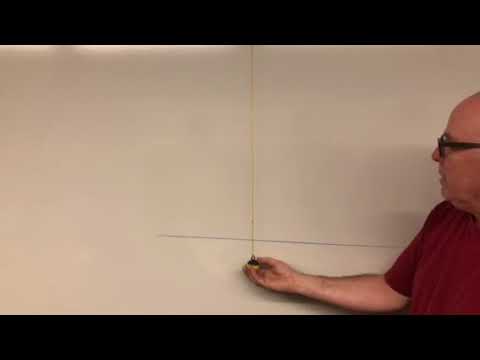
You know that feeling when you’re just chilling and suddenly, something simple blows your mind? Like watching a swing at the park. You give it a little push, and off it goes, back and forth.
Well, let’s talk about Galileo. This guy was like the original swing-pusher for science! He looked at pendulums—yeah, those things that swing—and figured out some serious stuff about motion and gravity.
Imagine him just sipping his espresso in Italy while he wonders why that pendulum keeps swaying. It’s wild to think that this little movement led to huge ideas about how everything works around us!
So grab a comfy seat because we’re diving into Galileo’s world, where swings are way more than just playground fun—they’re the heartbeat of understanding motion itself!
Galileo’s Groundbreaking Discoveries: The Science Behind Pendulums and Their Motion
Galileo Galilei was a total rock star of science back in the 16th century. He wasn’t just looking at the stars; he was also diving deep into how things move right here on Earth. One of his coolest discoveries involved pendulums. Yeah, those swinging things you see in old clocks! But there’s a lot more to it than just timing.
You see, when Galileo noticed that a pendulum swings back and forth in a steady rhythm, he realized something important. It doesn’t matter how far you pull it from the center or how heavy it is; the time it takes to swing—what we call its period—is almost always the same for small angles. That’s kind of mind-blowing when you think about how much different each swing can look, right?
The science behind this is all about gravity and motion. When the pendulum swings out and then comes back, gravity pulls it back down. The speed of this movement isn’t affected by how heavy the pendulum is or how far you initially push it, as long as you’re not pulling it too far to one side. Galileo figured this out through careful observation—like a detective uncovering clues!
1. The concept of simple harmonic motion captures what happens with pendulums. It’s like a dance between gravity and tension—that’s what keeps them moving!
2. The period ‘T’ can be estimated using a formula: T = 2π√(L/g), where L is the length of the pendulum and g is gravitational acceleration (about 9.81 m/s² on Earth). So longer pendulums take longer to swing! It’s pretty cool math if you ask me.
I remember trying to make my own pendulum once—just a weight on some string hanging from a shelf, right? I’d push it just enough to watch it swing back and forth for ages! And then I found out that if I changed the length of the string, the timing changed too. Just like Galileo discovered hundreds of years ago!
This connection between length and period shows us something big about nature: everything follows certain rules! So when you think about those old clock towers with their swinging weights, remember that they aren’t just pretty—they’re living examples of some fundamental science principles Galileo helped uncover.
The beauty of Galileo’s work lies not only in what he discovered but also in his method of questioning everything around him. His findings laid groundwork for future scientists like Newton who built off these ideas about motion and gravity later on.
You might think it’s all ancient history now, but pendulums are still used today in lots of technology! From clocks to seismographs that measure earthquakes, these simple yet elegant devices show us that sometimes, all you need is one brilliant insight to change our understanding forever.
So next time you’re at a clock or watching something swing back and forth, take a moment to appreciate what Galileo did—it wasn’t just swinging around; he was unlocking secrets about motion that still resonate today!
Exploring Galileo’s Revolutionary Insights on Motion and Gravity in Science
So, let’s chat about Galileo Galilei. This guy was kind of a big deal back in the late 1500s and early 1600s. You know, way before smartphones and social media. He changed how we think about motion and gravity, and his insights are still super relevant today.
First off, one of the coolest things Galileo did was look at how objects move. Imagine you’re at a playground with your friends, racing down a slide. You’d notice that the steeper the slide, the faster you go down it. That’s pretty much what Galileo was noticing with inclined planes! He used ramps to study how balls rolled down at different angles. He found that speed increases as they go downhill, which is all thanks to gravity.
Now, let’s get into that famous pendulum of his. Picture this: he hangs a weight from a string and lets it swing back and forth. What he discovered blew everyone’s mind! No matter how far you pulled that pendulum to begin with, it took about the same time to swing back to its resting position each time—this is known as the period. It was like an aha moment for him! He realized there’s something cool happening here related to gravity. It turns out that this can help us measure time more accurately too!
Galileo also pointed out something pretty astonishing: all objects fall at the same rate regardless of their mass if you ignore air resistance. So, like if you drop a feather and a hammer (yes, like in that famous Apollo 15 experiment), they hit the ground simultaneously when there aren’t any air currents messing things up. Weight doesn’t matter—only gravity does! Can you imagine? Maybe next time you’re tossing stuff around for fun at home or in class, remember Galileo’s insight.
You might be wondering why these ideas were so revolutionary back then? Well, before Galileo came along, most folks believed in Aristotle’s theories which said heavier objects fall faster than lighter ones. Talk about misunderstanding gravity! Galileo wanted proof for everything; he loved experimenting instead of just taking what others said as written in stone.
- Motion: Objects accelerate as they fall.
- Pendulum: Consistent swings despite varying distances.
- Aha Moment: All objects fall equally without air resistance.
- The Shift: Moved from philosophical beliefs to experimental evidence.
This shift from reasoning purely based on philosophy to actual experimentation laid down a foundation for physics as we know it today! It paved the way for future scientists like Newton who built upon these ideas—like seriously mind-blowing stuff!
The way I see it is like watching your child learn something new every day—the thrill of discovery shows you can never really stop exploring knowledge no matter where it leads. And who would’ve thought some swinging balls could end up changing our understanding of gravity forever?
I mean, isn’t science just wild? So many discoveries await us when we start looking closely at what seems ordinary around us!
Understanding the Lesson of the Pendulum: Insights into Physics and Motion
Let’s talk about pendulums, shall we? They’re not just those things you see in clocks. They’re a fascinating way to understand motion and gravity. You might remember Galileo’s experiments with one. He basically used a pendulum to show how gravity works. Pretty cool, right?
A pendulum is made up of three main parts: the bob, which is the weight that swings; the string, which connects the bob to a fixed point; and the pivot point, or where the string is attached. When you pull the bob to one side and let go, it swings back and forth in a beautiful motion. But here’s the thing: did you know that this motion isn’t just random? It follows some serious physics rules.
The first important concept is period. That’s how long it takes for the pendulum to make one full swing back and forth. The period depends on two things: the length of the string and gravity’s pull! Longer strings mean longer periods. It’s like swinging on a swing set—if you get higher up, it takes more time to come back down.
- Gravity: The stronger gravity pulls you down, faster your pendulum swings.
- Length of String: A longer string means slower swings; shorter ones swing quicker.
- The mass of the bob doesn’t change stuff much; whether it’s light or heavy, they still swing at the same rate!
Now, imagine watching someone swinging on a playground swing—like when I was six, pushing my best friend as high as I could! Each time she swung forward, she’d rise then fall. It looks effortless, but each motion is dictated by forces at play. That same idea applies perfectly to our pendulum!
One cool experiment Galileo did was dropping two different-weight balls from a height and timing them with his trusty pendulum clock. He found out that they hit the ground at almost exactly the same time! This helped him prove that mass doesn’t really matter when it comes to how fast something falls in gravity’s embrace.
This brings us to another key term: harmonic motion. Pendulums move in this pattern because they keep returning to their starting point after each swing. They don’t just stop; they keep going until friction (you know, resistance) slows them down gradually. If there were no air resistance or friction at all—imagine that—they’d swing forever!
The beauty of understanding pendulums doesn’t end here! They also teach us about energy transformation—when swinging upward, kinetic energy (motion) turns into potential energy (position), and back again as it swings down. Just think about those moments when you’re flying through the air on a ride—you feel weightless for an instant before being pulled back down!”
Sooo…next time you look at a pendulum in action—or even a simple swing at your local park—remember that there’s way more than meets the eye! From Galileo’s groundbreaking work on motion to modern-day clocks swaying steadily—it all links together beautifully in understanding physics!
Galileo’s pendulum is one of those concepts that really gets you thinking about the dance between motion and gravity, you know? Picture this: it’s the late 1500s in Italy, and a young Galileo Galilei is hanging out in a church, watching a lamp swing back and forth. He notices something incredible. No matter how hard or soft it swings, the time it takes to complete one cycle stays pretty much the same! I mean, can you imagine being struck by that revelation?
So what’s going on here? Well, when you let a pendulum swing, gravity pulls it down, and then it kind of wants to keep going. That pull creates this regular rhythm—like a heartbeat—that doesn’t change with how far you pull it back. If you swing it lightly or give it a big push, guess what? It still ticks like a clock.
This whole idea blows my mind because it’s not just about swinging weights or wooden beams. It’s like Galileo tapped into this universal truth about how things work. And here’s where it gets even cooler: his findings laid some serious groundwork for physics as we know today. The concept of uniform motion helped Newton later craft his own theories on gravity.
I remember watching my niece play with a simple pendulum at her school science fair. She was so excited to see how fast/slow her little toy could go just by changing the string’s length. Her joy reminded me of Galileo’s amazement! It made me see that this isn’t just an old science story—it’s alive and well in our everyday lives.
You ever notice how sometimes even the simplest ideas can pack such powerful insights? That pendulum isn’t just swinging back and forth; it’s teaching us about consistency in chaos, showing us that there are patterns beneath everything happening around us. So next time you see something sway or wobble, think of Galileo—and maybe give that little piece of history a nod for all its timeless lessons on motion and gravity!