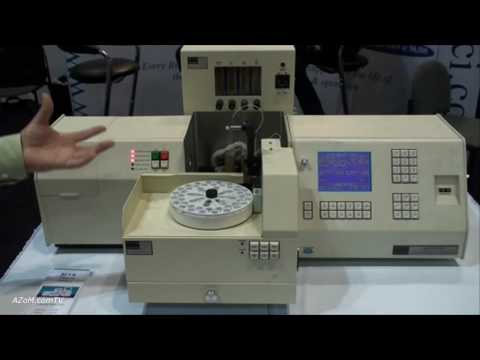
So, picture this: You’re at a science fair, and you see that one kid who’s got this super cool setup with burning graphite and colorful flames. You think, “What on earth is happening here?” It turns out, it’s all about graphite furnace atomic absorption techniques.
Now, I know it sounds like a mouthful. But trust me, it’s way more exciting than it sounds! These techniques help us figure out how much of certain elements are hanging out in samples—like those sneaky metals in our water or food.
And here’s where it gets even cooler. Thanks to advancements in these methods, we can be super precise. Imagine being able to detect trace amounts of stuff—like really tiny bits of lead or mercury—in a drink! This can help keep us safe without anyone even thinking twice about the science behind it.
So yeah, if you’ve ever wondered how we make sure our food and drinks are clean and safe to consume, buckle up! We’re diving into the wild world of graphite furnace atomic absorption techniques. It might just be the geeky adventure you didn’t know you needed!
Applications of Graphite Furnace Atomic Absorption Spectroscopy in Analytical Chemistry
So, graphite furnace atomic absorption spectroscopy, or GF-AAS for short, is one of those cool techniques in analytical chemistry that you might find fascinating. Seriously, it’s all about measuring the concentration of metals in a sample and getting really precise results.
First off, what’s the deal with graphite furnaces? Well, basically, they’re devices that heat up samples to super high temperatures. This process vaporizes the sample into an atomized form. You’re left with free atoms floating around for analysis. The cool part? You can detect incredibly low concentrations of elements—like parts per billion! That’s ultra-sensitive stuff.
Applications of GF-AAS pop up all over the place. For instance:
- Environmental Monitoring: Researchers use GF-AAS to keep tabs on heavy metals in water and soil. Imagine testing a river for lead or mercury contamination; these elements can seriously damage ecosystems and health.
- Food Safety: Ever thought about how safe your food really is? GF-AAS helps ensure levels of toxic metals like cadmium or arsenic in food products are within safe limits.
- Pharmaceutical Analysis: This technique provides an essential role in checking the purity of drugs. If there’s too much lead in a medicine, that could be a huge problem!
- Clinical Chemistry: Doctors often need to check metal levels in blood samples, especially metals like copper or zinc which are crucial for many bodily functions.
One time I was reading about how scientists analyzed fish from polluted waters using GF-AAS. They wanted to know if heavy metals had accumulated in them. It was both alarming and eye-opening! It shows how this method can help inform public health decisions.
Now let’s talk about advancements. Recent improvements have made GF-AAS even better at what it does:
- Improved Sensitivity: Newer models can differentiate even smaller differences between metal concentrations.
- Faster Analysis: Advanced techniques allow quicker runs without compromising quality; this means labs handle more samples daily—super efficient!
- Merging Technologies:
So, why should you care? Because knowing precisely what’s out there is crucial! Whether it’s about making sure our food isn’t poisoning us or figuring out how pollution affects wildlife, GF-AAS is like a trusty detective on the case.
In essence, graphite furnace atomic absorption spectroscopy isn’t just some scientific jargon; it’s a tool with real-life applications that impact us all! And as technology keeps getting better, who knows what else we’ll discover through this powerful technique?
Comparative Sensitivity of Graphite Furnace AAS versus Flame AAS in Analytical Chemistry
In the world of analytical chemistry, choosing the right technique for element detection can feel a bit overwhelming. Two common methods you’ll come across are **Graphite Furnace Atomic Absorption Spectroscopy (GF-AAS)** and **Flame Atomic Absorption Spectroscopy (FAAS)**. Let’s break down what makes each of these techniques tick, especially when it comes to their sensitivity.
First off, let’s talk about sensitivity. In analytical terms, sensitivity refers to a method’s ability to detect low concentrations of an analyte. Here’s where GF-AAS really shines. Because it uses a furnace to vaporize the sample, it can detect trace amounts of metals much better than FAAS. You see, flame methods have a bit of background noise due to the combustion process—which can mask those faint signals you’re trying to catch.
Next up is sample consumption. GF-AAS is typically more efficient with sample sizes. Since it can analyze very small amounts (think micro-liters), you don’t waste much material compared to FAAS, which generally requires larger volumes. This aspect is particularly beneficial when dealing with precious or rare samples.
But there’s a flip side! GF-AAS usually takes longer per analysis because of the heating cycles involved in graphite furnaces. It has those specific steps like drying, ashing and atomizing that take their time—unlike FAAS, which can just whip up results in seconds as it continuously burns samples in the flame.
Also important is interference issues. Flame AAS has its share of challenges with interferences from other elements or compounds present in the sample matrix. On the other hand, GF-AAS can often separate out these interferences more effectively—meaning you get cleaner results for your analytes.
It’s also worth noting that without proper calibration and method optimization, even GF-AAS can face hurdles regarding reproducibility and precision. While both methods require some effort here, you might find better consistency with GF-AAS if done right.
Lastly, there’s cost consideration. While GF-AAS equipment tends to be pricier upfront due to its complexity and additional consumables like graphite tubes, think about how much money resources save by reducing waste and enhancing efficiency in precious samples over time.
So there you have it! When deciding between GF-AAS and FAAS based on sensitivity alone? Think about what you need from your analysis:
- Are you working with trace elements? Go for GF-AAS.
- If speed and cost are your priorities with less critical volumes? FAAS could work just fine.
- Am I wasting too much material? Again, consider going graphite.
Always keep your specific requirements in mind! Each method has its own strengths and weaknesses that fit different scenarios quite well.
Comparative Advantages of Inductively Coupled Plasma (ICP) Over Atomic Absorption Spectroscopy (AAS) in Scientific Analysis
Alright, let’s break down the whole Inductively Coupled Plasma (ICP) and Atomic Absorption Spectroscopy (AAS) thing. I know, it sounds all techy and a bit overwhelming, but stick with me!
Inductively Coupled Plasma, or ICP for short, is like the superhero of analytical chemistry. It’s super sensitive and can detect really low levels of metals in samples. Think of it as having a magnifying glass that lets you see not just the big stuff but also tiny details that others might miss.
On the other hand, we have Atomic Absorption Spectroscopy (AAS). This method is a bit older and it works well too, but it has its limits compared to ICP. You see, AAS measures how much light is absorbed by atoms in a sample when you shoot them with light from a specific wavelength. It’s pretty cool, but you can only look at one element at a time.
Here’s where ICP struts its stuff:
- Multi-element capabilities: ICP can analyze several elements simultaneously. So instead of waiting your turn at the atomic buffet line like AAS does, ICP just dives right in and grabs whatever it wants all at once!
- Sensitivity: With ICP, you’re talking about parts per trillion detection limits for many elements. Whoa! This means you could detect trace amounts that are almost invisible to AAS.
- Broader Dynamic Range: The dynamic range of ICP is typically wider than that of AAS. That means it can handle high concentrations without getting overwhelmed or losing accuracy.
- No need for flame or graphite furnace: While AAS often requires these components to vaporize your sample before measuring absorption, ICP literally “plasma-fies” your sample using argon gas! Less fuss.
Let’s not forget about cost efficiency! You might think that with all these fancy features, owning an ICP would break the bank. But consider this: because you get so much data quickly and accurately from one run, you might end up saving money over time on analyses!
Now here’s something cool – imagine if you had to test soil samples from different spots in your garden for nutrients like copper and zinc. If you used AAS, each measurement could take forever since you’d have to run tests one after another. But with ICP? Bam! You could scoop up results for multiple nutrients practically in real-time.
But yeah, AAS isn’t totally out of the game; it’s still widely used for certain applications because it’s simple and good enough when you’re specifically looking at just one or two elements—and maybe don’t need that ultra-sensitivity.
In summary? It’s clear that while both methods have their unique advantages depending on what you’re after in your research or analysis work; if you’re needing fast results across multiple elements with great accuracy? Well then going with Inductively Coupled Plasma will likely be your best bet every time!
Alright, so let’s chat a bit about graphite furnace atomic absorption techniques. I mean, it sounds all technical and stuff, right? But the thing is, these advancements are actually pretty cool and important for science and industry.
Imagine you’ve got a glass of water from a river. Now, that water might look clear, but who knows what’s lurking in there? Heavy metals like lead or cadmium could be hanging out without you even knowing. Graphite furnace atomic absorption (GFAA) techniques are like super-sleuths for identifying those sneaky contaminants. They help scientists detect trace amounts of elements in various samples with incredible precision.
When I was in college, I remember working with some old-school methods that felt more like guessing games than science. It was frustrating! But over the years, technology stepped up its game—large leaps have been made to increase sensitivity and reduce interference in readings. You see, with advancements like improved detectors and better furnaces that heat samples more evenly, scientists can now detect lower concentrations than ever before. That means they can find even the tiniest traces of nasty stuff hiding out in samples.
And it doesn’t stop at just environmental testing. Think about food safety! Imagine being able to check your favorite snack for harmful substances before chowing down. These techniques have become vital in ensuring we eat safe food and drink clean water.
But there’s always a catch, right? With all these fancy advancements come challenges too—like costs and the need for trained technicians who can handle sensitive equipment properly. It’s not as simple as baking a cake! It takes skill to interpret results accurately.
Honestly, witnessing how science evolves is just mind-blowing sometimes. What started as basic tests has grown into this sophisticated world where we can uncover hidden dangers in our environment or food supplies with such accuracy. It makes you appreciate how far we’ve come—and why we should keep pushing boundaries in scientific research! Just think about it: a safer world thanks to some pretty neat technology!