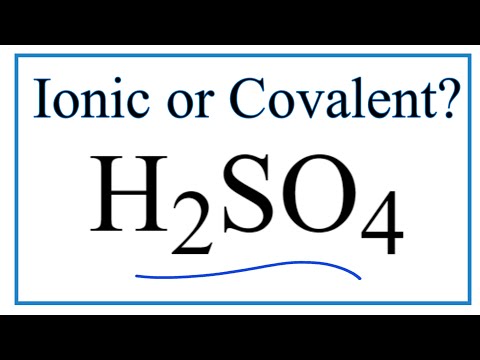
So, you know that moment when you accidentally mix vinegar and baking soda, and it foams up like a volcano? It’s basically chemistry magic in your kitchen! Now, what if I told you there’s a super star in the world of chemicals that packs quite a punch? I’m talking about H2SO4, or sulfuric acid.
This stuff is like the Hulk of the chemistry world—seriously strong but super important. But why should you care? Well, H2SO4 isn’t just some lab bench warmer; it’s in batteries, fertilizers, and even helps refine oil. Isn’t that wild?
Let’s break down its molecular structure and see what makes this acid such a big deal in chemistry. You’re gonna want to stick around for this one!
Exploring the Applications of Sulfuric Acid (H2SO4) in Chemistry: Key Uses and Implications
Did you know that sulfuric acid, or H2SO4, is often called the king of chemicals? It’s like this super important ingredient in the world of chemistry. Not only is it one of the most widely produced industrial chemicals around, but it also takes on several roles that are vital for various processes. Kind of mind-blowing, right?
The first thing to understand about sulfuric acid is its structure. It’s made up of two hydrogen atoms, one sulfur atom, and four oxygen atoms. This arrangement makes it a strong acid, meaning it can easily donate protons (H+) in reactions. That’s crucial in multiple chemical processes.
Now let me share some key uses where H2SO4 shines bright:
- Fertilizer Production: One of its major applications is in making fertilizers. Phosphoric acid, which is a key component of many fertilizers, is often produced using sulfuric acid to extract phosphorus from phosphate rock.
- Petroleum Refining: Sulfuric acid plays a massive role in the petroleum industry too. It helps refine crude oil by removing impurities and ensuring that our gasoline and diesel are clean and efficient.
- Battery Manufacturing: Have you ever thought about car batteries? H2SO4 is an essential part of lead-acid batteries. It helps store energy effectively.
- Chemical Synthesis: This acid is also used as a dehydrating agent in many chemical syntheses. It helps produce other important substances like nitric acid or even dyes!
- Wastewater Treatment: In treating wastewater, sulfuric acid neutralizes alkaline compounds and helps remove heavy metals from water.
Each one of these applications highlights just how powerful H2SO4 can be. But with great power comes great responsibility—or maybe I should say caution! This stuff can be seriously dangerous if not handled properly. You wouldn’t want to accidentally get it on your skin or inhale its fumes; they’re pretty corrosive!
Oh! And I remember once seeing a demonstration where they mixed sulfuric acid with sugar—this wild reaction turned the sugar into a fluffy black substance while releasing tons of heat and steam. It’s quite the spectacle but definitely not something to try at home unless you’re super careful.
So yeah, when we talk about H2SO4’s implications in chemistry, we can’t ignore how versatile it is across different industries and processes. Whether it’s helping plants grow through fertilizers or powering our cars with batteries, this “king” certainly rules over plenty!
Understanding the Molecular Structure of Sulphuric Acid in Chemistry
Alright, let’s chat about sulphuric acid, or H₂SO₄, for a second. If you’ve ever heard of it, you know it’s a big deal in chemistry. But what’s really going on with its molecular structure? Let’s break it down into bite-sized pieces.
First off, sulphuric acid is made up of three key elements: hydrogen (H), sulfur (S), and oxygen (O). You have two hydrogen atoms, one sulfur atom, and four oxygen atoms all hanging out together to make this strong acid. Think of them like friends who decided to form a really close-knit group.
The structure of H₂SO₄ is super interesting. It’s got this central sulfur atom at the heart of the molecule. This sulfur is bonded to four oxygen atoms. Two of those oxygens are double-bonded, while the other two form single bonds with hydrogen atoms. So you can picture it kind of like a tree where sulfur is the trunk and oxygen branches out from there.
- Sulfur Bonding: Sulfur forms strong covalent bonds with the oxygen atoms.
- Molecular Geometry: The overall shape is a tetrahedral structure due to these bonds.
- Polarity: H₂SO₄ is polar because of its uneven distribution of charge – that means it has a positive end and a negative end.
This polarity plays a crucial role in how sulphuric acid interacts in chemical reactions. Because it likes to attract water and dissolve in it easily, many chemical reactions become possible with H₂SO₄ as either a reactant or solvent.
You might be wondering why we even care about this complex little molecule. Well, its significance in chemistry stretches far beyond just being an acid! It’s used extensively in fertilizers, petroleum refining, and even batteries. Think about that next time you use your phone—thank sulphuric acid for that battery juice!
The strength of H₂SO₄ comes from its ability to dissociate in aqueous solution—it breaks apart into hydrogen ions (H⁺) and sulfate ions (SO₄²⁻). This is what makes acids feel sour or act corrosively. And when it’s mixed with water—watch out! It releases heat and can be pretty hazardous if you’re not careful.
If we take all this info together—it paints a picture of why understanding the molecular structure of sulphuric acid is so important in chemistry classes everywhere. You see how just three elements can create something so impactful? Pretty wild stuff!
So there you have it—a quick tour through the world of H₂SO₄ and its molecular wonders! Whether you’re mixing chemicals or just curious about what makes things tick at the atomic level, knowing about these structures gives you more insight into how substances behave around us.
Unlocking the Science of Hydrogen Sulfide: Properties, Applications, and Environmental Impact
Hydrogen sulfide, or H2S, is one of those compounds that you don’t hear about every day, but it definitely has a role to play in both our lives and the environment. It’s a gas that comes with a reputation, often described as smelling like rotten eggs. And that’s no exaggeration! You might bump into hydrogen sulfide in places like swamps or even near hot springs.
Properties of Hydrogen Sulfide
So here’s the deal: hydrogen sulfide is made up of two hydrogen atoms and one sulfur atom. Chemically speaking, it can be really interesting. It’s colorless, flammable, and pretty soluble in water. Basically, this means it can dissolve well in liquids, which helps explain why it’s often found in places where organic matter breaks down.
You could say that H2S is a bit of a chameleon in the gas world. Depending on the conditions around it—like temperature or pressure—it can act differently. For instance, at higher temperatures, it becomes more reactive and might participate in lots of different chemical reactions.
Applications of Hydrogen Sulfide
Now let’s talk applications! One major use for hydrogen sulfide is in chemical manufacturing. It helps produce sulfuric acid (H2SO4), one of the most important industrial chemicals out there. Sulfuric acid has tons of uses ranging from fertilizers to batteries; it’s kind of the backbone for various industries.
But that’s not all! H2S also makes an appearance in the world of healthcare. Did you know it’s being studied for its potential therapeutic effects? Some researchers suggest it may play a role in signaling within cells—like sending messages between cells about when to grow or heal.
Environmental Impact
On another note, let’s touch on environmental concerns. Hydrogen sulfide isn’t inherently bad—it shows up naturally—yet when humans create excess amounts through industrial processes or waste treatment plants, we run into problems. High concentrations can be toxic to humans and wildlife alike.
Moreover, natural occurrences of H2S can lead to what we call hydrogen sulfide pollution. This happens when too much gas escapes into the atmosphere from sources like volcanic eruptions or breakdowns of organic material—not exactly ideal for air quality!
In short, while hydrogen sulfide might have some fascinating properties and applications—even showing promise as a health aid—we need to keep an eye on its environmental impact too. You see? The balancing act between leveraging its benefits and minimizing risks keeps life interesting!
So, let’s chat about sulfuric acid, or H2SO4. Seriously, this stuff is like the rock star of the chemistry world. When you think of it, you might picture those crazy lab scenes where things are bubbling away and who knows what’s going on. But there’s actually a lot to unpack here.
Now, H2SO4 has this interesting molecular structure. It’s got two hydrogen atoms (that’s the H2 part), one sulfur atom, and four oxygen atoms—like whoa! It forms something we call a tetrahedral shape around the sulfur atom. Imagine a pyramid with oxygen atoms at each corner and hydrogen atoms hanging off like little flags. This structure is key because it gives sulfuric acid its unique properties.
You might be asking why this matters in our daily lives. Well, think about it: sulfuric acid is used in car batteries and to produce fertilizers that help grow our food. It’s also involved in making detergents and even in petroleum refining. Isn’t that wild? Something that looks kind of unassuming can have such a massive impact on so many things around us.
I remember when I first saw some sulfuric acid at my college lab. It was just sitting there in its bottle—clear and kind of silent—but I knew how much power it had packed within! Just one drop could take out an entire piece of metal if mishandled. That gave me a healthy respect for chemistry!
But aside from its applications, it teaches us more about chemical reactions too. When H2SO4 mixes with other substances, it can either absorb water or act as a dehydrating agent, which opens up a whole new world of reactions that help scientists create new compounds.
So yeah, when you break down H2SO4 and look at its molecular structure, you’re not just seeing atoms linked together; you’re seeing the foundation for so many things we rely on every day—like literally life essentials! Chemistry isn’t just formulas and beakers; it’s the story behind those elements working together to shape our reality. Pretty cool when you think about it, huh?