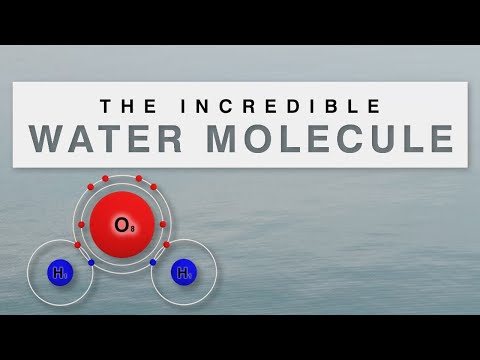
So, you know how when you blow up a balloon and it floats away? Well, that’s kind of like hydrogen in the grand scheme of things—super light and ready to escape! It’s the first element on the periodic table, but don’t let its size fool you; it plays a massive role in chemistry.
Think about it: this little guy is in water, which makes up a huge chunk of our planet. But there’s so much more to hydrogen than just being part of H2O. It’s involved in reactions that create energy and even helps build life as we know it. Seriously, without hydrogen, life would be pretty dull.
And honestly, when you start looking at its molecular structure, it gets kinda mind-blowing. Like, how can something so simple be so crucial? Let’s unravel this together!
Understanding Hydrogen Bonds: Their Role and Significance in DNA Structure
Hydrogen bonds are like the unsung heroes in the world of chemistry. Seriously, they’re super important, especially when it comes to DNA structure. You know that twisted ladder shape of DNA? Well, that’s called a double helix, and guess what? Hydrogen bonds help hold that thing together.
So, let’s break it down a bit. A hydrogen bond forms when a hydrogen atom is attracted to an electronegative atom, like oxygen or nitrogen. It’s not as strong as covalent bonds (the ones that share electrons), but they pack a punch when it comes to biological interactions.
The thing is, in DNA, you’ve got these two long strands made up of nucleotides. Each nucleotide has a sugar, a phosphate group, and one of four nitrogenous bases: adenine (A), thymine (T), cytosine (C), or guanine (G). Here’s where it gets interesting!
When A pairs with T and C pairs with G through hydrogen bonding, you’ve got stability without making things too rigid. They use two hydrogen bonds for A-T pairing and three hydrogen bonds for C-G pairing. You might think this makes DNA weak overall, but that’s not true! The sheer number of these hydrogen bonds across the entire molecule contributes to the overall strength and flexibility of DNA.
Also, during processes like replication and transcription—where DNA makes copies of itself or turns into RNA—those hydrogen bonds need to be broken. It’s like unzipping a jacket! Once they’re unzipped, enzymes can do their magic.
And here’s another cool fact: think about how water behaves because of hydrogen bonding. Water molecules attract each other due to these weak forces which gives rise to surface tension and allows some insects to walk on water! It’s pretty wild how similar concepts apply across different areas in chemistry.
In summary:
- Hydrogen bonds are essential for maintaining DNA structure.
- A pairs with T using two hydrogen bonds; C pairs with G using three.
- The presence of these bonds allows flexibility in biological processes.
- They’re weaker than covalent bonds but vital for interactions.
So yeah, next time you think about DNA or even just water molecules floating around your glass on a hot day, remember those invisible connections holding everything together! It’s all about balance between strength and flexibility thanks to good ol’ hydrogen bonds.
The Role of Hydrogen in Biological Molecules: Implications for Biochemistry and Molecular Biology
Sure! Let’s get into the fascinating world of hydrogen, shall we?
Hydrogen is the simplest and most abundant element in the universe. It has just one proton and one electron. Can you imagine that? Such a small thing plays a massive role in life! Basically, hydrogen is like the building block of everything, including biological molecules.
Hydrogen Bonds are super important in biochemistry. They help hold together the structures of larger molecules, especially proteins and nucleic acids like DNA. These bonds are not as strong as covalent bonds but they’re crucial for stabilizing the shapes of these biological structures. Think of them as little magnets that keep things together.
For example, when you look at DNA (you know, that spiral ladder shape), it’s those hydrogen bonds that hold the two strands together. If they weren’t there, all the genetic information would just fall apart! It’s kind of poetic when you think about how something so tiny can have such huge implications for life itself.
Then there’s pH Levels, which have a lot to do with hydrogen ions (H+). When you mix water with an acid, you’re increasing the number of hydrogen ions in solution. This affects everything from enzyme activity to how our cells function. Enzymes are like little workers in our bodies and if their environment isn’t just right—let’s say too much or too little acidity—they can stop working properly.
Also, think about energy transfer. In cellular respiration (that process cells use to get energy), hydrogen ions play a key role again. They help create ATP, which basically powers almost everything our cells do. Without hydrogen ions hustling around during this process, we’d be missing out on a ton of energy.
Now let’s not forget about water. Water is known as the universal solvent because it does such a great job dissolving stuff needed for life. Its unique properties are largely due to its hydrogen bonding capabilities—like helping nutrients dissolve so they can be transported throughout your body!
In summary:
- Hydrogen bonds: Crucial for maintaining structures in proteins and DNA.
- pH levels: Affect enzyme activity and cell functions.
- Energy transfer: Essential for creating ATP during cellular respiration.
- Water: Facilitates nutrient transport due to its unique properties.
So next time you hear about hydrogen or see H2O on your water bottle, think about all these incredible roles it’s playing behind the scenes—it’s more than just some basic element; it’s a fundamental part of life itself! And isn’t that just amazing?
Exploring Chlorine: Its Role and Significance in Modern Science
Chlorine is one of those elements that pops up in the most unexpected places. You might know it best for its role in keeping swimming pools clean, but there’s so much more to this element. It’s not just a chemical; it’s a cornerstone of modern chemistry.
So, let’s start with the basics. Chlorine is part of the halogen group on the periodic table, sitting snugly next to fluorine and bromine. It has an atomic number of 17, which means it has 17 protons in its nucleus. This unique structure gives chlorine some pretty interesting properties. For instance, it’s highly reactive—more so than many other elements—which means it loves to form compounds with other elements.
You might ask yourself why this matters? Well, the reactivity of chlorine is what makes it such a player in chemistry. It can combine with metals to create salts—think sodium chloride or table salt! This combination process involves electron transfer, where chlorine grabs an electron from sodium. That simple interaction creates something we use every day and shows how essential chlorine is to life as we know it.
Now, let’s pivot a bit and talk about the relationship between hydrogen and chlorine. The molecular structure of hydrogen (H₂) plays a crucial role here too. When hydrogen gas mixes with chlorine gas under certain conditions—like, you know, heat or light—they can react explosively to form hydrochloric acid (HCl). It’s like chemistry meets fireworks!
And speaking of hydrochloric acid, this compound has some serious importance in our bodies—it’s what helps digest food in your stomach! So chlorine isn’t just chilling around; it’s literally helping you break down those nachos you love so much!
- Water Treatment: One of chlorines’ most vital roles is water purification.
- Industrial Uses: Chlorine compounds are used to make plastics like PVC.
- Medical Applications: Chlorinated compounds have antiviral properties useful for sanitizing medical tools.
You see? Chlorine is everywhere! And while its striking reactivity can make you raise an eyebrow—like how volatile this element can be—it also opens doors for a multitude of applications.
Let’s not forget about safety though; dealing with chlorine isn’t all sunshine and rainbows. Its gas form can be toxic if inhaled in high concentrations; hence why proper handling is necessary in laboratories or industrial settings.
In essence, exploring chlorine gives us insight into not just chemistry but also everyday life—from swimming pools to digestion and even industrial processes that shape our world today. So next time you’re splashing around in a pool or seasoning your dinner, think about that clever little element doing its job behind the scenes!
Hydrogen, the simplest and most abundant element in the universe, is kinda like that quiet friend who’s always there but doesn’t always get the spotlight. But when you dig into its molecular structure, it’s actually pretty neat! You know how your phone chargers sometimes have a lightning bolt symbol? That’s sort of what hydrogen is to chemistry – it powers so many reactions!
So let’s break it down a bit. Hydrogen molecules, which are represented as H₂, are formed when two hydrogen atoms come together. Each hydrogen atom has one proton and one electron. When these two atoms link up, they share their electrons in what’s called a covalent bond. It’s like they’re holding hands! And since it’s the smallest atom out there, it zooms around and is super reactive—kinda like that kid who can’t sit still during a class.
I remember this one time in high school when my chemistry teacher did this experiment with hydrogen and oxygen. They created water by mixing them together, but not without a dramatic flair! There was this loud pop sound when they ignited the gas mixture—totally shocking but also super cool! It stuck with me because it showed how different elements can transform into something completely new. That transformation highlights hydrogen’s role in so many essential chemical reactions.
Now here’s the deal: Hydrogen isn’t just hanging out; it’s crucial for life and energy production! It’s found in water—guess we all need that—or as part of organic compounds that make up everything from our cells to those yummy pastries we bake. And, get this—it’s also key in processes like photosynthesis and cellular respiration. It’s life’s little helper!
What makes it even more interesting is hydrogen’s potential for future energy solutions. There are all these talks about using hydrogen as a clean fuel source – no greenhouse gases involved! Imagine if our cars ran on hydrogen instead of gasoline? It would be a game-changer for pollution reduction.
In summary, while hydrogen might seem like just an uncomplicated little molecule at first glance, it turns out to have quite the impact on chemistry—and life itself! So next time you see something boiling or sizzling in a lab or even just enjoy a good cup of coffee (thanks to water!), think about that tiny little molecule playing its part behind the scenes. It really puts things into perspective, doesn’t it?