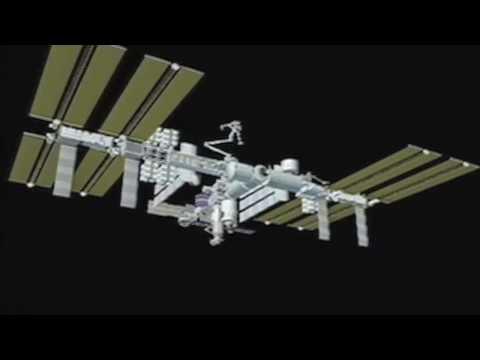
So, picture this: you’re outside with a telescope, aiming it at the stars. Suddenly, you spot this bright streak zipping across the sky. It’s not a shooting star. Nope, it’s the International Space Station!
Crazy, right? Who knew we could see something built by humans just cruising up there? It feels like you’re catching a glimpse of sci-fi in real life.
But here’s the best part—watching the ISS isn’t just for scientists or astronauts. Seriously, you can do this from your backyard! You just need to know when and where to look.
Ready to take your stargazing game to the next level? Let’s get into it!
Exploring Tiangong: Advancements and Innovations in Space Science
So, you’re curious about **Tiangong** and its role in the cosmic neighborhood? Awesome! Let’s break this down. Tiangong, which means “Heavenly Palace” in Chinese, is part of China’s ambitious space program. It’s a modular space station that’s been making waves since it started launching components into orbit.
Now, you might be thinking, “What’s the big deal?” Well, Tiangong represents a significant step for humanity in terms of living and working in space. It’s equipped for long-term missions with astronauts, just like the International Space Station (ISS). In fact, it’s designed to support scientific research and offers a platform for international cooperation—even if it doesn’t always get the same media spotlight as the ISS.
One of the cool things about Tiangong is its design. It’s actually built in modules, sort of like LEGO blocks. This means that scientists can add or change parts as needed—super flexible! Here are some key points about this innovation:
- Modular Construction: By launching modules separately, they can adapt to new technologies.
- Scientific Research: It’s set up to conduct experiments in fields like biology and materials science.
- International Collaboration: Tiangong opens doors for other nations to participate in space science.
Now let’s talk about how you can see this amazing structure from Earth. If you have a telescope handy—or even just your eyes on a clear night—you can actually spot the ISS flying across the sky!
The ISS moves incredibly fast. It orbits Earth at about 17 thousand miles per hour! That’s faster than most cars zooming down the highway. Seeing it is like catching a shooting star—it zips by quickly so keep your eyes peeled! You’ll want to check online when it’s due to pass over your area because it only shows up for a few minutes at a time.
But why should you care about spotting Tiangong or even learning about it? Well, think back to that feeling when you looked up at the stars as a kid—wondering what was out there. The advancements made with Tiangong contribute directly to our understanding of life beyond our planet. Plus, they push technology forward here on Earth too.
The **experiments** being conducted aboard these platforms could potentially lead to breakthroughs that affect our daily lives—think new materials or medical technologies derived from understanding how things work in microgravity. It’s pretty mind-blowing!
So if you’re ever out with your telescope and catch sight of either station gliding across the night sky, remember: you’re looking at human ingenuity floating hundreds of miles above you—building bridges between dreamers on Earth and explorers among the stars. Pretty neat stuff, right?
How to Observe the International Space Station with a Telescope: Tips and Insights from the Reddit Community
Alright, so you want to observe the International Space Station (ISS) with a telescope? That’s pretty cool! It’s like watching a moving star that’s actually a space station filled with astronauts and science stuff. Seriously, it’s a fun experience, but there are some tricks and tips gathered from the Reddit community that can help you get the best view.
First off, timing is everything. The ISS moves fast—about 17,500 miles per hour, which is insane! It usually crosses the sky in just a few minutes. So, you’re gonna want to check when it’ll be visible in your area. Websites like Heavens-Above or NASA’s own spot the ISS site are great for figuring this out. Just pop in your location and they’ll give you all the upcoming pass times.
Next up, telescope settings. If you have an adjustable telescope, bring it down to its lowest power setting first. You might think higher magnification sounds better – but nah – that’s not really helpful at this speed. You want to be able to see more of the sky without losing track of where the ISS is zipping by.
Once you’ve got your scope set up and locked onto the right spot in the sky, you’ll need to practice tracking. This can be tricky since it moves quick! A good tip shared on Reddit is to find something stationary nearby—like a tree or building—and start tracking that first before moving up to where you expect the ISS will appear.
Also, don’t forget about light pollution. If you live somewhere super bright with city lights everywhere, try heading out to a darker location if possible. The clearer your sky, the easier it’ll be to see this space marvel zooming through!
And hey, don’t underestimate good old patience. Sometimes you’ll miss it—it happens! It can be really exciting one moment and then just gone in another blink of an eye. But don’t let that discourage you; keep trying! You might catch some awesome details next time around.
Some folks on Reddit suggest using binoculars as well if your telescope setup feels too complicated at first. Binoculars can give a nice view without all that hassle while you’re learning how all this tracking works.
Lastly, once you’ve spotted it (woohoo!), take a moment just to appreciate what you’re seeing—a tiny space station occupied by real-life astronauts floating above us all while we’re here on Earth! It’s kinda mind-blowing when you think about it!
So yeah! Grab your gear and get ready for an interstellar show right from your backyard. Observing the ISS can really make you feel connected to everything happening way up there in space–it’s like witnessing history in motion!
Observing the International Space Station: A Guide to Telescopic Astronomy
Have you ever looked up at the night sky and seen a super bright “star” zipping by? That’s actually the International Space Station (ISS). It’s a massive spacecraft that orbits Earth and is home to astronauts conducting science experiments. Now, if you’re itching to catch a closer glimpse of it, using a telescope can be pretty cool!
First off, observing the ISS through a telescope isn’t like looking at distant galaxies or nebulas. The ISS moves really fast — about 28,000 kilometers per hour (or roughly 17,500 miles per hour). This means you’ve got just a few minutes to line up your telescope and focus before it zooms out of sight! That’s why timing is everything.
You’ll want to check out websites or apps that track the ISS in real-time. They provide exact times when the ISS will be visible from your location. It’s kind of like waiting for your favorite ice cream truck. Once you know when it’s coming, you can get prepared!
Now, let’s talk about gear. You don’t necessarily need a fancy telescope—though bigger scopes tend to work better for tracking fast objects. A modest telescope with an aperture of around 4 inches can do the trick if you have steady hands or some good mounts.
- Mounting: A computer-controlled mount will rock your world here because it can help track the ISS as it moves across the sky.
- Cameras:b>If you’re into astrophotography, attaching a camera can let you capture stunning images of the ISS flying by.
- Lenses:You might consider using lower magnification lenses—too much zoom can make it difficult to keep up with all that speed!
A few years back, I tried observing the ISS for the first time with my buddy Jake. We were huddled around my little telescope, and honestly? We totally missed it at first because we weren’t ready in time! But once we figured out how to track it, seeing that big metal structure crossing against a backdrop of stars was mind-blowing!
Another thing worth noting is that sometimes you can see sunlight glinting off its solar panels! When this happens? Wow! It’s like watching an ultra-bright satellite gliding across a canvas of black velvet. The view from even a simple setup can be breathtaking.
If you’re feeling adventurous, why not host an observation night with friends? You could take turns checking out different features on the station while also enjoying some snacks under the stars—maybe even popcorn?
If your area has lots of light pollution, don’t fret too much; even city folks get lucky sometimes! Just pick spots where buildings aren’t blocking your view as much and look for clear skies without clouds.
The thrill comes not just from seeing this engineering marvel but knowing people are up there working hard for science every day! And let me tell ya; nothing compares to sharing those moments with friends while chatting about space exploration.
So grab that telescope and give it a shot next time you’re lucky enough to spot our extraordinary orbiting laboratory in action! Happy stargazing!
So, let’s chat a bit about the International Space Station, or ISS, for a moment. I mean, how cool is it that there’s a giant metal thing zooming over our heads, holding astronauts doing actual science? Just the thought of it excites me!
A while back, I got my hands on a decent little telescope. You know how people always say that looking through one can change your perspective? Well, they weren’t wrong. It was one of those clear nights when all the stars decided to hang out together. And there it was—the ISS gliding across the sky. Man, it felt like a scene from a sci-fi movie!
When you look through a telescope and spot the ISS, it becomes this tiny shimmering dot moving fast across your view. You can’t help but think about all the people aboard—floating in zero gravity, working on experiments that might even help us understand our own planet better! Sometimes I wonder what they’re discussing up there; maybe someone’s telling jokes to lighten things up after a long day of research.
But here’s something to consider… While you’re observing this marvel zipping by, it’s humbling too. Like you’re up against the vastness of space and reminding yourself just how small we actually are in this universe. It sparks curiosity about other planets and possibilities out there.
However, if you’ve never seen it with your own two eyes through a telescope? Seriously! You gotta try it sometime! All you need is one good clear night and some basic info on when it’s passing overhead (like dude, Google makes that part super easy).
And as much as I loved seeing the ISS zip by that night, I’ll admit—sometimes I just stood back and let my imagination wander. Who knows what advances humanity will make next? Or where our next step in space travel will take us? Those thoughts just keep swirling around in my head.
So yeah, observing the ISS isn’t just about spotting some shiny object zooming past your house; it’s about connecting with something bigger than ourselves—literally! It’s pretty wild when you think about it!