You ever tried to clean a mess with just water and felt like you might as well be fighting a losing battle? I mean, we all know that sometimes you need a little extra help to get things sparkling clean. That’s where isopropanol comes in.
This nifty little molecule is basically your go-to buddy for cleaning stuff up. It’s not just a fancy term scientists throw around; it’s got some serious importance in the world of chemistry and beyond.
So, what’s the big deal about isopropanol’s structure? Well, understanding it can unlock why it’s so effective at tackling those pesky germs and grime we encounter daily. Stick around; I promise it’ll be worth knowing!
Exploring the Molecular Structure of Isopropanol: Scientific Significance and Insights
Isopropanol, also known as isopropyl alcohol, is a fascinating little molecule. With the formula C3H8O, it’s made up of three carbon (C) atoms, eight hydrogen (H) atoms, and one oxygen (O) atom. Imagine it like a tiny building block that has tons of uses! The cool thing about isopropanol is its molecular structure—it’s simple yet powerful.
Let’s break it down a bit. In isopropanol’s structure, you have a central carbon atom connected to two other carbon atoms on either side. This makes it what scientists call a “branched-chain” alcohol. The oxygen atom is attached to the central carbon through a hydroxyl group (-OH). This arrangement gives isopropanol its unique properties.
Why does this matter? Well, the molecular structure affects how the substance behaves in different situations. For example:
- Solvent capabilities: Because of its polar -OH group, isopropanol can dissolve many substances, making it an excellent solvent for everything from oils to resins.
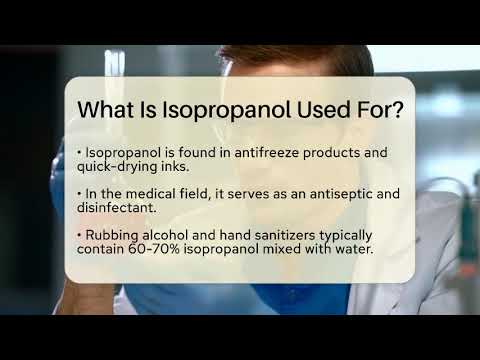
- Antiseptic properties: Its ability to kill bacteria makes it super useful in hand sanitizers and disinfectants.
- Evaporation rates: Isopropanol evaporates quickly due to its low boiling point (around 82 degrees Celsius), which can be really handy in cleaning applications.
Remember that time you spilled something sticky? A little bit of isopropanol could’ve cleaned it right up! It’s not just for keeping surfaces clean; its unique structure means it can interact with biological systems too.
Speaking of interaction, let’s chat about how isopropanol works at the molecular level. When you pour some on your hand or use it as a cleaner, what happens? The hydroxyl group attracts water molecules because they’re both polar. This ability allows isopropanol to mix well with water—making cleaning more effective!
But wait, there’s more! Isopropanol can also act as a dehydrating agent when mixed with certain substances. This means it can help pull water away from them. In labs or industries where moisture control matters, this property comes in handy.
You might think—okay, cool molecule; but what’s the big scientific deal? Well, understanding the molecular structure of compounds like isopropanol helps chemists design new materials or improve existing ones. Whether it’s creating better antiseptics or finding greener solvents for industrial applications, all that starts with knowing how these molecules behave.
In summary, exploring the *molecular structure* of **isopropanol** isn’t just academic—it’s key to numerous practical uses and innovations we encounter daily. From ensuring our homes are clean to pushing forward research in chemistry and health sciences—you see how significant this little molecule really is?
Understanding the Molecular Structure of Isopropanol: Insights for Chemical Research
Isopropanol, or isopropyl alcohol, is a fascinating molecule! You might recognize it as rubbing alcohol. At its core, the molecular structure of isopropanol features a simple setup.
Chemical Formula: The formula for isopropanol is C3H8O. This means it’s made up of three carbon atoms, eight hydrogen atoms, and one oxygen atom.
Now let’s break this down a bit more. Isopropanol has a **branched chain** structure. Unlike straight-chain alcohols like ethanol, isopropanol has its carbons arranged in a way that one carbon atom (the one attached to the hydroxyl group) is connected to two other carbon atoms. It’s sometimes drawn like this:
– **C1** – the central carbon connected to the -OH group,
– **C2 & C3** – two other carbons on either side.
This arrangement gives it unique properties compared to other alcohols.
Functional Group: The -OH group, known as a hydroxyl group, is what makes it an alcohol. This little part of the molecule does a lot of work! It allows isopropanol to form hydrogen bonds with water molecules, which explains why it’s so soluble in water.
Now here’s where it gets even cooler: because of that branching structure, isopropanol can be quite efficient in various industrial applications. For instance:
Let’s think about that last point for just a second. When I was in chemistry class, we’d often use isopropanol as a solvent for reactions because it helped dissolve other compounds really well. That means you could get better results when mixing things together.
Scientific Importance: Understanding the molecular structure of isopropanol isn’t just about knowing what it’s made of; it’s essential for chemical research too! Its properties affect how it interacts with different substances—like how well it can dissolve oils versus water.
Also, its **low toxicity** compared to other solvents makes it popular not just in labs but also at home—it’s pretty safe when used correctly!
So next time you grab that bottle of rubbing alcohol, remember there’s a whole world behind its simple structure—one that’s vital for both everyday uses and advanced chemical research! Isn’t science neat?
Understanding the Melting Point of Isopropyl Alcohol: A Scientific Exploration
Isopropyl alcohol, also known as isopropanol, is quite the interesting compound. It’s one of those things that people often see in their homes, especially as a rubbing alcohol or cleaner. You might be curious about its physical properties, like its melting point, which tells us a lot about the substance.
Now, the **melting point** of isopropyl alcohol sits at around **-89 degrees Celsius** (-128 degrees Fahrenheit). That’s pretty low! This means that it stays liquid at most temperatures we encounter in daily life. Imagine trying to freeze it; you’d need some serious cold!
So, what makes this specific melting point so significant? Well, let’s think about molecular structure. Isopropyl alcohol has a simple structure with three carbon atoms and several hydrogen and oxygen atoms. More specifically:
- It’s got the formula C3H8O.
- Its molecules are held together by relatively weak forces called van der Waals forces.
- This allows them to slide past each other easily when temperatures rise.
In simpler terms, these weak forces mean that you don’t need much energy to break them apart—hence the low melting point. If the bonds were stronger, you’d find yourself needing much colder conditions to freeze it.
And here’s an anecdote for you: I remember doing a science project back in school where we mixed isopropanol with water. Even at room temperature, it just flowed smoothly together like they were old friends! That’s another testament to how substances behave based on their physical and chemical properties.
Moreover, understanding this melting point can be key for various applications. For example:
- In pharmaceuticals: Isopropanol is often used as a solvent due to its ability to remain liquid under many conditions.
- In industrial settings: Knowing when it will solidify helps with safe handling and storage.
All in all, isopropyl alcohol’s melting point may seem like just another number but actually reflects its unique molecular makeup and plays a role in its practical uses. So next time you pick up that bottle of rubbing alcohol, remember there’s some cool science behind why it behaves the way it does!
So, let’s chat about isopropanol, shall we? You might know it better as rubbing alcohol. I remember the first time I used it; I had this annoying scratch on my arm from playing in the backyard. My mom poured some on a cotton ball, and I was like, “Whoa, that stings!” But you know what? It also made me feel a bit safer knowing it was cleaning everything up. Isn’t it funny how something so simple can have such an impact?
Now, onto the juicy stuff—its molecular structure! Isopropanol has this cool little setup: it’s made up of three carbon atoms (C3), eight hydrogen atoms (H8), and one oxygen atom (O). It’s technically called a secondary alcohol because that -OH group—yeah, that’s the hydroxy group—attaches to a carbon that’s linked to two other carbon atoms. Picture a tree with branches; those carbons are like the trunk and branches working together.
But why should you care about its structure? Well, the arrangement of atoms in isopropanol gives it some pretty nifty properties. Because of its structure, it can dissolve both polar and nonpolar substances. This means isopropanol can help clean grease off surfaces while also mixing well with water to kill germs. That’s why it’s such a superstar in hospitals and households alike!
You might also be curious about how isopropanol interacts with other chemicals. Its versatile nature makes it great for things like making paints smoother or even helping when you’re extracting essential oils from plants. Quite impressive for something you probably thought was just for cuts and scrapes!
When you look at its molecular structure more closely, you see how science plays in everyday life—like how your favorite hand sanitizer usually has isopropanol in it to keep those pesky germs at bay. It’s not just about chemistry for nerds in lab coats; it’s about real-world applications that affect our health and hygiene.
So yeah, next time you reach for that little bottle of rubbing alcohol, remember there’s some serious science behind its molecular makeup doing all that work quietly behind the scenes!