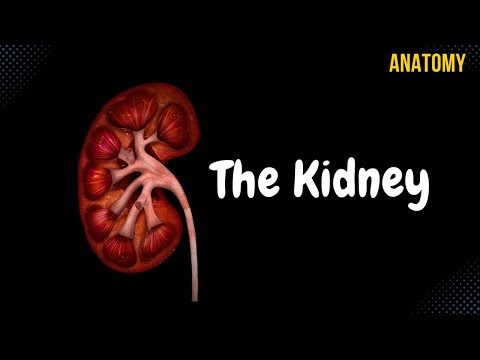
So, here’s a funny thing. Did you know that your kidneys are like your body’s personal bouncers? Seriously! They filter out all the junk and keep the good stuff flowing.
It’s wild to think about because, without them, we’d be in a real mess, right? But how much do you actually know about these bean-shaped superheroes chilling out in your lower back?
You might not give them much thought until you’re chugging water after a workout or trying to figure out why you’ve gotta run to the bathroom every five minutes.
Let’s take a little journey inside those kidneys of yours. We’ll break down their anatomy and reveal what makes them so crucial for keeping you in tip-top shape. Ready to geek out over some kidney details?
Detailed Kidney Diagram: An Essential Resource for Understanding Renal Anatomy and Function in Biomedical Science
Alright, let’s chat about kidneys! These little beans-shaped organs are more than just cool shapes on a diagram. They play a huge role in keeping our bodies in check. When you look at a detailed kidney diagram, you’ll see why understanding their structure is key to grasping how they function.
The Anatomy of the Kidney: So, each kidney has parts that work together like a well-oiled machine. Here’s what you’ll typically find:
- Cortex: The outer layer of the kidney. Think of it as the protective shell where filtering begins.
- Medulla: The inner region, sort of shaped like pyramids. This area manages urine concentration.
- Pelvis: It collects urine before sending it down to the bladder. Like a little funnel!
- Nephrons: These are the functional units (and there are about a million in each kidney!). They filter blood and produce urine.
You know, I once read about how vital nephrons are when my friend had kidney problems. It really opened my eyes—each tiny nephron does such important work, filtering through waste and balancing electrolytes. Crazy to think all that happens without us even noticing!
The Function of Kidneys: Now, let’s break down what these amazing organs actually do:
- Filtration: Blood flows into the kidneys and gets filtered through those nifty nephrons. Waste products and excess substances get removed.
- Regulation: They help maintain fluid balance and electrolyte levels, which is super important for muscle function and nerve signaling.
- Erythropoiesis Regulation: The kidneys produce erythropoietin (EPO), which tells your body to make more red blood cells when needed.
The whole process is fascinating! Imagine all that goes on while you’re just relaxing or maybe eating your favorite snack. Seriously, kidneys do so much without any fanfare!
If we think about diagrams again—it’s neat how they visually represent this complexity. Each part connects with others in unexpected ways, showing us like an intricate puzzle where everything has its place.
Next time someone mentions kidney health or anatomy, you’ll be able to picture those diagrams clearly and understand what’s happening inside your body! And hey, appreciate those little organs more—they work hard behind the scenes every single day!
Comprehensive Kidney Labelled Diagram for Class 10 Science Students
Sure! Let’s break down the anatomy of the kidney in a way that makes sense.
The kidneys are pretty amazing organs, right? They’re like little filters for your blood, and they play a huge role in keeping your body balanced. If you think about it, they’re kinda like tiny powerhouses making sure everything runs smoothly!
Kidney Structure: Each kidney is bean-shaped and about the size of your fist. You’ve got two of them, one on each side of your spine in the lower back area. Here’s where it gets interesting—each kidney has several important parts.
- Cortex: This is the outer layer. It’s kinda like the protective skin of the kidney. You can think of it as the first line of defense!
- Medulla: Inside the cortex is the medulla, which looks a bit like a striped pattern. It contains structures called renal pyramids, where urine starts to form.
- Pelvis: The inner portion that collects urine from the medulla before it moves to the ureter. Imagine it as a funnel that directs everything out.
- Nephrons: Tiny filtering units inside each kidney—each kidney has about a million of these! They’re responsible for cleaning your blood and making urine.
Now, picture this: you drink some water on a hot day, and your kidneys get busy right away. The nephrons filter out waste products and extra water from your bloodstream. This process helps maintain your body’s balance by regulating things like salt levels.
The nephrons themselves have different parts too, which is pretty cool! You’ve got:
- Glomerulus: A tiny ball made up of capillaries (fancy word for small blood vessels) where filtration happens.
- Bowman’s Capsule: This surrounds the glomerulus; think of it as a catcher’s mitt collecting what gets filtered out.
- Tubules: These are long tubes where stuff gets reabsorbed back into your body or secreted into urine.
Isn’t that mind-blowing? One moment you’re drinking lemonade, and then there’s this whole system working hard to keep everything just right!
And let’s not forget about blood supply! Each kidney receives blood through its own renal artery. It’s like they have their own personal delivery service bringing them what they need.
So, if you were drawing this all out for class or something, you’d start with the overall shape first—bean-shaped—and then label those big parts we discussed: cortex, medulla, pelvis, and hopefully make sure to include those all-important nephrons too!
Your kidneys do so much more than just filter waste; they also help regulate blood pressure and produce hormones that affect how we feel overall.
When students get into this topic in Class 10 Science, it’s super important to understand not just *what* each part does but how they all work together—you see? They really make life possible by keeping us healthy.
Every time we learn about something intricate in our bodies—like these amazing kidneys—we’re reminded how interconnected everything is in biology!
Exploring Kidney Anatomy: A Comprehensive Guide to Renal Location and Structure in Human Biology
The kidneys are pretty amazing organs, aren’t they? Nestled in the back of your abdomen, they play a huge role in keeping your body in balance. So let’s take a closer look at these bean-shaped buddies, their location, and their structure.
First off, you’ve got two kidneys. They sit just below your ribcage on either side of your spine. If you feel around your lower back area, that’s roughly where they hang out—like little kidney-shaped bodyguards for your renal system. The right kidney usually sits a bit lower than the left because of the liver’s presence on that side. Pretty neat how everything’s organized in your body!
Now, talking about their structure, each kidney is made up of several important parts:
- Renal Cortex: This is the outer layer and it looks kind of like a thin shell around the bean shape. It’s where blood is filtered and urine begins to form.
- Renal Medulla: Inside that cortex lies the medulla. It has these cool pyramid-shaped areas called renal pyramids. They help with urine concentration.
- Renal Pelvis: This is like the funnel at the end of the kidney where urine collects before it goes down to the bladder through the ureters. Think of it as a waiting room for pee!
- Nephrons: Now here’s where it gets super interesting! Each kidney has about a million tiny filtering units called nephrons. These are like little factories working all day long to filter out waste from your blood.
Ever had that moment when you’re really thirsty? That’s actually your kidneys doing some serious work! When you’re dehydrated, they conserve water to keep things running smoothly by concentrating urine—so less water leaves your body.
Another cool thing? The blood supply to the kidneys is impressive; each kidney gets its own artery coming straight from the heart—the renal artery. And afterwards, filtered blood heads back through another vessel called the renal vein.
So there you have it! Your kidneys are not just there for show; they’re vital organs working tirelessly behind the scenes to keep everything balanced and healthy in your body. Next time you sip that refreshing drink or go for a jog, remember those little beans doing all their hard work—you’d miss them if they were gone!
You know, the kidney is like one of those unsung heroes in our body. You can’t really see them – they’re tucked away in your lower back, but they do a ton of work. So, picture this: a cold winter night. I’m cuddled up with a mug of hot chocolate, and my friend, who’s studying to be a doctor, starts explaining what kidneys actually do. It was pretty cool to see that spark in their eyes.
So let’s break it down, shall we? The kidney is about the size of your fist and shaped kinda like a bean. This little organ has some crazy important parts. There are these tiny filtering units called nephrons – seriously, each kidney has about a million! They’re the ones responsible for cleaning your blood. Can you imagine? A million little workers just doing their thing day in and day out.
Now, the kidney has a couple main zones you might find interesting. The outer part is called the cortex and it’s where most of the filtration happens. Then there’s the medulla inside it—looks kinda striated or striped—which houses another set of structures called renal pyramids. These guys help transport urine to where it’s supposed to go! And when everything’s working right, urine flows from there down to the ureters and into the bladder for storage.
But here’s where it gets really cool: these organs don’t just filter waste; they also manage fluids and electrolytes. They release hormones that help control blood pressure and even make red blood cells! Who thought kidneys could be such multitaskers?
Oh! And don’t forget about that protective layer around them—the renal capsule that keeps everything nice and safe while they go about their business.
It’s easy to take these little guys for granted since we don’t often think about them until something goes wrong. Honestly, learning about kidneys that night made me appreciate my body even more! Every part plays its role without us even realizing it most of the time.
So next time you’re sipping on something warm or enjoying your favorite snack, take a sec to think about what’s happening behind the scenes with your kidneys. Just like my friend diving deep into their studies sparked something in me – knowing how our bodies work can really open our eyes to how amazing life is!