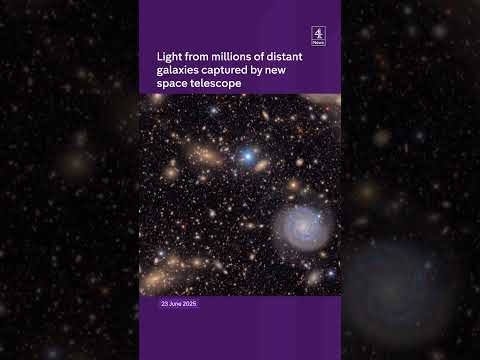
So, picture this: you’re at a party, right? And someone starts talking about the latest space telescope. Maybe they mention it can see through time or something wild like that. You chuckle, thinking they’ve had one too many drinks! But seriously, space telescopes are the real deal.
Alright, but let’s get real for a sec. The newest one is like having a superpower for scientists. It’s peering into the cosmos in ways we’ve never seen before. I mean, this tech is pushing boundaries and changing everything we thought we knew about our universe.
And believe me, it’s not just about capturing pretty pictures of galaxies—though those are pretty mind-blowing too. This advanced telescope is diving deep into mysteries that have puzzled astronomers for ages.
So buckle up! Space just got a whole lot more interesting!
Exploring the Future of Astronomy: Is There a New Telescope More Powerful Than the James Webb Space Telescope?
So, the James Webb Space Telescope (JWST) has taken a lot of the spotlight lately, right? I mean, who could blame it? It’s revealing some of the deepest secrets of the universe. But here’s a fun question: could there be a new telescope that outshines JWST in the future? You know, it’s an exciting prospect!
First off, let’s talk about what makes JWST so special. Launched in December 2021, this telescope can see further back in time than any before it. Because it observes in infrared wavelengths, it can peek through dust clouds and give us glimpses of star formation and distant galaxies. This ability to see the early universe is groundbreaking. But innovations never stop in science.
Now, there are already talks about telescopes that might one day surpass JWST. For example:
- NASA’s Roman Space Telescope: Set to launch in 2027, this beauty will study dark energy and exoplanets. It won’t replace JWST but will complement its discoveries.
- European Space Agency’s Euclid: Also targeting dark energy and dark matter, Euclid aims to map billions of galaxies over its mission.
- The Extremely Large Telescope (ELT): Located on Earth but with technology that might rival space telescopes, ELT will collect more light than any other telescope ever built.
Now, I know what you’re thinking. “But why Earth-based telescopes?” Well, they have their own advantages! They can be upgraded more easily than space telescopes and often come with huge mirrors to gather more light.
Then there’s something called the next generation of space-based observatories. Imagine a telescope even larger than JWST soaring into the cosmos! Concepts like the Habitable Exoplanet Observatory or LISA (Laser Interferometer Space Antenna) are being kicked around by scientists eager to uncover even more mysteries of our universe.
It’s like when you get a new smartphone—each version seems better than the last with all those extra features! The thing is—these future telescopes are still years away from becoming reality and involve immense planning and resources.
And while we’re waiting for these shiny new tools to arrive on the cosmic scene, we should definitely appreciate what JWST has already done for astronomy. Seriously! Just think back to those first stunning images we got—it was like peeking into a cosmic treasure chest.
So yeah, while there may not be anything ready to dethrone JWST **right now**, exciting developments are happening all around us. Astronomy is evolving at lightning speed! Just imagine what other galaxies hold or how many Earth-like planets might exist out there waiting for scientists like you or me to discover them someday. Who knows? Maybe one day we’ll look through our virtual window into the cosmos with something even cooler!
Future of the James Webb Telescope: Consequences of Fuel Depletion in Space Exploration
Alright, so let’s chat about the James Webb Telescope for a sec. This bad boy is the pride of modern astronomy, peering deep into space and helping us understand the universe like never before. But there’s a catch—it’s got fuel, and that fuel isn’t infinite!
The thing is, Webb uses a kind of fuel called propellant. It’s mainly for steering around and keeping itself in the right spot to take those stunning pictures. Over time, as you might guess, that propellant will run out. So, what does this mean for the future of space exploration?
- Limited Maneuverability: Without fuel, the telescope won’t be able to adjust its position easily. Imagine trying to take a perfect selfie but being stuck in one spot—super frustrating!
- Operational Lifespan: Right now, it’s projected that Webb could operate for at least 10 years. But once that fuel is depleted, its ability to function effectively could shrink rapidly.
- End of Data Collection: Eventually, if it can’t maneuver or turn towards new targets, we won’t get to collect new data. That’s like having your favorite band play all their hits but not releasing any new songs.
- Affects Other Missions: The Webb’s end could impact future missions too. If we learn something groundbreaking from its observations, we might want to send other telescopes or spacecraft out based on that info.
You know what’s wild? When I think about it, I remember when I was a kid and gazing up at the stars with my dad using an old telescope. We were both mesmerized by what was out there! Now we have tools like Webb that can see billions of light-years away! But realizing they could stop working because of something as mundane as running out of propellant brings things down to Earth a bit.
This whole situation makes NASA and scientists pretty cautious about planning ahead. They’re looking into ways to extend Webb’s life—like maybe creative use of solar sails or using less fuel-efficient maneuvers when possible.
So yeah, while it feels exciting to think about how much we’ve learned with the James Webb Telescope so far—the potential fade-out due to fuel depletion reminds us how fragile our tools can be in this vast universe.
The future holds promise yet uncertainty. Each time we gaze through this cosmic window into our past will add pieces to larger puzzles about galaxies and planets far from our own.
Exploring Cosmic Wonders: The Legacy and Discoveries of the Spitzer Space Telescope in Astronomy
The Spitzer Space Telescope has been an essential player in our journey to understand the universe. Launched way back in 2003, it was one of NASA’s Great Observatories, joining the ranks of Hubble and others. Its job? To see the cosmos in infrared light, which lets us peer into nursery stars, distant galaxies, and even the remnants of massive stellar explosions.
Because Spitzer operated outside Earth’s atmosphere, it offered a clearer view of many cosmic wonders. You see, when we look up at the night sky from Earth, our atmosphere gets in the way. It blurs and distorts what we can see. But out there in space? It’s like having a front-row seat to a 3D cosmic movie!
Spitzer’s discoveries were nothing short of mind-blowing. For example, it helped identify exoplanets—those planets that orbit stars outside our solar system. By analyzing how light changes as it passes through these planets’ atmospheres during transits (when they move across their star), Spitzer provided clues about their temperature and even hints at their possible compositions.
What does this mean for us? Well, it opens up discussions about life beyond Earth! The telescope found evidence for possibly habitable conditions on some of these distant worlds. Just imagine: there could be life forms out there that we’ve yet to discover!
Another huge highlight was Spitzer’s gaze into dust clouds where new stars are born. These clouds often hide young stars since they’re wrapped up tight in thick dust blankets. Infrared light can penetrate these clouds much better than visible light—sort of like using X-ray vision! Spitzer revealed stunning details about how these stars form and evolve over time.
And don’t get me started on its role in understanding galaxies! With its advanced instruments, Spitzer captured images of galaxies merging and colliding—like a cosmic dance party happening millions or billions of years ago! These observations help astronomers piece together how galaxies evolve over time.
Even after its retirement in early 2020, the legacy of Spitzer lives on. Its findings continue to influence future missions and projects like the James Webb Space Telescope (JWST). The technologies developed for Spitzer set a solid foundation for JWST’s mission to explore deeper into space.
To sum things up: Spitzer changed our understanding of the universe by revealing aspects we couldn’t see before and inspiring a new generation of astronomers. So yeah, it might have wrapped up its mission but the discoveries from this remarkable telescope are still sparking curiosity and fueling our quest to understand more about our home in this vast cosmos we call home!
You know, when I think about space and all the mysteries it holds, I can’t help but feel a little giddy. I remember sitting outside with my family as a kid, staring up at the stars on those clear nights. It felt like each twinkling light was a secret waiting to be uncovered. Fast forward to today and look at us—humans have built instruments that can literally peer into the cosmos!
So, let’s talk about this unbelievable achievement: some of the most advanced space telescopes that scientists have created. We’re not just talking about looking at our moon or Mars; we’re venturing way beyond that. These telescopes can see galaxies billions of light-years away! Imagine seeing something that formed only a few hundred million years after the Big Bang—it blows my mind.
The latest one takes stunning images in ways we’ve never seen before. Think about it: it’s like upgrading from an old flip phone to one of those fancy smartphones with a killer camera. The clarity and depth these new telescopes provide open up so many possibilities for understanding our universe—planets in other solar systems, black holes, and even the elusive dark matter that makes up most of what’s out there but is just so hard to detect.
But here’s where it gets really interesting for me: when scientists analyze these images and data, they’re not just cataloging stars or planets. They’re piecing together how everything fits into this giant cosmic puzzle. You know how sometimes you catch yourself staring out into space and feeling this deep connection? Well, these discoveries remind us of our place in all of this—the vastness surrounding us makes our day-to-day worries seem pretty small.
And honestly? It’s also kind of humbling to realize that while we may be sitting here on Earth sipping coffee or scrolling through social media, there are entire galaxies out there evolving away from us. It puts things in perspective.
In a way, these advanced telescopes are tools for curiosity as much as science—they ignite imagination and inspire questions. Like why does any of this even matter? Well, maybe it encourages us to dream bigger and think more deeply about who we are and what lies beyond our little blue planet.
So next time you find yourself gazing up at the night sky—or even hearing about new discoveries from those incredible machines—take a moment to appreciate not just what they show us but also how they connect us all through knowledge and wonder. Isn’t that pretty special?