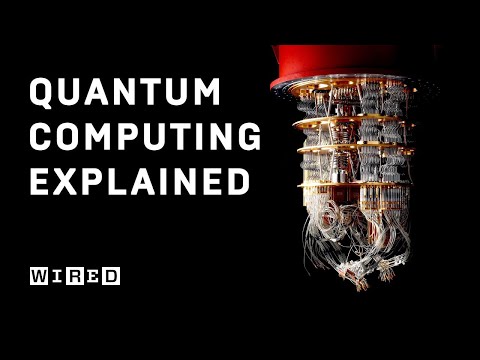
You know that moment when you’re trying to solve a Rubik’s Cube, and it feels like your brain might just short-circuit? Well, imagine if you could throw a super-smart robot into the mix that solves it in like, a split second. That’s kind of what quantum supremacy is all about.
Basically, it’s this idea that quantum computers, with their weird science-y magic—like entanglement and superposition—can tackle problems beyond our current tech capabilities. Picture a computer so fast it makes regular ones look like they’re stuck in molasses.
So, why should we care? Because this could flip science on its head. Think about everything from medicine to cryptography getting a major upgrade. It’s wild stuff! And trust me; there’s plenty more where that came from!
Exploring the Implications of Quantum Supremacy in Scientific Advancements
Quantum supremacy, huh? It’s one of those terms that sounds like it’s straight out of a sci-fi movie. But the thing is, it’s super relevant to our world today. So, what does it really mean? Well, let me break it down for you.
First off, quantum supremacy is basically when a quantum computer can perform a calculation that would take a traditional supercomputer an impractical amount of time—think thousands of years! Like, imagine you’re trying to solve a massive maze; classical computers are using maps and road signs, while quantum computers just teleport through the walls. Pretty neat!
Implications for Scientific Advancements
So, why should we care about this leap into the quantum realm? The implications are huge! Here are some key points:
- New Discoveries in Materials Science: Quantum computers could help us design new materials at an atomic level. Picture inventing materials that are lighter yet stronger than anything we have today. Seriously cool stuff!
- Drug Discovery: Imagine if researchers could model complex molecules in seconds instead of months. Quantum computing might just speed up how we find new drugs, potentially saving lives and money.
- Optimization Problems: Businesses deal with tons of optimization problems daily—like figuring out delivery routes or supply chain logistics. Quantum computers could solve these puzzles way more efficiently than our current tech.
- Climate Simulations: Our planet’s climate is complicated! Quantum computing might unlock better models to help predict weather changes and assess climate risks more accurately.
Now, let’s get personal for a second. I remember being in school and diving into chemistry experiments where we’d mix different substances together just to see what happened. It took ages to gather all the right info and test things out! With what quantum computing can do now—or will do soon—those experiments could be run on screens in just minutes instead of dragging them through trial and error in labs.
However, there are challenges too! Quantum computers aren’t perfect yet; they’re still developing, which means they can be temperamental little beasts prone to errors. It’s like trying to tame a puppy who keeps running off after every squirrel instead of obeying your commands!
Also, there’s this big conversation around ethics and accessibility. Who gets access to this technology? We obviously want scientists everywhere getting their hands on these toys so they can innovate across the board!
The bottom line is: quantum supremacy opens doors we didn’t even know existed—and as exciting as that sounds, we’ve got some hurdles to jump over before everyone can enjoy the ride. You feel me?
Exploring the Current Status of Quantum Supremacy in Scientific Research
Well, quantum supremacy is one of those buzzwords that can sound a bit intimidating, but don’t worry; I’m here to break it down for you. Basically, it refers to the point at which a quantum computer can solve problems that classical computers just can’t. And believe me, this is a big deal in the world of science and tech.
So where are we right now in this journey? A couple of years ago, Google claimed they achieved quantum supremacy with their quantum processor called Sycamore. They performed a calculation in about 200 seconds that would take even the most powerful supercomputers thousands of years. Pretty wild, huh? But this claim sparked quite a debate in the scientific community. Some folks said it was a monumental achievement, while others thought it didn’t really prove much in practical terms.
Let’s break down why this matters. Here are some key points to consider:
- Speed of Calculation: Quantum computers use qubits instead of classical bits. While bits are like tiny light switches (either on or off), qubits can be both at the same time thanks to something called superposition. This allows quantum computers to process huge amounts of data much faster.
- Complex Problem Solving: Imagine trying to find your way through an enormous maze—it’s tricky! Classical computers would have to explore each path one by one. But quantum computers can explore many paths simultaneously due to entanglement—a fancy word for when qubits become interconnected and share information.
- Real-World Applications: So what does this mean for us? Think about drug discovery or climate modeling. Quantum computing could help scientists run simulations that were previously impossible, leading to new medicines or better understanding our planet.
But hey, not everything is sunshine and rainbows! There are still some major hurdles we need to jump over.
- Error Rates: Quantum systems are sensitive little things! Qubits can lose their state due to interference from their surroundings—this is called decoherence. So current quantum computers struggle with error rates that make reliable calculations challenging.
- Scalability: Building more qubits isn’t as simple as just throwing more components together. We need innovative designs and materials which make scaling up these machines pretty tough.
Now let’s talk implications for modern science. If we get quantum computing right, it could revolutionize fields like cryptography and artificial intelligence too! For example:
– In cryptography, certain algorithms used today may become outdated once we have powerful enough quantum computers.
– AI could learn faster from massive datasets using quantum techniques.
Imagine having machines capable of learning complex patterns without breaking a sweat!
So what do you think? The road ahead for quantum technology is both exciting and bumpy at times—kind of like riding a bike uphill while juggling! We’re not quite there yet when it comes to full-blown practical applications but keep an eye out; progress is definitely being made. It’ll be fascinating seeing where this field takes us next!
Exploring the Future of Scientific Research and Technology: The Implications of Quantum Theory
Alright, let’s chat about something that’s been making waves in the science world: **Quantum Theory**. You know, it sounds all fancy and complicated, but it’s like the secret sauce that might just change everything about how we do research and tech in the future.
So, what is Quantum Theory? In simple terms, it’s a branch of physics that deals with really tiny things—like atoms and particles—where the usual laws of physics don’t quite apply. Imagine you’re playing a game where the rules keep changing every time you look away! That’s kind of how quantum particles behave; they can exist in multiple states at once. This is known as *superposition*.
Now, let’s jump into something called **Quantum Supremacy**. This fancy term means that quantum computers can perform tasks faster than traditional computers. Think about it: a regular computer is like a really fast librarian who can find books super quickly but still has to check each shelf one by one. A quantum computer? It could be like having an entire library on your desk—you can explore tons of information at once!
Here are some of the implications for modern science:
- Speedy Data Processing: Quantum computers can crunch numbers way quicker than classical ones. This means scientists can analyze huge data sets faster—imagine predicting weather patterns or understanding protein structures in biology!
- Advancements in Medicine: Quantum technology could revolutionize drug discovery by simulating molecular interactions instantly. It’s like having a super-powered lab that helps researchers find cures more efficiently.
- Enhanced Security: With quantum encryption methods, our online info could become practically unhackable. Your bank details would have next-level protection!
- Complex Problem Solving: Some problems are just too hard for today’s best computers—think climate modeling or optimizing supply chains. Quantum computers could tackle these challenges head-on!
But wait, there’s more! There are also some ethical questions popping up around this tech boom. Like, who gets to use these powerful tools? And how do we ensure they’re used responsibly? It’s like giving someone a superpower; you want to make sure they use it for good!
Sometimes I think about my buddy Sam who always wanted to build robots when we were kids. If he had access to quantum computing back then, he might have invented something incredible by now! I mean, imagine what future scientists will create with these tools.
In closing, while we’re only scratching the surface of what quantum theory and technology can do, it’s clear it’s going to reshape our world in some pretty big ways. There’s so much potential waiting just around the corner!
Alright, let’s chat about quantum supremacy. It’s this big, fancy term that some scientists throw around like it’s no big deal. But honestly, it’s got some serious implications for modern science that are worth unpacking.
So here’s the deal. Quantum supremacy basically means that a quantum computer can solve problems faster than the best classical computers out there. You know how your laptop sometimes feels like it takes forever to load a website or run a program? Well, imagine if we had computers that could do those same tasks in mere seconds – or even less! It’s like comparing a bicycle to a Formula 1 car. There’s just no competition once you see how fast the latter can go.
I remember when I first came across this concept. I was at a coffee shop, minding my own business, scrolling through some science articles when I stumbled on an article about Google’s quantum computer achieving this milestone in 2019. My brain sort of exploded with possibilities! Seriously, it felt like watching science fiction come to life. Could we finally unlock doors to solve some of humanity’s biggest challenges?
But let’s get real for a second: what does this mean for us? Well, for one thing, it could change everything from drug discovery to climate modeling – stuff that matters in our day-to-day lives! Imagine being able to model complex molecules at lightning speed to develop new medicines for diseases we’re struggling with. Or creating super accurate simulations of climate change effects to better prepare ourselves for what lies ahead.
Then again, there’s the flip side of the coin. All these advancements come with ethical and security concerns too. Like, if these super-fast computers can crack codes that currently protect our data and communications, we really need to think about privacy and security measures moving forward. Sometimes you have to wonder if we’re racing ahead without enough thought about where the finish line is.
So yeah, quantum supremacy is miles ahead on the tech highway right now and definitely opens up all sorts of conversations – and questions! As much as I’m excited about where it could take us in science and beyond, I can’t help but feel a mix of hope and caution roaming around in my head. It reminds me how crucial it is for us as a society to stay engaged with these changes and their implications on our future.
In short? Quantum supremacy could be our ticket to new scientific realms… but let’s not forget the road we’re on needs careful navigation as well!