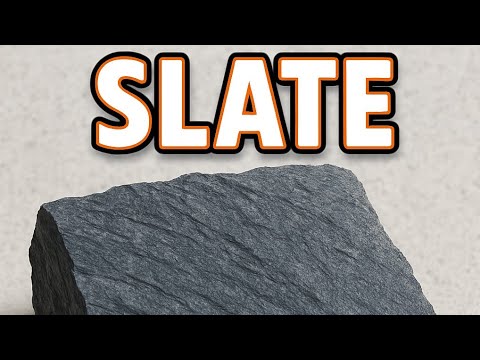
You know that moment when you’re hiking, and you spot a rock that looks totally out of place? Like, who dropped this giant chunk of slate here?
Well, that’s more than just a random boulder. It’s a piece of Earth’s history! Seriously, this stuff has stories to tell, and it’s not all boring geology talk. Slate is kind of like the bookkeeper of the planet’s past—keeping records of everything from ancient oceans to mountain-building events.
Imagine unrolling a scroll that reveals secrets from millions of years ago. That’s what slate does! It’s been shaped by pressure and heat and has made its way through time in some pretty cool ways. So let’s get into how slate plays its part in our planet’s epic tale. You’ll be surprised at how much drama is hiding in those layers!
Exploring the Scientific Significance of Slate Rock: Properties, Uses, and Geological Insights
Slate rock is one of those cool geological wonders that often gets overlooked. Formed from shale through a process called **metamorphism**, it’s like the rock equivalent of taking a nice long nap—shale gets compressed and heated, and voilà, you’ve got slate! So what makes this rock special? Let’s break it down.
Properties of Slate
One of the first things you’ll notice about slate is its smoothness. This texture comes from the way it splits into thin sheets—super handy for lots of uses!
- Color: Slate can be gray, green, blue, or even purple! The color depends on its mineral content; iron gives it reddish hues while other minerals provide the green and blue tones.
- Durability: It’s tough. Slate’s made to last. This is partly due to its tightly packed structure that resists weathering.
- Splitability: You can easily split slate into thin sheets, which is why it’s often used for roofing and tiles.
When I was a kid, my family took me on a hike in Wales, where we stumbled upon an old slate quarry. I remember feeling amazed at how these massive sheets of stone shone in the sunlight! It was like nature’s art display—each piece unique yet definitely part of the same family.
Uses of Slate
So, why do we care about slate in everyday life? Here are some key uses:
- Construction: People have been using slate for roofs and flooring for centuries. Its water-resistant nature makes it ideal for protecting homes from rain.
- Craftsmanship: Artists love working with slate too! It’s perfect for making chalkboards or decorative items because it’s easy to carve.
- Paving: Ever walked on a beautiful slate walkway? That’s because it’s durable enough to withstand foot traffic while looking stunning!
But there’s more to slate than just being pretty or practical. It also tells us stories about Earth’s history.
Geological Insights
Slate sheds light on past geological events. Here are some things to keep in mind:
- Tectonic Activity: The formation of slate indicates areas where tectonic plates have collided and created pressure—think mountain ranges like the Appalachians.
- Paleoenvironmental Indicators: The characteristics of slate can give clues about ancient environments: if you find marine fossils in your slab, you know that area was once underwater!
- Aging Rock Layers: Since slates form under specific conditions over time, geologists can use them as markers to date other rocks nearby. It’s like reading a book where each chapter tells part of Earth’s epic tale.
So yeah, while we might not think about slate every day, this rock has some serious significance in both our lives and Earth’s story. From forming those gorgeous landscapes we admire to being used in our homes, it literally grounds us—in more ways than one! Next time you see a slab of this stuff, remember: there’s history packed into every layer!
The Significance of Slate in Scientific Research and Applications
Slate is one of those rocks that doesn’t get all the glory, but it has a pretty significant role in scientific research and our understanding of Earth’s geological history. So, let’s delve into what slate really is and why it matters.
What exactly is slate? Well, it’s a fine-grained metamorphic rock that comes from shale. When shale gets heated and pressed deep within the Earth, it transforms into slate. This process gives slate its distinctive foliation – which means you can split it into thin sheets. Pretty cool, huh?
One of the cool things about slate is its age. Some slates are hundreds of millions of years old. That makes them valuable for geologists who want to piece together Earth’s story over eons. Imagine sifting through ancient records! You can actually trace back to periods when the continent was forming or when marine life was bustling.
Now, let’s talk about how slate helps in scientific research. When scientists study these rocks, they can learn more about past environmental conditions. For instance, they look at minerals in the slate to figure out what temperatures and pressures existed when the rock was formed. This information is key to understanding not just local geology but also global climate patterns from millions of years ago.
Here are a few areas where slate shines:
Also relevant is how slate plays a part in some practical applications today! It’s used in construction because it’s durable and water-resistant—perfect for roofs and floors.
So you see? Slate isn’t just hanging around doing nothing; it’s telling stories of our planet’s past while helping us understand both its history and future potentials. It might be easy to overlook this humble rock, but its contributions to science are genuinely profound!
Exploring the Diverse Scientific Applications of Slate Rock in Geology and Material Science
Slate rock is more than just something you might find covering a rooftop or in a chalkboard, it actually tells us a story about Earth’s history. Formed from shale through a process called metamorphism, it’s fascinating to dive into its characteristics and uses in both geology and material science.
Geological Features
Slate is usually characterized by its fine-grained texture. Under the right conditions of heat and pressure, shale transforms into slate. The great thing about slate is that it can preserve fossils and other sediments from ancient environments, which are crucial for understanding past ecosystems. These layers of history can help geologists reconstruct what the planet looked like millions of years ago!
Then there’s the whole idea of “slaty cleavage.” This refers to the way slate splits easily along specific planes. You’d be surprised how handy this trait is for scientists studying rock formations! It helps them understand the tectonic processes that shape our planet.
Applications in Material Science
Now, shifting gears to material science—slate has some really cool applications here too! Because it’s durable and resistant to water, people have been using it as a building material for ages. It’s not just about aesthetics; its durability means buildings last longer and require less maintenance.
Another fascinating application is in insulation. Slate can be crushed into pieces and used for thermal insulation materials. Seriously! This means homes can stay warmer in winter without cranking up the heating all the time. That’s efficiency at work!
Cultural Significance
Oh, and did I mention how slate has cultural significance? Many regions have historic slate quarries that not only provide insights into local geology but also cultural heritage. For example, communities often celebrate their unique connection to slate through festivals or local artwork made from this stone.
So whether you’re gazing at your sleek new slate countertop or marveling at geological formations on a hike, you’re witnessing an incredible combination of natural history, scientific advancement, and human artistry coming together. It’s pretty amazing how something as simple as rock can hold so many secrets, wouldn’t you say?
So, slate. You might have seen it around, especially if you’ve ever been in a house with a slate roof or even that fancy chalkboard in school. It’s more than just pretty rock, though. Slate is like the quiet, unsung hero of geology, and its story is pretty cool when you think about it.
Slate forms from a type of rock called shale. Basically, think about clay being squished under all that weight of dirt and other rocks over millions of years. You know how when you sit on a couch for too long and it kind of molds to you? Well, shale does that too but on a much grander scale! It gets compressed under pressure and turns into this neat rock we call slate—a fine-grained metamorphic rock, if we’re being technical here.
What’s really fascinating is how slate helps us peek into Earth’s geological history. Each layer tells a story about what the environment was like back then. Imagine walking through layers of time! When scientists study these layers, they can learn about ancient oceans, mountain ranges that have risen and fallen—like Earth’s own diary entries.
There’s this moment I remember from my geology class where we were hiking through some hills and found these slate formations. The teacher pointed out the ripples in the stone as evidence of ancient water flows. I remember thinking how wild it was to imagine those same spots being underwater millions of years ago! It really gives you this feel for how dynamic our planet is.
So yeah, slate might seem simple on the surface (pun totally intended!), but it plays a crucial role in our understanding of Earth’s past. Every piece has something to share about tectonic movements or climate changes from eons ago. It’s like holding a piece of history right in your hands, reminding us that Earth is always changing—even if we don’t notice it day to day.
In short, while we’re busy living our lives up here on the surface, slate is down there quietly documenting everything that’s happened over millions of years—making sure those stories aren’t lost to time. Isn’t that just kind of beautiful?