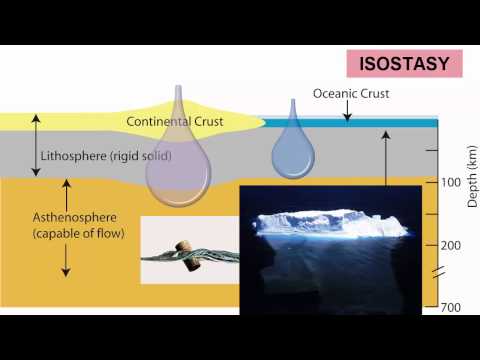
So, you know how when you jump into a swimming pool, you kinda feel that push from the water, right? It’s like the water is telling you, “Whoa there! You can’t just plop down without me moving aside!” Well, Earth’s crust plays a similar game.
You see, there’s this fancy word called isostasy. Sounds like something you’d hear in a sci-fi movie, but it’s actually super chill. It’s all about how Earth balances itself out. Imagine a big ol’ seesaw on a playground; if one side’s heavier, it sinks down, and the lighter side rises up. That’s what isostasy does with our planet!
It even explains why mountains are tall and why some areas sink or rise over time. Isn’t that wild? Like a never-ending dance beneath our feet! So let’s break down how this balance works and what it means for everything from earthquakes to those majestic peaks we love to hike.
Understanding Geological Processes: The Role of Isostasy in Earth Science
So, let’s talk about isostasy and how it fits into the big picture of Earth science. You know, it’s kind of like balancing a seesaw. Picture this: you’re sitting on one end, and your friend is on the other. If you both weigh about the same, then you’re balanced, right? Well, that’s pretty much what happens with Earth’s crust floating on the denser mantle below.
To break it down a bit more, here’s what you should know about isostasy:
But why does this even matter? Well, think about mountains and valleys—they’re not just random bumps and dips! They are shaped by these processes over millions of years.
You might wonder how we realized all this stuff about isostasy in geology. Back in the 19th century, scientists noticed that mountain ranges were often taller than surrounding areas but covered less area than what they had assumed was their actual shape below ground. That brought them to figure out that there should be some sort of balance happening.
Also interestingly enough, if you’re ever at a glacier site melted by climate change and see those huge rocks just hanging around—yeah, that’s because as ice melts away and reduces pressure from above—a process called glacial rebound occurs! The land underneath has been waiting patiently to rise again.
And here’s another cool thing: Your location matters too! In places where there used to be massive ice sheets—like parts of Canada—you can see land rising even today as we come out from under that heavy blanket.
So anyway, isostasy influences everything from earth quakes to mountain formation! It helps geologists understand not just where things are today but also why they look like they do after all those years.
So yeah! Remember when you think about geology—it’s never really static; it’s always shifting and balancing beneath our feet!
Understanding Isostasy: Its Importance in Geography and Earth Sciences
Isostasy is a pretty cool concept in geography and Earth sciences. Essentially, it’s all about balance—how Earth’s crust floats on the denser, semi-fluid mantle beneath it. Imagine floating on a pool float: the more weight you put on it, the deeper it sinks. When you get off, though, it rises back up. That’s kind of what happens with landmasses!
So, why should you care about isostasy? Well, for starters, it helps explain mountain ranges and valleys. When those big mountains form due to tectonic activity, they push down on the Earth’s crust. The crust compensates by sinking slightly into the mantle—this is part of that balancing act we’re talking about.
When glaciers form and pile up ice on land, they also weigh down the crust. Think about how heavy snow can bend tree branches. As glaciers melt and retreat—with climate change really shaking things up—this pressure is released, and guess what? The land starts to rise again! This phenomenon is called post-glacial rebound. It’s like watching nature bounce back.
Another interesting aspect has to do with ocean basins. Did you know they’re deeper than continental regions because they’re made of thinner crust? Yup! Oceanic crust is denser and heavier than continental crust, so it sits lower on the mantle.
Here are some key points about isostasy:
- Mountain formation: Tectonic forces can create mountain ranges which affect local isostatic balance.
- Glacial effects: The weight of glaciers causes the crust to sink during glaciation periods.
- Post-glacial adjustments: The land rebounds once glaciers melt away.
- Oceanic vs continental crust: Oceanic crust sits lower than continental due to its density.
Isostasy plays a vital role in shaping Earth’s landscapes over millions of years—kind of like your favorite video game leveling up as you progress through challenges!
One emotional tidbit: think back to when you went hiking in the mountains or maybe took a trip to see beautiful coastal cliffs. Those stunning views are a direct result of this geological dance happening below our feet!
Understanding isostasy isn’t just academic; it connects us directly to how we experience Earth every day! So next time you’re out there exploring nature’s wonders, remember that beneath all that beauty lies an intricate balance working tirelessly!
Understanding the Dutton Theory of Isostasy: Insights into Geophysical Science and Earth’s Crust Stability
Isostasy might sound like a fancy term, but it’s all about balance. Picture a big rubber duck floating in your bath. When you push it down, it displaces some water, right? When you let go, it pops back up. That’s kinda what’s happening with Earth’s crust and mantle.
So, the Dutton Theory of Isostasy is tucked into this idea of balance in the Earth’s crust. It was developed around the late 19th century by an American geologist named William Dutton. He suggested that the Earth’s crust floats on the denser underlying mantle. Think of it like icebergs—only a small part shows above water while the majority is submerged.
Now let’s break this down.
- Crust and Mantle: The Earth’s crust is like a thin skin over the mantle, which is much denser and hotter.
- Equilibrium: Isostasy means that when weight is added or removed from the crust, it adjusts to maintain balance.
- Example of Mountains: When mountains form through tectonic activity, they exert more pressure on the mantle, causing it to sink slightly.
- Glacial Rebound: When ice sheets melt after an ice age, the land that was pressed down begins to rise up again—a process called isostatic rebound.
You know those moments when you feel light after shedding some weight? Well, that’s sort of how this works too! The Earth does something similar when glaciers retreat; its surface responds by uplifting.
Understanding this helps explain why different regions have different elevations. For instance, areas with thick glaciers are lower than regions without them because they’re being pushed down into the mantle.
What really gets interesting is how these processes fit into larger geological happenings. Say there’s an earthquake or volcanic activity; these can shift massive amounts of rock and sediment around rapidly. So now what happens? Exactly—this can also cause shifts in isostatic equilibrium!
Also, Dutton’s theory ties in closely with other concepts like bathymetry, which studies ocean depths and shapes. Oceanic and continental crusts behave differently; oceanic crust is thinner but denser compared to continental crust which is thicker and lighter.
There’s a lot at stake here! Understanding this science can help us predict natural disasters better or manage our resources more wisely. Just remember: Earth isn’t static; it’s constantly adjusting itself much like we do daily with our own weights and burdens.
Keeping all this in mind makes you realize that even though we might just be tiny specks on our planet’s surface, there’s a powerful game of balancing act going on below us every single moment!
You know, it’s pretty fascinating how our planet works, right? Like, think about all those mountains and valleys. They’re not just sitting there randomly; it’s all due to this thing called isostasy. So, what is isostasy? Well, simply put, it’s like the Earth’s way of balancing itself out.
Imagine you’re standing on a giant seesaw. If you lean to one side, the other side goes up to balance things out. That’s kind of how isostasy works with the Earth’s crust and mantle. When we talk about the crust being relatively thick under a mountain range or thinner under oceans, we’re seeing this process in action.
Here’s a cool story: A few years ago, I went hiking in the Rockies. Just standing there among these towering peaks made me feel so small—like I was part of something way bigger than myself. But here’s where it gets interesting: all that rock sitting above us wasn’t always that high up! Isostasy helps explain why mountains rise and fall over time. After glaciers melt or when rocks erode away, the ground can actually push back up and reach towards balance again.
It gets even more intriguing when you look at tectonic plates—they’re always moving around like puzzle pieces. Sometimes they crash into each other or pull apart. These interactions create mountains and trenches on Earth’s surface that tell stories about how long they’ve been there and what forces are at play underneath.
So yeah, when you get down to it, isostasy connects to everything—the rise of mountains, the depth of oceans—it’s literally shaping our world! It makes me think about how life adjusts too; whether it’s nature or people adapting to changes around us, there’s something poetic in that need for balance. You see what I mean? It’s not just geology; it’s a reminder of how interconnected everything really is!