Did you know that the universe has a whole secret language? Seriously. It’s not just stars and planets out there; it’s full of weird vibes we can’t even see with our own eyes.
When I was a kid, I remember laying on the grass, staring up at the night sky. I’d point at constellations, dreaming of what was out there. But I had no idea that a big chunk of the cosmic action happens in ultraviolet light.
It’s like trying to listen to your favorite song through a wall—you just can’t get the full vibe. Ultraviolet telescopes are those super cool gadgets that help us peek through that wall!
Think about it: they let scientists look at all kinds of hot stuff in space, from massive stars to mysterious galaxies far away. So, buckle up, buddy! We’re about to explore how these nifty tools help us unravel the universe’s secrets!
Exploring the Universe: The Applications and Importance of Ultraviolet Telescopes in Astrophysics
The universe is like this vast, mysterious book waiting to be read. And one of the coolest ways we can peek into its pages is through ultraviolet telescopes. These instruments are vital for astrophysics, letting us explore things that are just impossible to see with regular telescopes. So, let’s break down why they’re so important and what they actually do.
First off, we have to talk about light. You see, light comes in different flavors: visible light (the stuff our eyes can see), infrared, and ultraviolet (UV). UV light has higher energy than visible light. Because of this higher energy, it interacts differently with materials. When you point a UV telescope at something like a star or a galaxy, you get information that you wouldn’t pick up otherwise.
One awesome application of UV telescopes is studying star formation. New stars are born in dense clouds of dust and gas. When these stars ignite, they emit a ton of UV radiation. By examining this UV light, scientists can learn about the temperature and composition of these stars during their fiery birth process. Crazy cool, right?
Also, UV telescopes are key for investigating galaxy evolution. Galaxies can be super tricky because they change over billions of years. By observing the UV spectrum from galaxies—especially those at massive distances—we can track down their life cycle stages. That means we get to see when galaxies were young and how they’ve transformed over cosmic time.
Now let’s not forget about our own solar system! Ultraviolet telescopes help us study objects like comets and planets too. For example, by examining the UV emissions from Mars’ atmosphere, scientists have discovered how solar wind strips away gases from it over time—this helps us understand why Mars turned from a wet world into a dry one.
And here’s another interesting aspect: exoplanets. These are planets outside our solar system orbiting other stars. When an exoplanet passes in front of its host star (called a transit), some star light filters through the planet’s atmosphere before reaching us. If that atmosphere absorbs specific wavelengths in the UV range, we can identify the chemicals present—and wow! We might even find signs of water vapor or other important molecules.
Using instruments like Hubble Space Telescope—which has been observing in ultraviolet since 1990—has proven invaluable for collecting data across all these areas. It’s almost like having an old friend who always shows up with exactly what you need! Hubble has revolutionized our understanding by giving us clear views into distant galaxies and stellar nurseries—all thanks to its ability to capture that beautiful ultraviolet light.
But wait; there’s also something emotional about all this exploration! Remember when people marveled at those first images from Mars rovers? That feeling translates even bigger when we think about looking deep into space with ultraviolet telescopes—it’s like making contact with the past and future of our universe!
To wrap things up: ultraviolet telescopes are more than just nifty gadgets; they’re gateways into understanding phenomena from star birth to galaxy evolution and even exoplanet atmospheres. They help astronomers piece together the narrative of our cosmos so that each discovery paints a clearer picture of where we come from—and where we might be going next.
So yeah, next time you gaze up at those twinkling stars or think about distant galaxies colliding in space—just remember there’s some serious science happening behind the scenes with these incredible tools!
Unlocking the Secrets of the Early Universe: The James Webb Space Telescope’s Role in Modern Astronomy
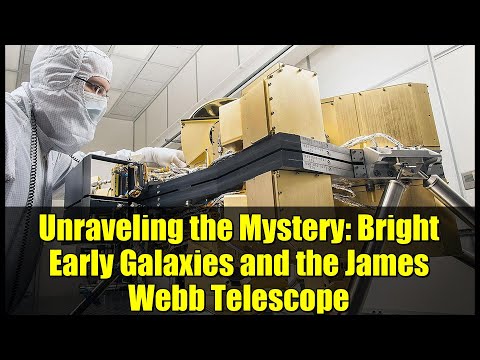
So, let’s get into it! The early universe is like this huge puzzle that scientists have been trying to piece together for ages. The James Webb Space Telescope (JWST) is a super cool tool that’s changing the game for astronomers. It’s not just any telescope; it’s designed to look further back in time than ever before. Think of it as a time machine, peering into the distant past of our universe.
First off, **why is the early universe so important?** Well, it’s when everything began. You’ve got stars forming, galaxies colliding, and all sorts of cosmic drama unfolding. By studying this era, we can learn how our own galaxy—and everything in it—came to be.
Now, what makes JWST utterly awesome? It operates in the **infrared spectrum**, which means it can see through cosmic dust clouds that hide a lot of what we want to observe. These clouds are like thick fog on a cold morning; without infrared light, you wouldn’t see a thing! So with JWST’s abilities, we’re finally getting clearer pictures of those first stars and galaxies.
Here’s how JWST helps us understand the early universe:
- Studying Cosmic Dawn: JWST focuses on a period called Cosmic Dawn when the first stars lit up. Finding these stars helps us understand how they influenced their surroundings.
- Galaxy Formation: Observing forming galaxies gives us clues about how they evolved over billions of years into what we see today.
- Exoplanets Exploration: Looking at atmospheres of exoplanets might provide hints about conditions similar to those on Earth.
I remember reading about astronomers who were so excited when they first got pictures from JWST—they felt like kids opening gifts on Christmas morning! That excitement is contagious; you can almost feel the thrill as they uncover secrets hidden for more than 13 billion years.
Then there’s this fascinating part: **ultraviolet observations**. While JWST does its magic mainly in infrared, ultraviolet telescopes are also key players out there. They help us glimpse hot young stars and track elements like hydrogen and helium from those early moments after the Big Bang.
So basically, connecting JWST with ultraviolet astronomy opens up even more doors for discovery. You get an even fuller picture by combining these different types of light!
In summary, **the James Webb Space Telescope is breaking new ground** in our understanding of the universe’s infancy by seeing things we’ve never seen before. It’s all about piecing together our cosmic history one observation at a time—like reconstructing an ancient mural that tells us who we are and where we came from! Isn’t that something?
Exploring Ultraviolet Discoveries: What NASA Seeks in Scientific Research
Exploring the universe is like opening a giant treasure chest of mysteries, and one of the most fascinating tools we have at our disposal is ultraviolet (UV) light. Now, you might be wondering, “Why UV?” Well, to answer that, let’s get into what NASA is really up to with its ultraviolet telescopes.
First off, ultraviolet light has a shorter wavelength than visible light. This means it can reveal details about celestial objects that are just not visible to us without specialized equipment. For instance, while visible light helps us see stars and planets in our galaxy, UV can uncover high-energy environments like young star systems or supernova remnants. It’s like using a special lens that opens your eyes to a whole new world!
So what exactly does NASA want to find out with these telescopes? Here are some key points:
- Star Formation: Ultraviolet telescopes allow scientists to study how new stars are formed. Bright UV emissions from hot young stars can be tracked to understand their life cycle.
- Galaxy Evolution: By observing distant galaxies in UV light, researchers can gather insights into how galaxies evolve over billions of years.
- Exoplanets: Some projects focus on exoplanets—those planets outside our solar system. UV observations can determine atmospheric compositions and even potential habitability!
I remember once stumbling upon an old photograph from the Hubble Space Telescope that showcased the breathtaking colors of nebulas captured through different wavelengths. It was hard not to be awestruck by the vibrant displays; this was nature’s art! But more importantly, each color told a story—one that scientists pieced together using varying wavelengths of light.
NASA’s ongoing research also aims at detecting elements like carbon and oxygen in space. These elements are crucial for understanding if life could exist elsewhere. Imagine pinpointing where all the action is happening in terms of cosmic chemistry; it’s like being an intergalactic detective searching for clues about potential life beyond Earth.
But here’s where it gets even more interesting: with missions such as the upcoming Ultraviolet Spectrograph, scientists hope to explore phenomena like black holes in greater detail than ever before! Black holes emit powerful UV radiation when matter falls into them and heats up—a dramatic cosmic dance that’s both beautiful and terrifying.
In summary, UV discoveries hold the key to unlocking many secrets about our universe. Whether it’s tracking star formation or venturing into alien atmospheres, these missions serve as stepping stones towards answering some of humanity’s biggest questions: Are we alone? How did our universe form? Each new discovery feels kind of like getting a little closer to understanding our place in this vast cosmos.
So next time you look up at the night sky twinkling with stars, remember there’s way more happening beyond what meets the eye—and NASA is gearing up with their ultraviolet telescopes for an incredible cosmic adventure!
You know, thinking about space always gives me a bit of a thrill. Like, when I was a kid, I remember staring up at the night sky during camping trips, just amazed by all those twinkling stars. It felt like there was so much out there, and you couldn’t help but wonder what secrets the universe might be hiding. Fast forward to today, and we have powerful tools like ultraviolet telescopes that seriously help us peek deeper into those cosmic mysteries.
Alright, let’s unpack this a bit. Ultraviolet telescopes are designed to observe light in the ultraviolet spectrum. This is different from the visible light we see with our eyes. You know how when you get a sunburn? That’s because UV light from the sun is hitting your skin. In space, UV light carries information about celestial objects that are often hidden in plain sight when we look at them with regular telescopes.
So why bother with ultraviolet? Well, it turns out that a lot of critical processes in the universe happen in this range of light—like how stars are born or even how they die. Imagine trying to cook dinner without being able to see what’s in your oven; that’s what astronomers face without UV observations! With these telescopes, they can study hot young stars and galaxies that are far away and evolving quickly.
And here’s something cool: studying heat emissions can tell us about black holes too! These mysterious giants can be tricky to spot since they don’t give off light themselves. But around them? There’s all this hot gas swirling around that emits UV radiation! It almost feels like you’re uncovering hidden treasure every time you identify something new.
But here’s the kicker—there’s also an emotional connection tied to all this science. Each time researchers discover something using these tools, it connects us as humans on this little blue planet to something so massive and ancient. Like finding keys to a door that’s been locked forever—every peek through those keys makes us feel more part of this grand story unfolding across billions of years.
So next time you gaze at the stars or think about what lies beyond our little corner of the universe, remember those ultraviolet telescopes working tirelessly to lend us their eyes, showing us worlds we’ve only dreamed about! It’s kind of magical when you think about it; how science can take our curiosity and turn it into knowledge about everything we’re just trying to understand better.