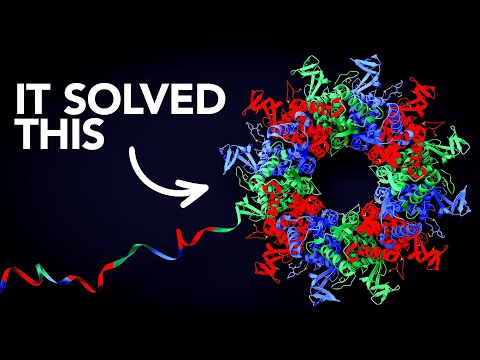
You know how sometimes you just can’t find your keys, and they end up being right in front of your face? Protein structure prediction has been kind of like that for scientists. Seriously! For decades, they’ve been hunting in the dark, trying to figure out how proteins fold and why it matters.
Then along comes AlphaFold. This AI marvel practically turned everything upside down. It’s like having a super-smart buddy who just gets it—like that friend who always knows where you left your stuff.
So, what’s the big deal about AlphaFold? Well, imagine cracking a code that helps us understand diseases, develop new medications, or even design plants that thrive in extreme conditions. Sounds pretty rad, right? Proteins are the building blocks of life and unlocking their secrets could change the game for science as we know it!
Revolutionizing Biochemistry: Five Key Advancements in Protein Structure Prediction Through AlphaFold
Biochemistry has gotten a seriously cool upgrade thanks to something called AlphaFold. Now, what exactly is this? Well, it’s an AI developed by DeepMind that makes predicting protein structures way easier than ever. It’s like having a super-smart buddy who can look at a protein’s amino acid sequence and tell you its 3D shape. This is important because the shape of a protein determines its function in the body, kinda like how the shape of a key fits into a lock.
So let’s break down five key advancements that AlphaFold has brought to the table:
- Accuracy Boost: The thing is, older methods used to struggle with accuracy. AlphaFold can predict protein structures with high precision. It actually won the CASP competition (Critical Assessment of Techniques for Protein Structure Prediction) multiple times! This was like winning the Olympics for protein prediction.
- Speed: Traditional methods took ages to compute structures—sometimes weeks or even months! But with AlphaFold, what used to take forever can now be done in just hours, or even minutes. That’s like going from dial-up internet to high-speed fiber optics.
- Handling Complex Structures: Proteins aren’t always simple; they can be huge and complicated. Older tools often got lost in translation when faced with these giants. AlphaFold has shown it can tackle these big guys better than anything we’ve seen before. Talk about a game changer!
- Data Availability: One of the biggest hurdles for scientists was collecting enough data for accurate predictions. AlphaFold’s algorithms learned from massive amounts of existing data, which means it can take less information and still give reliable results—like making something amazing from leftovers in your fridge.
- Catalyzing Research: With faster and more accurate predictions, researchers are getting excited about potential breakthroughs in medicine and biology faster than ever. Imagine discovering new treatments for diseases because you understood how proteins work! That could change lives.
Here’s a cool story: A group of scientists studying malaria had been struggling with understanding a specific protein that helps the parasite invade human cells. With AlphaFold’s help, they quickly identified its structure, leading them closer to designing effective treatments. Seriously exciting stuff!
In short, what we’re seeing is more than just tech advancement; it’s pushing biochemistry into new realms where discoveries can happen at lightning speed! So yeah, keep your eyes peeled on how this develops—it could lead us down some really fascinating paths in science and medicine!
Revolutionizing Protein Structure Prediction: The Impact of AlphaFold on Modern Scientific Research
Proteins are super important in biology. They do just about everything, from building tissues to speeding up reactions. But here’s the catch: their functions depend a lot on their shapes, known as protein structures. Until recently, figuring out these structures was like trying to solve a giant puzzle, sometimes taking years or even decades. That’s where AlphaFold comes in.
So, AlphaFold is basically this awesome AI tool developed by DeepMind that predicts protein structures with stunning accuracy. Instead of spending ages in labs experimenting and guessing, researchers can now input amino acid sequences (the building blocks of proteins) and get back predicted structures almost instantly! You see, proteins are made up of these chains of amino acids that fold into specific shapes. The way they fold determines their function.
Now let’s break it down a bit more. Here’s how AlphaFold revolutionizes things:
- Speedy predictions: Traditional methods like X-ray crystallography and NMR spectroscopy can take ages to determine a protein’s structure. AlphaFold can do this in minutes or hours.
- Accuracy: In some cases, its predictions are as accurate as experimental results! This means scientists can trust the data it provides.
- Accessibility: It democratizes access to protein structure information. Even labs without advanced equipment can use AlphaFold’s models.
- Opening doors for drug discovery: Knowing how proteins look helps researchers design better drugs targeting specific diseases.
Thinking about the implications? It’s pretty mind-blowing! For example, imagine you’re a scientist studying Alzheimer’s disease. You might want to understand the structure of certain proteins involved in plaque formation. With AlphaFold, you could get insights way faster than ever before!
There was this one time I heard from a friend studying environmental science who used AlphaFold for her research on bacteria that can break down plastics. She said she managed to predict their protein structures and found new ways they could be harnessed for bioremediation—like using nature to help clean up our mess!
And while there may still be challenges ahead—like predicting protein interactions or dynamics—AlphaFold has already changed the game significantly. It encourages collaboration across disciplines because now people from different areas of science can work together more effectively using shared data.
In short, with tools like AlphaFold, we’re stepping into a new era of scientific research where understanding life at the molecular level is not just dream but a rapidly approaching reality. Seriously exciting times ahead!
Revolutionizing Structural Biology: The Impact of AlphaFold 2 on Protein Folding and Scientific Research
So, you’ve probably heard about AlphaFold 2, right? Well, it’s a big deal in the world of structural biology! Basically, this is an advanced AI program developed by DeepMind that predicts protein structures from their amino acid sequences. Proteins are like the little workers in your body—they do everything from building muscles to fighting off infections. Understanding their shapes is super important because a protein’s function often depends on its structure.
Now, let’s break this down a bit. Proteins are made up of chains of amino acids that fold into specific shapes. This folding process is crazy complex and can take a long time to figure out using traditional lab methods like X-ray crystallography or nuclear magnetic resonance (NMR). AlphaFold 2 changes the game by predicting these structures within minutes rather than weeks or months.
What’s really cool about AlphaFold 2 is how accurate it is. Researchers found that it can predict protein shapes with an accuracy similar to what you’d get from experimental methods—and that’s saying something! The models produced can even identify small details like the twists and turns in a protein structure that are crucial for its function.
But you might be wondering: why should we care? Well, understanding protein folding can lead to breakthroughs in medicine, agriculture, and beyond. For instance, scientists are already using AlphaFold 2 to study proteins linked to diseases like Alzheimer’s and cancer. Imagine being able to see how those mischievous proteins misfold—instead of guessing—so you can figure out how to fix them!
Now let me tell you a little story that highlights just how revolutionary this tool can be. A while ago, there was a group of researchers trying to solve the structure of a protein involved in malaria transmission. They spent years trying different techniques but hit dead ends everywhere. Then they turned to AlphaFold 2 as a last resort and—boom!—the model provided insights they couldn’t have dreamed of before. This not only sped up their research but opened new doors for developing better treatments.
So, when we talk about revolutionizing structural biology, it’s not just about speed; it’s about access and collaboration too. By making structural predictions available freely online through platforms like the AlphaFold Protein Structure Database, scientists all around the world—even those with limited resources—can benefit from this technology.
Anyway, here are some key points that capture what makes AlphaFold 2 such an incredible advancement:
- Speed: Predicts protein structures much faster than traditional methods.
- Accuracy: Provides highly accurate insights comparable to experimental results.
- Accessibility: Open-source models available online for researchers globally.
- Disease Research: Helps unlock mysteries tied to various diseases.
- Sparking Collaboration: Encourages teamwork among scientists across disciplines.
In short, AlphaFold 2 isn’t just changing structural biology but shaking up scientific research as a whole! And who knows where this knowledge will take us next? It’s an exciting time in science for sure!
You know, when I first heard about AlphaFold, I was like, “Whoa, this is a game changer!” It’s crazy to think that predicting protein structures, which used to take scientists years and years of painstaking work, has suddenly gotten way easier thanks to this technology. Just imagine the excitement—it’s like finding out you can finally solve that Rubik’s Cube you’ve been staring at for days.
So here’s the deal: proteins are pretty much the building blocks of life. They’re involved in everything from making enzymes that help us digest food to fighting off infections. Each protein needs a specific three-dimensional shape to function right. If it’s all squished up or misshapen? Well, good luck getting it to do its job! Traditionally, figuring out how a protein folds into its 3D shape was like trying to guess how a jigsaw puzzle looks without the picture on the box.
Then along came AlphaFold. Basically, it uses artificial intelligence to predict how proteins fold based on their amino acid sequences—like magic! Researchers uploaded data into this system and bam! Out popped predictions with astonishing accuracy. I mean wow!
I remember reading about a molecular biologist who had spent nearly two decades studying one particular protein that was key in Alzheimer’s disease. He felt like he’d hit a wall; every approach seemed tedious and slow. When AlphaFold was introduced, he finally saw hope. With its help, he got insights into the structure of that stubborn protein way faster than ever before! That sense of relief and excitement must’ve been immense—a bit like scoring the winning goal in an overtime match!
Now you might be thinking: Why does this matter? Well, let’s break it down a bit more. Accelerating our understanding of proteins opens up pathways for drug discovery and disease treatment. Think personalized medicine where treatments are tailor-made based on specific protein structures in your body—pretty cool concept if you ask me!
But there are still bumps in the road ahead. Even though AlphaFold has made crazy strides in accuracy, it isn’t perfect. There are still some tricks that nature has up her sleeve that we need to figure out.
In any case, as exciting as these advancements are, they also remind us how important collaboration is in science—bringing together minds from various disciplines can lead to breakthroughs we never even imagined possible! So while we sit back and watch these developments unfold (seriously exciting stuff), I can’t help but feel hopeful for where this journey will take us next in understanding life itself.