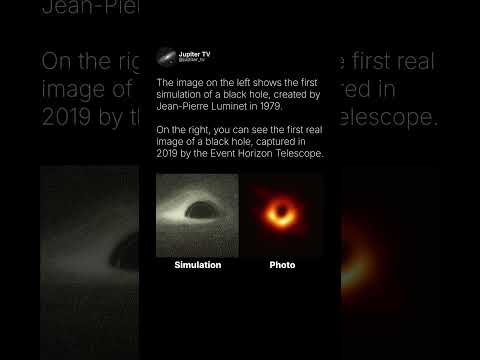
You know, the first time I heard about black holes, I thought they were just something out of a sci-fi movie. Like, seriously, who wouldn’t? Space is full of crazy stuff! But then it hit me—these cosmic vacuum cleaners are actually real!
I mean, how wild is it that there are places in the universe where time and space just go bonkers? Imagine stepping into one and getting stretched like taffy. Not exactly on my to-do list!
But here’s the thing: black holes aren’t just about mind-bending science. They spark curiosity in a way that gets us asking big questions. And that’s what this whole Black Hole Initiative is about—harnessing that curiosity to explore the unseen. So buckle up; we’re going to dig into how this fascinating project pulls us into the mysteries of the universe!
Exploring Oppenheimer’s Role in the Development of Black Hole Theory in Modern Physics
Oppenheimer isn’t just a name you hear in history classes about the atomic bomb; he’s actually tied to some pretty wild ideas in physics too, especially when it comes to black holes. So, what’s the story there?
First off, did you know that Oppenheimer was part of a group of thinkers who tackled the biggest questions in the universe? In the 1930s, he and his colleague George Volkoff started working on something called “gravitational collapse.” It’s a fancy way of saying how massive stars can end their lives by collapsing under their own weight. Picture this: you have a balloon (that’s your star) that suddenly pops, and everything inside it gets squished together. That’s kind of what happens to stars when they go supernova.
What’s cool here is that Oppenheimer and Volkoff’s work led to one of the first theoretical descriptions of black holes. They showed that if enough mass gets packed into a small enough space, gravity becomes so strong that nothing can escape—not even light! Imagine trying to run out of a room that has walls made of gooey jelly; it’s impossible, right? Well, that’s how black holes trap everything.
But Oppenheimer didn’t stop there; he also pondered over what happens inside these cosmic monsters. He wrote about how once something crosses the event horizon (which is like an invisible boundary around a black hole), it’s gone forever. This idea was pretty radical at the time and sparked a lot of debate among scientists.
Fast forward to today, and thanks to initiatives like the Black Hole Initiative, we’re still exploring these mysteries. Scientists are using new technologies and theories to dig deeper into things Oppenheimer only scratched the surface on. For instance:
It’s amazing how Oppenheimer’s early work laid down some serious groundwork for modern physics! It reminds me of when I was young and first saw pictures from space—there’s just something magical about wanting to know what’s out there.
So yeah, Oppenheimer’s role in developing black hole theory wasn’t just some side project; it helped open up an entire field for exploration. And as we continue digging into those dark corners of space, who knows what other surprises await us? The universe is full of secrets just waiting to be uncovered!
Exploring the Black Hole Experiment: Unraveling the Mysteries of Space and Time in Modern Science
Sure! Let’s talk about black holes, those mysterious cosmic entities that are basically like the ultimate vacuum cleaners of space. Seriously, they can suck in everything around them, including light. So let’s unravel some of their mysteries, shall we?
First off, what *is* a black hole? Well, a black hole is formed when a massive star runs out of fuel and collapses under its own gravity. Just imagine a giant star going supernova and then imploding. This collapse creates an area where the gravitational pull is so strong that nothing can escape—not even light. That’s why we call it a “black” hole!
Now you might be asking yourself: how do scientists even study something that can’t be seen? Great question! The thing is, while black holes themselves are invisible, they have some pretty dramatic effects on nearby stars and gas. When stuff gets too close to a black hole, it forms what’s called an **accretion disk**, which is basically swirling material cleaning up around it and emitting X-rays in the process.
You know what’s really cool? One groundbreaking project called the Black Hole Initiative aims to explore these cosmic giants using innovative techniques. Scientists are harnessing curiosity—like real-life explorers of the universe—to take a closer look at these phenomena and understand concepts like space and time.
Here are some key points related to this fascinating research:
- Event Horizon: This is the point of no return around a black hole. Once something crosses this boundary, it’s lost forever!
- Hawking Radiation: Proposed by physicist Stephen Hawking, this theory suggests that black holes can actually emit radiation due to quantum effects near their event horizons.
- Gravitational Waves: When two black holes collide, they create ripples in space-time known as gravitational waves that scientists have begun detecting.
- Imaging Black Holes: The Event Horizon Telescope project successfully captured an image of a black hole for the first time in 2019—wow! It was mind-blowing to see!
A little while back, I was watching some footage from that Event Horizon Telescope collaboration with friends over pizza, and I gotta say, seeing that grainy yet iconic photo of M87’s supermassive black hole felt like witnessing history. It really hit home how much our understanding of the universe has evolved over time.
So you follow me? Black holes challenge our understanding of physics because they mess with fundamental concepts like gravity and time itself. They raise questions about what happens at their centers—somewhere known as “singularity.” Here is where things get really perplexing; current theories struggle to explain what occurs there.
As research advances through initiatives like this one, we are getting closer to solving these cosmic puzzles. Who knows? Maybe one day we’ll unlock deeper secrets about existence itself or even connect our reality with other dimensions!
Basically, delving into the world of black holes isn’t just about exploring phenomena—it’s about pushing boundaries and igniting our curiosity for the cosmos as a whole. So keep looking up at those stars; who knows what you might end up discovering next!
Exploring the Harvard Black Hole Initiative: Advancements in Astrophysics and Cosmology
The Harvard Black Hole Initiative (BHI) is a super exciting project that dives deep into the enigmatic world of black holes. You know, those cosmic beasts that seem to gobble up everything around them? Well, the BHI is all about helping us understand how these massive entities work and their role in the universe.
First off, black holes are like gravitational vacuum cleaners. They form when a star collapses under its own gravity after running out of fuel. At its core, there’s this point called the singularity, where all the mass is concentrated and gravity is incredibly strong. You can’t really escape from it—not even light! That’s why we call them black holes; they’re invisible because they don’t let any light escape.
The BHI brings together scientists from various fields like astrophysics and cosmology, you know? They want to answer some big questions: How do black holes form? What happens at their event horizon—the boundary beyond which nothing can escape? It’s not just about curiosity; understanding these phenomena could help us learn more about the fundamental laws of physics.
One of the cool things that’s come out of this initiative is a focus on observational techniques. By studying how matter behaves around black holes, scientists can gain insights into their properties. For example, when matter spirals into a black hole, it heats up and emits radiation. Detecting that radiation allows researchers to gather important data.
Another fascinating aspect is how these massive objects may influence galaxy formation. Imagine huge black holes lying at the centers of galaxies—like our Milky Way! Their gravity could be shaping the way stars cluster and evolve over time. The researchers involved in BHI are working hard to model these interactions.
And let’s not forget about education! The initiative aims to ignite interest in science among students and the public alike. Through talks, workshops, and outreach programs, they encourage people to ask questions and explore further into this mind-bending field.
So yeah, exploring black holes isn’t just for rocket scientists anymore. Thanks to projects like the Harvard Black Hole Initiative, we’re peeling back layers of our universe’s mysteries—one discovery at a time! Who knows what other cosmic wonders lie ahead?
Curiosity, huh? It’s one of those things that makes us human. I remember lying in bed as a kid, staring up at the night sky and wondering about the stars—like, what really is out there? That wonder, that itch to know more, drove so many of us to explore and learn. And when it comes to cosmic mysteries, black holes are some of the most mind-boggling topics you can ponder.
Now, let’s talk about the Black Hole Initiative. It’s not just a fancy name; it’s like gathering a bunch of curious minds to tackle one of the universe’s biggest enigmas. Just think about it for a moment: black holes are regions in space where gravity is so strong that nothing—even light—can escape. Like an ultimate cosmic vacuum cleaner! They challenge our understanding of physics and stretch our imaginations to their limits.
What’s so exciting is how this initiative brings together scientists from different fields—physicists, astronomers, even computer experts—all united to decode these celestial enigmas. Each person involved has their own spark of curiosity and expertise they bring along. It’s like watching a brilliant jam session where everyone adds their unique sound to create something amazing.
Personally, I find it inspiring that we have initiatives like this aiming not just at answering questions but also at sparking new ones. Every breakthrough could lead to another mystery! And isn’t that what keeps science alive? It’s not just about getting answers; it’s about discovering new paths and ideas along the way.
I sometimes wish we could all hop on a spaceship and take a little trip into one of those black holes or at least peek inside. Imagine having all your questions answered in one go! But then again, if everything was figured out already, wouldn’t that take away from the excitement? You see what I mean?
So yeah, harnessing curiosity through initiatives like this doesn’t just push the boundaries of knowledge; it also fuels our imagination and reminds us how much there still is left to uncover in our universe—and maybe even within ourselves.