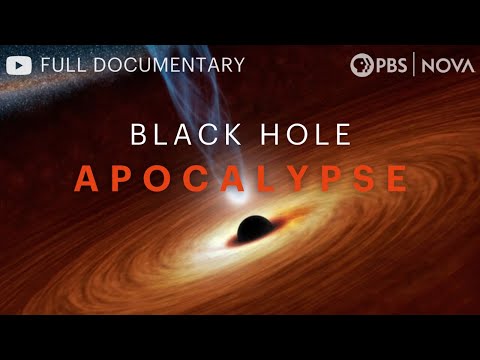
So, get this: there’s a black hole not too far from us. Yeah, you heard that right! It’s like finding out there’s a mysterious neighbor living just down the street who never says hi.
But instead of nosy gossip, scientists are buzzing with excitement. All that dark matter and crazy physics stuff is suddenly way more interesting! Imagine trying to wrap your head around something that just swallows everything up—and we’re talking light too.
This black hole is stirring up curiosity and sparking some serious scientific debates. I mean, who doesn’t want to know what secrets it holds? Buckle up; it’s going to be a wild ride through the cosmos!
Exploring the Terrifying Mysteries of TON 618: A Scientific Perspective on the Universe’s Most Massive Black Hole
Wow, the universe really knows how to keep us on our toes, huh? Let’s talk about **TON 618**, which is not just any black hole. It’s one of the **most massive black holes** ever discovered. We’re talking about a monster that’s roughly **66 billion times** the mass of our Sun! That’s more than you can even wrap your head around.
You might be thinking, “So what? It’s just a big space thing.” But here’s the thing: black holes like TON 618 make scientists go all giddy because they challenge what we think we know about physics and the cosmos.
But wait, where did it come from? Well, TON 618 is located about **18 billion light-years away** in a galaxy that’s far beyond what we can see with our eyes. Just put that into perspective – it takes light, which moves pretty fast at nearly 300 thousand kilometers per second, **18 billion years** to reach us from there! That means we’re looking back in time at how things were when the universe was still young.
Now, let’s break down some key points that make TON 618 so fascinating:
- Massive Size: As I mentioned earlier, this black hole’s mass is mind-blowing. Most black holes are many times more massive than our Sun but nothing comes close to TON 618.
- Quasar Connection: This beast is also associated with a quasar—an incredibly luminous object powered by energy released as material falls into the black hole. It pumps out more light than entire galaxies combined!
- Gravitational Influence: Because it’s so big, it has a strong gravitational pull. If it were in our Milky Way galaxy (thankfully it’s not), we’d be feeling its effects from miles away.
- Theoretical Insights: Studying TON 618 helps physicists understand how supermassive black holes form and grow over time. This could give clues about galaxy formation too!
A little emotional anecdote for you: Imagine standing on Earth and looking up at the night sky, trying to find constellations and stars. Now think about how every twinkle you see could potentially be hiding enormous forces like TON 618 out there in the vastness of space! It makes you feel both tiny and connected to something so much bigger than yourself.
Scientists continue to investigate these cosmic giants because each finding brings new puzzles to solve. TON 618 isn’t just a curiosity; it’s a glimpse into our universe’s past and future realities. So next time someone brings up black holes at a party, just remember: they might be talking about an awe-inspiring cosmic force that really challenges everything we know or thought we knew.
The mysteries of space are endless—like these colossal entities lurking in their own cosmic shadows—waiting for us to unravel their secrets one discovery at a time! Crazy stuff out there!
Exploring Sagittarius A*: Insights into the Supermassive Black Hole at the Center of Our Galaxy
The universe is full of mysteries, but when it comes to black holes, Sagittarius A* (pronounced “Sagittarius A-star”) takes the cake. This supermassive black hole, located at the center of our Milky Way galaxy, weighs in at an astonishing 4 million times the mass of our Sun. That’s a number so big it’s hard to wrap your head around!
So, what exactly is a black hole? Think of it like this: it’s a region in space where gravity pulls so much that nothing—not even light—can escape from it. This intense gravitational force is why we can’t see Sagittarius A* directly. Instead, scientists use various tools and methods to observe its effects on nearby stars and gas clouds.
Now, here’s something pretty cool: astronomers have been studying Sagittarius A* for decades. They’ve noticed how stars close to this black hole move in ways that are just plain weird compared to other parts of the galaxy. For instance:
- The stars orbiting around Sag A* do so at incredibly high speeds.
- Some travel at about 90% the speed of light! That’s just mind-blowing!
- This helps scientists estimate its mass based on how fast these stars are moving.
The thing is, you can’t just walk up and take a selfie with a black hole. So instead, in April 2019, scientists unveiled the first-ever image of a black hole’s shadow, which was from a different one called M87*. This was groundbreaking! But guess what? It only deepened our curiosity about Sag A*. Just imagine what more we could learn if we focused on our own galaxy’s mysterious giant.
And there are ongoing projects aimed at observing this cosmic giant even more closely! The Event Horizon Telescope (EHT) will keep sending us data. Scientists hope that with better technology and techniques, they might even unveil more secrets about how Sag A* formed and how it influences its surroundings.
Let’s not forget about something super intriguing—like the relationship between supermassive black holes and galaxy formation. It seems that these monsters play a critical role in shaping galaxies over billions of years. The way they consume matter affects star formation rates nearby. So if you think about it, learning about Sag A* could tell us loads about our own home—the Milky Way!
This whole field gives us such an exciting perspective on life and existence too! You’ve got this massive entity consuming everything around it while also shaping entire celestial systems—it kind of makes you think about balance in nature doesn’t it?
In summary:
- Sagittarius A* is huge—4 million solar masses!
- You can’t see it directly because light can’t escape its grasp.
- The movement of nearby stars reveals its presence.
- The study of this black hole could unlock insights into galaxy evolution!
Amazing stuff happens when you peer into the cosmos! Just sits there whispering secrets while casting shadows across time and space. So let yourself wonder; who knows what’s next as we keep looking deeper into these cosmic mysteries?
Exploring Gaia BH1: Insights into Stellar Evolution and Galactic Dynamics
You might have heard about this cool thing called Gaia BH1, right? It’s this black hole that’s, like, the nearest one to Earth we know of. It’s stirring up conversations in the scientific community because it helps us understand how stars evolve and how galaxies work. Pretty intriguing stuff, I’d say!
So, here’s the deal: black holes form when massive stars run out of fuel and collapse under their own gravity. They’re not just cosmic vacuum cleaners; they’re important players in the universe’s game. Gaia BH1 is about 1,600 light-years away in the constellation Ophiuchus. That’s really close in cosmic terms!
What makes Gaia BH1 so interesting? Well, it’s actually part of a binary system with a star that orbits it. This is key because studying how they interact gives us clues about both stellar evolution and black hole formation.
Here are some things we’re learning:
- Stellar Evolution: When massive stars die, they can form these incredible objects called black holes. By observing Gaia BH1’s companion star, scientists are piecing together what happens during that transformation.
- Galactic Dynamics: The way this black hole affects its surroundings helps us understand how black holes behave in our galaxy and others.
- Gravity’s Role: Black holes warp space-time around them. Studying their effects shows us more about gravity, perhaps even hinting at new physics!
So here’s a fun thought: when I was a kid, I used to stare up at the night sky dreaming of what could be out there. Learning about things like Gaia BH1 feels like discovering hidden treasures among those twinkling stars.
You see, each discovery isn’t just some nerdy statistic; it’s a piece of a much larger puzzle—how our galaxy formed and continues to evolve over eons. And every new insight into places like Gaia BH1 helps astronomers refine their understanding of our universe.
In short, Gaia BH1 isn’t just any old black hole; it’s got some serious stories to tell as we continue exploring its mysteries! And who knows? Maybe one day you’ll look up at those same stars and think about all the magic happening out there in space!
So, you know how there are things in the universe that just blow your mind? Like, we’re talking about massive structures hanging out in space, far beyond our reach. One of those wonders is a black hole. Yeah, a black hole! And guess what? There’s one not too far from us—well, in cosmic terms anyway.
A while back, scientists spotted this black hole called V616 Monocerotis, or V616 Mon for short. It’s chilling out around 3,000 light-years away. That may sound like forever to you and me, but in the grand scheme of the universe? It’s practically next door! Imagine standing in your backyard and realizing that a giant cosmic vacuum cleaner is just a few steps away—pretty wild, huh?
Black holes have always had this mysterious allure. They suck everything in—including light! Our brains kinda struggle with that concept. I mean, can you really grasp something that’s invisible yet so powerful? I remember reading about them as a kid and thinking they were the stuff of science fiction movies. But now they’re real, and real close!
What scientists are excited about isn’t just their proximity but also what studying them can reveal about our universe. When it comes to gravity and how objects move in space-time—yeah, space-time!—black holes could hold vital clues. Imagine piecing together how galaxies are formed or understanding more about the fabric of reality itself.
But let me tell you why this hits differently for me: I once stargazed with friends on a camping trip under a pitch-black sky. We spent hours spotting constellations and imagining worlds light-years away. To think that within that vastness lies something as strange as a black hole made our little human worries feel so insignificant yet awe-inspiring at the same time.
So yeah, V616 Mon isn’t just another name on some scientific list; it’s an invitation to look deeper into the cosmos and challenge our understanding of existence itself. And while we might never hop into a spaceship to check it out ourselves, knowing it’s there sparks curiosity—and curiosity is like fuel for further exploration!