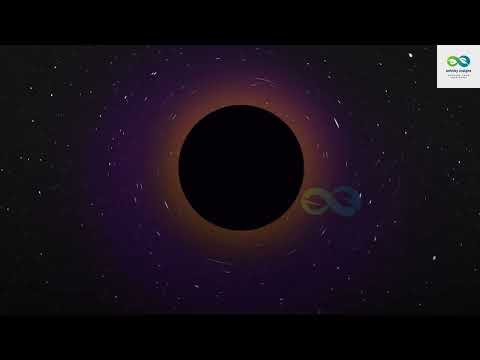
So, picture this: you’re at a party, and someone brings up black holes. You know, those cosmic vacuum cleaners that can gobble up anything that gets too close? I mean, who wouldn’t want to chat about the ultimate space phenomenon?
But seriously, black holes aren’t just one-size-fits-all. They come in different varieties, kinda like ice cream flavors. You’ve got your stellar ones, which are created when massive stars collapse. Then there are supermassive black holes lurking in the centers of galaxies—like the big bosses of the cosmos!
And let me tell you, diving into these mysteries feels like unraveling a cosmic detective story. There’s so much more beneath the surface; it’s wild! Ever thought about what life would be like near one? Or how they actually form? Buckle up, because we’re going on an adventure through these mysterious realms of space!
Unveiling TON 618: Analyzing the Reality Behind the Cosmic Phenomenon
Alright, so let’s talk about TON 618, one of the biggest and brightest black holes out there, and dive into its cosmic story. Black holes are these mind-bending objects in space that pull everything in with their massive gravitational force. And TON 618? It’s a supermassive black hole located around 18 billion light-years away from us. Crazy, right?
You might be thinking, “What’s so special about this one?” Well, TON 618 is considered a quasar—basically a super bright nucleus of a distant galaxy powered by that black hole. It’s like the lighthouse of the universe! Quasars like this one emit huge amounts of light and radiation as material falls into them, which makes them visible across vast distances.
The thing is, TON 618 has an estimated mass of about 66 billion solar masses. To put that into perspective, our sun could fit into it over 65 billion times! Imagine just how much matter has to collapse to create something that massive!
Now let’s break down some key aspects related to this cosmic phenomenon:
- Formation: Supermassive black holes like TON 618 likely formed from the collision and merging of smaller black holes or through gas accretion over billions of years.
- Brightest Object: It is one of the most luminous objects known, shining brighter than trillions of stars combined. That luminosity plays a huge role in helping us detect these distant black holes.
- Evolving Galaxies: Black holes are often found at the center of galaxies, and studying them can give insights into how galaxies evolve over time.
- Puzzles in Physics: TON 618 raises questions about how such massive black holes can exist in the early universe since it challenges our understanding of galaxy formation and growth.
A cool story related to understanding these powerful entities happened when astronomers first identified quasars. They thought they were stars at first because they were so bright! However, after some careful observation and research, they realized those lights came from materials spiraling into supermassive black holes—like amazing space tornadoes!
If you think about it,TON 618 isn’t just another point in the sky; it’s a reminder of how much we still don’t know about our universe. The more we study these cosmic giants, the better we get at piecing together the vast puzzle that is our cosmos. So next time you look up at the night sky—or even just ponder your existence—think about these crazy phenomena out there transforming matter in ways we’re only beginning to understand!
Exploring the 4 Distinct Types of Black Holes: A Comprehensive Guide to Cosmic Mysteries
Black holes are some of the most intriguing and mind-boggling objects in the universe. There are four distinct types of black holes, each with its own unique characteristics. The mystery surrounding them is a bit like diving into a cosmic ocean where not everything is clearly visible. Let’s break them down.
- Stellar Black Holes: These form when massive stars exhaust their nuclear fuel and can no longer support themselves against gravity. Picture a giant star collapsing under its own weight! Stellar black holes can be about 3 to several tens of solar masses. An example is V616 Monocerotis, which weighs in at around 9 to 13 times the mass of our Sun.
- Supermassive Black Holes: These beasts sit at the centers of galaxies and can be millions or even billions of times more massive than our Sun! They’re thought to have been created during the early universe, but how exactly that happened is still a hot topic among scientists. Sagittarius A*, sitting in our Milky Way, is one such supermassive black hole.
- Intermediate Black Holes: Ah, here’s where it gets interesting! These are kind of like the middle child in black hole families, weighing between stellar and supermassive black holes—think hundreds to thousands of solar masses. They’re harder to find and understand, leading some folks to wonder if they even exist! Researchers spotted one recently in a globular cluster called 47 Tucanae, sparking debate about their role in cosmic evolution.
- Primordial Black Holes: Now we’re getting into theoretical territory! These tiny black holes might have formed just after the Big Bang due to fluctuations in density—like little nuggets scattered throughout space-time. They could range from tiny pea-sized to massive ones weighing as much as stars! Some researchers think they could explain dark matter’s mysteries but finding evidence for them? That’s another story.
The thing with black holes is that they’re not just voids; they warp space-time around them, creating gravitational pulls so strong that not even light can escape once it crosses the event horizon—the point of no return. It’s like a cosmic trap door!
My friend once told me about trying to measure how close you could get to a black hole without getting sucked in. It blew my mind just thinking about it! He said you’d need powerful instruments and maybe some luck too—but mostly you’d just see your life flash before your eyes if you got too close.
In essence, while we’ve made strides toward understanding these fascinating giants lurking out there, there’s still so much left to explore. Every type of black hole adds another layer to our understanding of the universe—kind of like peeling back layers on an onion but way cooler!
Exploring the Mysteries of Supermassive Black Holes: Insights from Modern Astrophysics
Supermassive black holes are one of those cosmic enigmas that really get you thinking. You might have heard that they exist at the centers of almost every galaxy. The thing is, these massive beasts can weigh millions, even billions, of times more than our Sun! What’s the deal with them?
So, first up, let’s break it down a bit. A black hole itself is formed when a massive star collapses under its own gravity. But supermassive black holes? They’re like the giants of the universe. They’re thought to grow over time by merging with other black holes and gobbling up gas and dust from their surroundings.
- Formation Theories: One theory is that they start as regular black holes and gain mass gradually. Another idea is that they formed quickly in the early universe from large clouds of gas collapsing.
- How We “See” Them: You can’t actually see black holes since they don’t emit light. But we can observe their effects on nearby stars and gas. For instance, swirling gas around a black hole heats up and emits X-rays, which we can detect with telescopes.
- The Milky Way’s Black Hole: Our home galaxy houses a supermassive black hole named Sagittarius A*. It’s about 4 million times the mass of our Sun! Astronomers have tracked stars orbiting this mysterious object for years.
A cool anecdote: back in 2019, astronomers got a glimpse of another supermassive black hole’s shadow—this was done by capturing an image of the event horizon (that point of no return). Can you imagine how mind-blowing it must be to see something like that? It’s like peeking into a different dimension!
The study of these cosmic titans helps us understand not just their nature but also how galaxies evolve over time. It’s like unraveling a grand story where every chapter reveals more amazing twists!
- Jets and Outflows: Supermassive black holes sometimes eject high-speed jets made up of particles. These jets can extend far beyond their host galaxies and influence star formation in surrounding areas.
- Matter Accretion: When matter falls into a supermassive black hole, it doesn’t just vanish; it forms an accretion disk first! This disk glows brightly due to friction as materials spiral inward.
So yeah, supermassive black holes are complex entities that challenge what we know about physics! As modern astrophysics progresses, we’re constantly uncovering new insights about their role in shaping not only galaxies but also the entire universe itself.
If you find yourself sitting under the stars one night pondering these mysteries, remember: you’re part of an endless quest for knowledge!
You know, black holes are one of those mind-bending things in the universe that can really get you thinking. They’re like cosmic vacuum cleaners with a whole lot of mystery wrapped up in them. When we talk about black holes, though, it’s not just one kind. There’s a whole variety out there, each with its own quirks and traits.
I remember this one time I was sitting around with friends, chatting about space—like you do—and someone brought up the idea of supermassive black holes. You could see everyone’s eyes widen! These bad boys hang out in the centers of galaxies and can weigh billions of times more than our sun. Imagine a monster that big just chilling there, sucking everything nearby into its gravitational grip. It’s wild to think about how they might play a role in shaping galaxies as they grow and evolve over time.
Then you’ve got stellar black holes, which form when massive stars run outta fuel and collapse under their own weight. It’s kinda poetic, right? A star that lived so brightly ultimately becomes something so… dark. And if you’re still with me on that emotional rollercoaster, there are also intermediate black holes lurking around—these ones aren’t fully understood yet but are believed to sit somewhere between stellar and supermassive black holes.
But wait—there’s more! There’s even talk about primordial black holes from the early universe. They might be tiny compared to their cousins but could pack quite a punch if they’re out there floating around in space even now.
Seriously, thinking about all these different kinds just blows my mind! Each type has its own story to tell and mysteries to unravel. We’re still learning so much about them and how they fit into the grand tapestry of the cosmos. So next time you look up at the stars or catch a glimpse of a documentary on space, remember: behind all that beauty lies some pretty wild stuff waiting to be discovered!