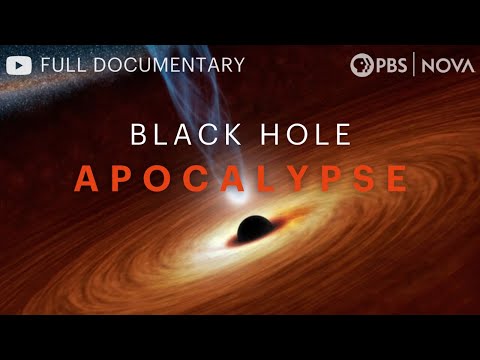
Alright, imagine this: you’re chilling at a party, and someone casually mentions they just got back from a “black hole adventure.” You’re like, wait, what? How do you even go on that trip?
Well, here’s the thing. Black holes are these mind-bending cosmic beasts that can suck up everything in their path. Stars, gas, and even light—gone! Just picture it: a giant vacuumer in space, but way cooler.
And it’s not just sci-fi stuff! People have been trying to understand black holes for centuries. From ancient stargazers to today’s super-smart astrophysicists, it’s like this ongoing quest for the ultimate cosmic mystery.
So buckle up! We’re diving into how our thoughts about black holes have morphed over time. You ready? Let’s get into it!
Exploring the Intriguing Evolution of Black Hole Discoveries: A Comprehensive Summary
Sure thing! Let’s take a little trip through the amazing history of black hole discoveries. It’s like a cosmic treasure hunt, really. So here we go!
Black holes are these **mysterious** objects in space that, to the untrained eye, might seem just like science fiction. But they’re real and they’ve been a huge part of astronomy for over a century now. The thing is, they don’t actually “suck” everything in like a vacuum cleaner. Instead, they have an incredibly strong gravitational pull.
First off, the idea of black holes started back in the 18th century thanks to **John Michell**. He was this British clergyman who proposed that there could be stars with such strong gravity that not even light could escape. It’s totally wild to think about it! But it wasn’t until Einstein came along that things started to heat up.
Einstein’s theory of **general relativity**, published in 1915, changed everything. He laid out the groundwork for understanding how gravity works on a cosmic scale. Basically, mass curves space-time around it—like putting a heavy ball on a trampoline and watching it dip down. In 1916, **Karl Schwarzschild** found solutions to Einstein’s equations that hinted at this “invisible” entity we now call black holes.
As time went on, more scientists jumped into this cosmic pool. In the 1960s, **Roger Penrose** helped show how black holes could form from the collapse of massive stars. You know those super-duper massive stars? When they run out of fuel, they go through something called a supernova explosion and can leave behind black holes.
But here’s where it gets cooler—eventually astronomers began finding evidence for their existence! In the late 20th century, researchers discovered something called **X-ray binaries**, which are pairs of stars where one is sucking material from its companion star. The X-rays emitted from this accreting material gave strong hints about unseen companions—guess what? Yep! Potential black holes lurking there!
Then there was the big moment in 2019 when scientists involved with the Event Horizon Telescope managed to capture an image of a black hole’s shadow in M87 galaxy. I mean, wow! It was like seeing Bigfoot or Nessie for real!
So what’s next? Researchers are still studying these fascinating objects using gravitational waves—ripples in space-time caused by colliding black holes that got detected by LIGO starting in 2015. This opened up an entirely new way to explore the universe; they basically turned our ears into telescopes!
In summary:
- John Michell<!– proposed stellar bodies with immense gravity.
- Einstein’s general relativity laid down how mass affects space-time.
- Karl Schwarzschild introduced solutions leading to modern black hole theory.
- X-ray binaries provided indirect evidence for their existence.
- The image from Event Horizon Telescope shattered perceptions about what we can see!
- Gravitational waves opened entirely new avenues for exploration.
The journey through understanding and discovering black holes has been truly fascinating! Just think about all those brilliant minds who laid down groundworks and theories that have brought us here today—right at the edge of understanding one of our universe’s biggest mysteries! Isn’t science just thrilling sometimes?
Exploring Distant Worlds: The Science Behind Faraway Planets and Their Mysteries
Exploring distant worlds is like taking a road trip through the cosmos. Seriously, just think about it! Some of these planets are so far away that it feels like we’re trying to send a postcard to an alien on the other side of the universe. But, scientists are up for the challenge, and here’s how they do it.
First off, let’s talk about how we find these distant planets. The most popular method is called the transit method. It’s simple: when a planet passes in front of its star, it blocks a bit of its light. This dip in brightness is what astronomers look for. You got it? It’s kind of like when you hold your hand up to block the sun just to peek at something glowing behind it!
Then there’s the radial velocity method. Basically, stars wobble a smidge when they have planets orbiting them due to gravitational pulls. By measuring that wobble, scientists can infer the presence of a planet. Imagine you’re on a merry-go-round and someone pushes you; you’d feel yourself getting pulled around slightly, right? Same concept here!
Now on to some really wild planets. Have you heard of “hot Jupiters”? These gas giants orbit super close to their stars, making them incredibly hot—sometimes hotter than many ovens! They’re basically exoplanets (those beyond our solar system) that seem pretty weird compared to what we know here at home.
And what about water? We’ve been obsessed with finding it because where there’s water, there might be life! On moons like Europa (one of Jupiter’s buddies), there could be vast oceans beneath icy surfaces, stirring up excitement for potential life forms.
And talking about life—sometimes I get emotional thinking about what might be out there. Picture us discovering an entire ecosystem on another planet or moon. It feels surreal but also hopeful, doesn’t it?
But things get even crazier when you throw black holes into this mix. These cosmic monsters can warp space and time itself! Imagine them as cosmic vacuum cleaners sucking everything in that gets too close. If our universe were a movie set and we had distant planets as stars in one scene, black holes would be those brief moments that leave everyone holding their breath.
Speaking of which, researchers are constantly trying to understand how black holes affect surrounding celestial bodies. Planets near black holes get influenced by their intense gravity—it’s all about balance in this vast universe.
So yeah, investigating these distant worlds isn’t just about checking boxes or gathering data; it’s like piecing together an intricate puzzle that reveals our existence and maybe much more than ourselves. You feel me?
In summary:
- The transit method helps find new planets by observing dips in starlight.
- Radial velocity measures stellar wobbles caused by orbiting planets.
- Hot Jupiters challenge our ideas of planetary systems.
- Water discovery leads us closer to understanding life beyond Earth.
- Black holes offer insights into how celestial bodies interact under extreme conditions.
So whenever you gaze at the night sky or read about faraway worlds and their mysteries, remember—you’re not just reading; you’re partaking in humanity’s age-old quest for knowledge—and who knows what amazing things we’ll discover next!
Black holes. Just the name makes you think of something mysterious, right? It’s like they’re the ultimate cosmic vacuum cleaners, sucking everything in around them without a trace. I remember the first time I really thought about them. I was watching one of those space documentaries, and they talked about how black holes were formed from collapsing stars. It blew my mind! I mean, even stars can meet their end. So poetic and kinda sad if you think about it.
The history of black holes is just as intriguing as the things themselves. It all started way back in the early 20th century when scientists were trying to understand the fabric of our universe. Albert Einstein’s theory of general relativity opened up a whole new realm of possibilities! A lot of folks thought he was out there in left field with his ideas about gravity bending space-time, but look at us now!
Through time, scientists argued over whether these black holes even existed or not. Some believed they were just theoretical constructs—like unicorns but in space! Then came the amazing breakthrough by John Archibald Wheeler in the 1960s who actually coined the term “black hole.” Can you imagine being the one to give such a dramatic name to an astronomical phenomenon? It’s like naming a pet dragon!
And then you had Stephen Hawking, who added this wild twist to things by suggesting that black holes might not be completely black after all. Can you believe that? He introduced this idea called Hawking radiation, which implies that they can actually emit radiation and lose mass over time. That kind of flipped everything on its head for many scientists.
The modern era has brought more amazing revelations too! With technology getting better every day—like those incredible telescopes—we’ve finally had visual proof! Just a few years ago, we got our first image of a black hole’s event horizon from the supermassive one at the center of galaxy M87. Talk about a jaw-dropper!
Thinking back to all this history makes me appreciate how much curiosity and determination have driven humanity forward through science. Black holes represent not only cosmic enigmas but also that persistent spark within us to keep questioning what we know and exploring what lies beyond our sight.
So yeah, when you contemplate black holes, it’s more than just outer space; it’s also about our journey as thinkers and dreamers trying to make sense of an endlessly fascinating universe. And who knows what other astounding discoveries await us?