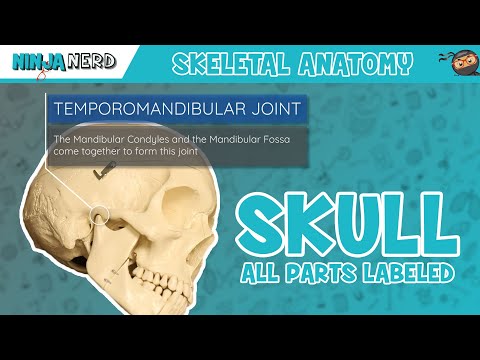
You know, I once tried to impress my friends by sharing a fact about the human skull at a party. I ended up getting way too complicated, and all I got was blank stares. Turns out, talking about bones isn’t exactly the life of the party! But here’s the thing: our skulls are more than just hard hats for our brains.
Think about it—your skull is like this super cool puzzle made up of different pieces, all working together to protect your noggin. It’s wild how so much complexity fits right above our necks. So let’s take a chill look at what makes up this bony fortress and uncover some mind-blowing facts along the way!
Unraveling the Evolution of the Complex Human Brain: Key Factors and Scientific Insights
Sure, let’s talk about how our brains evolved and why it’s pretty awesome!
The human brain is like this incredibly complex network that has developed over millions of years. It’s not just about being smart; it’s about surviving and adapting to different environments. You might say our brains became more complex because we needed to be more social, invent tools, or even create art. It’s all part of the package that makes us who we are.
So, what really kicked off this evolution? Well, here are some key factors:
- Environmental Changes: As climate and landscapes shifted, early humans had to adapt. Basically, when food was scarce or when they had to deal with new predators, those with better problem-solving skills survived better.
- Social Structures: Our ancestors were probably living in groups which meant they needed to communicate effectively. Strong social bonds helped them work together for hunting or gathering food.
- Tool Use: Early humans started making tools around 2.6 million years ago! The need for creating complex tools likely pushed brain development since those who could innovate and improve their tools were at an advantage.
- Cognitive Development: As time went on, our brains got bigger and more organized. This increase in size wasn’t just fluff; it meant more room for neurons—the cells that help us think!
Just imagine a moment from early human life—imagine a group trying to catch a mammoth. They had to communicate the plan clearly and think quickly when things went wrong. That kind of teamwork would have selected for smarter individuals over generations.
Now, let’s not forget about the birth canal! That sounds odd but hear me out. Human babies are born smaller than you might expect from such a large-brained species because if they were any bigger, it’d be tough for mothers to give birth. So there’s this trade-off between brain size and safe childbirth.
Also interesting? The structure of our skulls changed too! Our skulls became lighter as we evolved which allowed for a larger brain without weighing us down too much. This adaptation helped support our big brains while still being practical.
So yeah, it’s all interconnected! The complexities of the human brain didn’t happen overnight; they’re like a long story shaped by environmental needs and social interactions. Every twist and turn along the way added another layer to this incredible organ we carry around today.
You follow me? It’s wild just thinking about how all these elements fit together over such a long time! And isn’t it fascinating that we’re still learning about these changes? Each discovery helps us appreciate not just where we’ve come from but also where we might go next in understanding ourselves as humans!
Understanding the Structural Anatomy of the Brain and Skull: A Comprehensive Guide in Neuroscience
The brain and skull are both pretty amazing, right? I mean, just think about it. Inside that hard, protective shell we call the skull is this incredibly complex organ that controls everything we do. It’s like a supercomputer wrapped in a squishy blanket of gray matter. So, let’s break down some interesting bits about their structure.
The Skull
The skull has two main parts: the cranium and the facial bones. The cranium is the top part that protects your brain, while the facial bones make up the front part of your head where your eyes, nose, and mouth hang out.
You know how sometimes you see those fancy diagrams showing all the bones in the skull? They’re usually grouped into eight cranial bones and fourteen facial bones. Crazy, huh? Here’s a quick rundown:
- The frontal bone—your forehead.
- The parietal bones—on the sides and roof.
- The occipital bone—at the back.
- The temporal bones—around your ears.
- The sphenoid bone—like a bridge at the base.
- The ethmoid bone—in between your eyes.
Each piece has its own job to do! These bones connect via joints called sutures. Think of sutures like tiny zippers holding everything together securely.
The Brain
Now, moving on to our superstar—the brain! It’s divided into several sections. We’ve got:
- The cerebrum: The biggest part responsible for thoughts and actions.
- The cerebellum: Right at the back; helps with movement and balance.
- The brainstem: Connects to your spinal cord; controls basic life functions like breathing!
Inside these areas are billions of neurons (that’s just fancy talk for nerve cells) working together to send messages around like an internal communication network.
Let’s talk about texture for a second. You’ve probably heard people say our brains are like jelly or tofu—and they’re kinda right! The outer layer is called the cerebral cortex, which is wrinkly (to fit more neurons!) and actually quite delicate.
Protective Layers: Meninges
But wait! There’s more! Both the brain and spinal cord are covered by protective layers called meninges. These layers have three parts:
- Dura mater: The tough outer layer that keeps things safe.
- Arachnoid mater: The middle layer with a web-like structure.
- Pia mater: The thin inner layer hugging every groove of your brain.
So basically, they act like cozy blankets keeping your brain safe from bumps or bruises.
Cranial Nerves & Blood Supply
Now let’s not forget about cranial nerves. There are 12 pairs running from your brain to various body parts to help with sense (hello sight!), movement, and tons more. Plus, there’s blood supply through arteries bringing oxygen-rich blood so all those neurons can keep firing away!
It might even feel overwhelming—a bit like trying to make sense of a puzzle with thousands of tiny pieces—but when you think about it all working together? It’s incredibly cool.
Understanding how these structures work helps us appreciate not only what makes us human but also what goes wrong when something happens neurologically. Each function connects us in ways we don’t always notice until they’re disrupted.
So next time you’re learning or talking about neuroscience—or even just daydreaming about how amazing you are—remember that behind every thought or action lies this intricate dance happening within your skull! Isn’t that wild?
The Timeline of Brain Evolution: Understanding the Science Behind Neural Development
The human brain is like this super complex puzzle, and figuring out its evolution is like piecing together a really old, dusty map. So, let’s talk about how our brains have developed over millions of years and how that connects to the skull that keeps it all safe.
First off, brain evolution started way back with our ancient ancestors. The very first brains were pretty simple, designed mostly for basic functions like breathing and eating. Think about it: early life forms didn’t need fancy thoughts; they just needed to survive.
As time passed, brains got bigger and more intricate. You know, around 500 million years ago, fish started to appear with slightly more complex brains. These guys had to navigate their watery world—so they developed better senses and motor skills. Ever seen a fish dart away from danger? That’s brain power at work!
Then came the amphibians. They took the leap onto land (literally), and guess what? Their brains adapted too! They developed parts that dealt with vision and movement more efficiently. It’s kind of cool to think that our distant relatives were also learning how to hop around instead of just swimming.
Moving on to reptiles—these creatures took things up another notch around 200 million years ago. Their brains evolved further for better hunting strategies and social interactions within their groups. Seriously! Imagine dinosaurs coordinating their attacks or navigating their territories; it all comes down to brain power.
Now, here is where things get really interesting: mammals showed up! And with them came some massive changes in brain structure. The mammalian brain became larger relative to body size compared to reptiles. Why? Because mammals liked to socialize and needed advanced problem-solving skills! Talking about your furry friends—ever see a dog figure out how to open a door? Yeah, that’s thanks to its clever little brain.
Fast forward a bit more to primates—the group we belong to. Our brain kept growing significantly over the last 2-3 million years! This growth has been connected with tool use and language development; just imagine those early humans using sticks for digging or chatting around fires!
Now when you think about our skull structure, it’s important because it protects our ever-growing brain. The skull had to adapt alongside the changes in brain size and complexity as humans evolved into what we are today. Our skulls have these cool features like rounded shapes that accommodate large brains while keeping everything secure inside.
So when we peek into the timeline of brain evolution—like an epic story stretching back hundreds of millions of years—it helps us understand not only where we came from but also why our neural development connects so tightly with our unique skull structure.
In short:
- The earliest brains were small and focused on basic survival.
- Fish introduced more complex structures for navigation in water.
- Amphibians needed adaptations for life on land.
- Reptiles developed social interactions that required smarter brains.
- Mammals showed significant increases in relative brain size.
- Primates’ evolution led directly towards language and tool use.
So next time you think about your own noggin’, remember it’s not just some squishy mass – it’s the result of millions of years of evolution working hard under that protective skull! Isn’t that something?
You know, the human skull is like this incredible jigsaw puzzle that we all carry around. I mean, it’s not just a protective helmet for our brain; it’s a complex structure with a story to tell. When you think about it, it’s kind of mind-blowing how many pieces come together to form something so essential.
I remember once going to an exhibit at a museum where they had real human skulls on display. There was this one skull that really caught my eye—it belonged to a person who had lived a pretty tough life. You could see the signs of wear and tear, maybe from injuries or accidents. It made me realize how this bony structure holds so much history—like every crack and mark tells a story about who that person was, what they experienced.
So let’s break it down, shall we? The skull isn’t just one solid piece; it’s made up of 22 bones! Yup, 22. These include the cranial bones that protect the brain and the facial bones that shape our appearance and help us chew food or make expressions. Think about how cool that is! Each bone fits together in perfect harmony like an architectural masterpiece.
And here’s something interesting: some of these bones are quite small yet super important. For example, the ossicles in your ear are tiny little bones that help you hear—just imagine how something so small can have such a big impact on your life!
But there’s more to it than just bones meeting each other at joints called sutures. This whole structure gives us our unique features—like eye sockets that determine your gaze or cheekbones that define your smile. Isn’t it wild how different we all look? All thanks to this intricate assembly of bone.
Let’s not forget about the fact that our skull has evolved over millions of years! Human ancestors faced different challenges—they needed their brains to grow larger for better problem-solving and tool-making abilities. The way the skull has adapted reflects our journey through survival, culture, and even social interactions.
It might seem like just a hard shell at first glance, but once you start looking closer at the human skull, you see layers upon layers of complexity and beauty intertwined with our very essence as humans. Each wrinkle tells a tale; each curve is part of who we are as individuals.
So next time you think about the skull—whether you’re sketching your favorite cartoon character or studying anatomy—take a moment to appreciate its complexity and what it represents in terms of our journey through life! Pretty rad if you ask me!