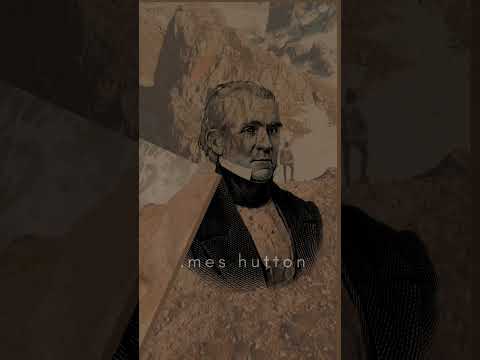
You know how some people can look at a rock and just see, well, a rock? But then there are those who see history written in layers? That’s where James Hutton comes in. This dude is like the granddad of modern geology.
Picture this: It’s the late 1700s, and Hutton’s wandering around Scotland, scratching his head at cliffs and valleys. He’s thinking about how old the Earth really is. I mean, like really thinking! His ideas were so far ahead of his time that some folks thought he was just a bit bonkers.
But here’s the kicker: Hutton’s thoughts laid the groundwork for everything we now know about Earth sciences. Seriously! His theory of uniformitarianism—that things happening now are pretty much what shaped everything before—changed the game. It’s like he flipped a switch that turned on a whole new way of looking at our planet.
So buckle up! We’re going to take a chill stroll through Hutton’s world and see how his wild ideas still shape what we learn today. You in?
Exploring Hutton’s Influence on the Evolution of Modern Science: A Legacy of Geology and Natural Philosophy
So, let’s talk about James Hutton, a guy who really changed the game when it comes to understanding our planet. Hutton, often called the father of modern geology, had some pretty radical ideas back in the late 1700s. His work laid the groundwork for how we view Earth’s processes today. He was all about that slow and steady change—like watching paint dry but way more interesting!
Hutton’s Big Idea
What’s fascinating is Hutton introduced the concept of deep time. This means that Earth’s history stretches back millions of years, much longer than what people were thinking at the time. Before him, most folks believed in a young Earth, shaped mainly by sudden biblical events. But Hutton? He argued that processes like erosion and sedimentation occur over eons. He famously said, “The present is the key to the past.” Basically, he thought if you want to understand how things got here today, look at how they work now.
The Rock Cycle
Hutton also championed what we now call the rock cycle. Imagine it like a never-ending loop where rocks break down into soil, get squished into new sedimentary rocks over millions of years, then maybe get melted into magma and turned back into igneous rocks. It’s a constant transformation! This idea helped scientists grasp how different rock types form and change over time—huge for both geology and other natural sciences.
Fieldwork and Observations
His passion wasn’t just about sitting in a library; he was out there observing nature firsthand—like a geologist vlogger before that was even a thing! One famous spot he studied is SICCAR POINT in Scotland; there you can see layers of rock piled on top of each other at crazy angles. It was this fieldwork and observation-driven approach that set standards for scientific research. You could say he paved the way for later scientists who value hands-on learning.
Natural Philosophy Meets Geology
Now let’s not forget that during Hutton’s time, science wasn’t as divided as it is today. The lines between philosophy and science were kinda blurred. While modern science often keeps these subjects apart, Hutton mixed them masterfully! His ideas influenced thinkers like Charles Lyell and eventually Charles Darwin too! Yep—without Hutton’s insights on gradual geological changes, who knows if Darwin would’ve framed his theory of evolution quite the same way?
The Legacy Today
So here we are today with technology to study these processes down to tiny details—we’ve got satellite imagery showing us erosion or climate changes in real-time! But honestly? A lot of this goes back to those foundational thoughts by James Hutton. His focus on observation, slow geological processes, and thinking deeply about nature have shaped how we learn about our planet now.
Of course there are modern refinements since then—our tools are way cooler—but you gotta respect where it all started! In many ways, every time you read about Earth sciences or geology today, you’re echoing ideas from this Scottish visionary whose thoughts were so far ahead of his time that they still hold weight centuries later!
That legacy? It’s not just about rocks; it has influenced environmental science too! The understanding that everything is connected—from tectonic activity shaping landscapes to how ecosystems function—is part of this grand narrative he began to weave together all those years ago.
So next time you hear about geology or ponder our planet’s vast history during a hike or while staring at a rock (hey—they’re more interesting than they look!), just remember: you’re standing on some serious historical ground grounded by good ol’ James Hutton!
James Hutton: Pioneering the Foundations of Earth Science and Geology
James Hutton was a Scottish geologist, chemist, and naturalist who lived in the 18th century. He’s often called the “father of modern geology.” Why? Because he fundamentally changed how we understand the Earth and its processes. So what’s his story?
Born in 1726, Hutton grew up to love nature. He spent time exploring Scotland’s landscapes, which sparked his curiosity about how those rocks and landforms came to be. One day, while observing some unique rock formations, he had a lightbulb moment. He realized that Earth’s surface changes over time through natural processes—like erosion and sedimentation.
The key idea that Hutton introduced was “deep time.” This concept suggests that the Earth is way older than people thought back then. Instead of just thousands of years, he argued for millions—even billions! Imagine trying to picture that kind of timescale; it’s mind-boggling!
Hutton also proposed something called the rock cycle. Basically, he explained how rocks can change from one type to another over time through processes like melting, eroding, and solidifying again. Picture this: a granite rock wears down into sand over countless years due to wind and rain. That sand might eventually become sedimentary rock under pressure, only to be transformed again later on. Just wild!
You know what else? Hutton was all about observation and evidence. He didn’t just guess or assume things; he studied the layers of soil and rock strata around him. His work culminated in a massive book called The Theory of the Earth, published in 1788. In it, he laid out his thoughts on geology and how these layers tell a story about our planet.
But here’s where it gets really interesting: Hutton’s ideas influenced other big thinkers too! One notable follower was Charles Lyell, who further spread these geological concepts in the 19th century. Lyell’s work laid the foundation for Darwin’s theories on evolution by pushing forward our understanding of geological processes over immense periods.
So you might wonder—how does this affect us today? Well, Hutton set the stage for modern earth science by emphasizing that understanding Earth’s age and processes helps us make sense of everything from fossil records to climate change impacts today.
In short:
- James Hutton revolutionized geology with concepts like deep time.
- The rock cycle explains how rocks transform over eons.
- His observations led to critical scientific advancements.
- He influenced future scientists like Charles Lyell, linking geology with biology.
To wrap it up—Hutton’s pioneering work gave us tools not only for understanding Earth but also for looking at life itself through a geological lens. Kind of amazing when you think about all that groundwork he laid!
James Hutton’s Pioneering Contributions to the Modern Understanding of Deep Time in Earth Sciences
James Hutton is one of those names you bump into in Earth sciences, and for good reason! He’s often called the father of modern geology, and his work laid the groundwork for what we now know about the age of our planet. Like, imagine being around in the 18th century, questioning everything everyone else thought about Earth’s history! That was Hutton.
He had a pretty radical idea: the Earth was much older than people believed. Before him, folks thought the Earth was only a few thousand years old. Hutton showed that geological processes happen over millions of years. He argued that the same forces shaping our planet today—like erosion and sedimentation—have been at it for ages. Seriously, he walked around observing rocks and formations, taking mental notes about how they changed over time.
One of his most famous concepts is called “uniformitarianism.” It’s kind of like saying “the present is the key to the past.” In other words, if you see a river cutting through rock today, it’s safe to assume something similar happened ages ago. This idea was revolutionary because it shifted thinking from supernatural explanations back to natural processes.
Hutton also introduced the concept of deep time, which is basically understanding that Earth’s history spans billions of years. Think about how wild that is! When he proposed this idea, he not only changed geology but also influenced biology and evolutionary theory later on. For instance, Charles Darwin took these ideas into account when developing his theories on evolution.
You know that moment when you realize something huge? Well, Hutton had one while exploring a place called Siccar Point in Scotland. There he found layers of rock tilted at an angle next to horizontal layers. This wasn’t just cool to look at; it was proof that geological processes had occurred over a long stretch of time—like really long! That site is practically a shrine for geologists today.
So here are some key points about Hutton’s contributions:
- Geological Time Scale: He advanced our understanding that Earth operates on its own timeline.
- Layers and Processes: His observations led to recognizing sedimentary layers reveal Earth’s history.
- Foundation for Future Scientists: His work influenced others like Darwin and helped shape modern science.
In essence, James Hutton turned geology from a study of rocks into an exploration into our planet’s ancient past. His ideas may have seemed out there back then—but they opened up so many doors for what we understand now about deep time and Earth’s dynamic nature.
So, let’s chat a bit about James Hutton and his impact on geology. You know, he’s often called the “father of modern geology,” which is pretty cool if you think about it. Imagine him back in the 18th century, roaming the Scottish Highlands, collecting rocks and peering into deep time. It’s like something out of an adventure novel!
Hutton had this radical idea that the Earth wasn’t just a random collection of rocks but a dynamic system shaped by natural processes over unimaginably long periods. He looked at things like sedimentary layers—you know, those cool strata you see in cliffs—and thought, “Hold on a minute. These didn’t just pop up overnight.” This was revolutionary! He proposed that geological features we see today are the results of processes that have been happening for millions, even billions, of years. It’s like he cracked open a window to the Earth’s history.
Take a moment to appreciate how his ideas changed everything. Before Hutton, people believed in this idea called catastrophism—where major events like floods or earthquakes explained Earth’s changes. But Hutton introduced uniformitarianism: “The present is the key to the past.” That means studying current processes helps us understand ancient events. Pretty neat concept!
Now, let’s fast forward to today. His influence is everywhere in modern earth science. Think about plate tectonics and how those big slabs of Earth move around over millions of years—Hutton set some groundwork for that understanding! His work laid paths for others like Charles Lyell and later scientists who built upon his ideas.
Sometimes I think about how connected we are to these concepts when we look at mountains or canyons formed over eons—it feels almost poetic! When I hike through rocky paths or stand beneath towering cliffs, I can’t help but feel humbled by their story. They’ve seen more than any one of us will ever know.
So yeah, reflecting on Hutton’s legacy really makes me appreciate not only our planet’s history but also human curiosity—the endless quest to explore and understand where we come from and how everything fits together in this vast cosmic puzzle. It’s amazing how one person’s insights can ripple through time and change our perspective of the world!