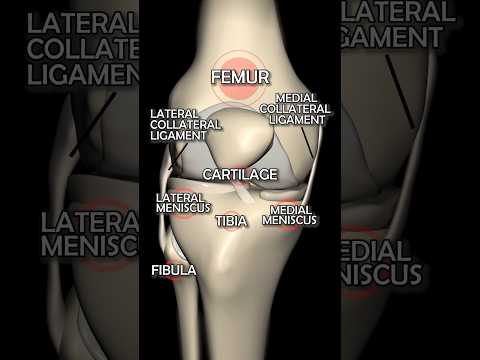
You know that moment when you trip over your own feet and your knee does that weird twist? Yeah, it’s like your body’s way of saying, “Whoa there!”
But seriously, have you ever stopped to think about what’s actually going on in there? The human knee is a complex puzzle, and it’s doing a lot more than just helping you walk or run.
It’s like the unsung hero of our body. Every time you bend down to tie your shoes or chase after a bus, it’s working hard behind the scenes.
Ready to take a peek at this amazing joint? Let’s break down its key components and see how they all work together. You might just gain a new appreciation for that tricky knee of yours!
Understanding Knee Joint Ligaments: Anatomy, Function, and Implications in Sports Science
So, let’s chat about something that gets a lot of action in our bodies: the knee joint! I mean, when you think about it, every time you run, jump, or even just stand up, your knees are hard at work. But what’s really going on with those ligaments in there? Well, grab a snack and let’s break it down.
The knee is basically made up of bones, cartilage, and ligaments. Those ligaments are super important because they connect the bones at the joint and help keep everything stable. The big players here are the anterior cruciate ligament (ACL) and the posterior cruciate ligament (PCL). They’re kind of like crossed strings in a tennis racket—helping to control movement in different directions.
Now, let’s get a bit nerdy for a second. The knee has four main ligaments:
- Anatomically speaking, there are two collateral ligaments: the medial collateral ligament (MCL) and the lateral collateral ligament (LCL). These guys keep things steady side-to-side.
- The ACL prevents your shin bone from sliding out in front of your thigh bone. It’s super important for activities like pivoting or quickly changing directions.
- The PCL does the opposite—it keeps your shin bone from sliding backward under your thigh bone. It kicks in a lot during sports where you need to backpedal or stop suddenly.
Imagine playing soccer. You’re dribbling down the field when suddenly—you go to change direction fast! That’s when your ACL comes into play. It’s doing its best to keep your knee from going all wonky while you make that sharp turn. But here’s where things can get messy; if you twist awkwardly or land wrong after jumping, that ACL might just say “nope!”—leading to tears or sprains.
But don’t forget about those MCLs and LCLs! They’re crucial too. If someone happens to knock into you from the side—like during a basketball game—a sprain could happen there as well. And let me tell you, being sidelined due to an injury like that can be super frustrating!
Now think about recovery times; an ACL tear might mean surgery and months of rehab—yikes! On the flip side, MCL injuries can often heal more on their own with rest and physical therapy.
So what implications does all this have for sports science? Well, understanding how these ligaments function can totally change how athletes train and recover. It influences everything from strength training programs to rehab exercises designed for getting athletes back on their feet faster.
At its core, knowledge about knee joint ligaments helps everyone: coaches figuring out training strategies, players avoiding injuries by strengthening key muscles around those joints—and even weekend warriors looking to stay active without ending up on crutches!
So yeah—it’s not just anatomy; it connects deeply with performance in sports and everyday life too! Isn’t it cool how something as simple as knowing more about our knees can empower both pro athletes and amateurs alike?
Understanding the Anatomy of the Left Knee: A Comprehensive Overview in Human Biology
The left knee, like its counterpart on the right, is a pretty cool piece of engineering in your body. It’s made up of several key components that all work together to keep you moving, bending, and doing all those everyday activities we often take for granted.
So, let’s break it down. The knee joint is primarily made up of four major parts:
- Bones: The knee contains three main bones: the femur (thigh bone), tibia (shin bone), and patella (kneecap). They fit together in a way that allows for smooth movement.
- Cartilage: Between these bones is something called cartilage. It’s this soft tissue that acts like a cushion, helping to absorb shock and reduce friction during movement. There are two types of cartilage in the knee—the articular cartilage on the ends of bones and the menisci, which are crescent-shaped pads that stabilize the knee.
- Ligaments: Ligaments are strong bands of tissue that connect bones to each other. There are four main ligaments in your knee: the anterior cruciate ligament (ACL), posterior cruciate ligament (PCL), medial collateral ligament (MCL), and lateral collateral ligament (LCL). Each plays a unique role in stability and mobility.
- Tendons: Tendons connect muscles to bones. In your knee, you’ll find the quadriceps tendon at the top connecting to the patella and then right below is the patellar tendon connecting from the kneecap to the tibia.
Now you might be wondering how all these parts work together. Well, think about when you go for a jog or play soccer. The muscles around your knee contract and relax, while tendons pull on your bones to create movement. Cartilage helps protect against wear and tear while ligaments stabilize everything so you don’t end up with an injury—a real team effort!
But here’s where it gets really interesting! The range of motion at your knee is something we often overlook until it doesn’t work quite right—like when you twist awkwardly or trip over something unexpected. That’s when injuries occur; strains or tears can happen in those ligaments or tendons if you’re not careful.
I remember once I twisted my knee while playing basketball with friends—it was one awkward fall! It reminded me just how crucial those ligaments are when you’re making swift moves on the court or even just walking down stairs. You really don’t appreciate them until they’re tested!
Also worth noting is how vital blood flow is to keeping your knees healthy, particularly from arteries like the popliteal artery which runs behind your knee. Good circulation means repairing any wear over time—so long walks every now and then help!
So there you have it—a breakdown of what makes up your left knee joint! Every part has its own function but they’re all working together for one common goal: allowing us to move freely through life! And seriously? Without it? Well, let’s not even go there!
Exploring the Anatomy of the Knee Joint: A Comprehensive Guide for Scientific Study
The knee joint is one of the most fascinating parts of our body. Seriously, it’s like this incredible mix of bones, cartilage, tendons, and ligaments all working together. Let’s break down its anatomy and see what makes it tick.
Components of the Knee Joint
So, the knee is primarily made up of three main bones: the **femur**, which is your thigh bone, the **tibia**, your shin bone, and the **patella**, commonly known as the kneecap. These bones fit together to form a hinge joint—think of it like a door that swings open and closed.
– The femur sits on top.
– The tibia is beneath it.
– The patella protects the front.
Now, what keeps these bones from just banging into each other? That’s where cartilage comes in. You’ve got two types in your knee:
1. **Articular cartilage**: This smooth tissue covers the ends of these bones. It helps them glide smoothly against each other.
2. **Menisci**: These are C-shaped pieces of cartilage that sit between the femur and tibia. They act as shock absorbers—kind of like your car’s suspension system!
Tendons and Ligaments
Next up are ligaments. They’re like tough ropes that hold everything together. In your knee, there are four major ligaments you should know about:
- Anterior cruciate ligament (ACL)
- Posterior cruciate ligament (PCL)
- Medial collateral ligament (MCL)
- Lateral collateral ligament (LCL)
The ACL and PCL cross each other in an “X” shape inside the knee; they’re super important for stability during movement—and let me tell you, if you’ve ever twisted your knee weirdly while playing sports, you might know how important these guys can be.
Then there are tendons too! They connect muscle to bone and help control movement. The biggest player here is probably the *quadriceps tendon*, which connects your quadriceps muscle to your patella.
The Knee’s Functionality
When you think about what a knee does, it’s mainly bending and straightening—pretty basic stuff! But there’s so much more happening under the surface.
Your knee allows for flexion (bending) and extension (straightening). You know when you’re running or jumping? That ability to absorb impact largely comes from those menisci I mentioned earlier plus all that cushioning from cartilage!
There’s this cool phenomenon called proprioception too. Your body’s sensory receptors help keep track of where your joints are in space—like knowing exactly how far you can bend without looking at it! This knack helps prevent injuries during activities.
Anecdote
Once when I was biking down a steep hill thinking I was invincible—and suddenly hit a bump—I felt my whole leg jolt! Talk about an adrenaline rush! My knee felt weird afterward because I twisted it just right (or wrong). That pang I felt reminded me how much we rely on our knees for balance and coordination during sports—and how important it is to keep them healthy!
In summary, understanding your knees can make you appreciate all this intricate work happening every time you take a step or kick a ball. It’s really incredible how much goes into something we often take for granted! So next time you’re out moving around—or even just sitting down—give a little nod to those amazing structures that help keep everything together!
The human knee is one of those marvels of design, you know? It’s like this complex puzzle that lets us walk, run, jump, and even do a little dance when we’re feeling it. I mean, think about your favorite childhood memory—maybe it was a day at the park or running around with friends. And then you realize how much you rely on your knees to enjoy those moments.
So let’s break down what makes up this fascinating joint. The knee isn’t just a simple hinge; it’s more like a combination of several parts working together in harmony. You’ve got the femur (that’s the thigh bone), which connects to the tibia (the shin bone) and they meet at the patella—the little kneecap that protects everything. It’s kind of crazy to think about how these bones fit together.
But wait, there’s more! Ligaments are like the strong ropes that hold everything in place. They give stability and make sure our knee can handle those wild moves—like jumping or running without giving out. We have the anterior cruciate ligament (ACL) and posterior cruciate ligament (PCL) working like champions to keep everything balanced during activity.
And cartilage? Oh man, that’s what keeps things smooth! It acts like a cushion between bones so we don’t feel every little bump when we move around. Without it, we’d be in serious trouble; imagine your bones grinding against each other—ouch!
Fluid also hangs out in our knees, providing lubrication so actions can happen easily without friction. Synovial fluid is the unsung hero here; it helps reduce wear and tear during all that bending and twisting.
It’s pretty impressive how all these components function together, right? But sometimes things can go wrong—injuries or wear from overuse can lead to problems like arthritis. That brings back memories! I had a friend who absolutely loved basketball but had to stop playing because his knees just couldn’t take it anymore. It was tough for him knowing he couldn’t do something he loved.
Anyway, next time you take a step or squat down to tie your shoes, just take a moment to appreciate what goes into that simple act! It’s all in this amazing anatomy of our knees doing their best every day to keep us moving and grooving through life.