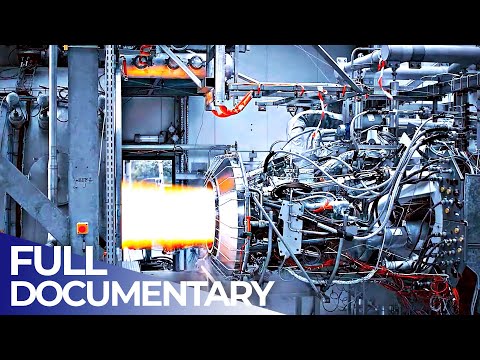
So, I was watching this sci-fi movie the other day, and it got me thinking: what if rockets could just teleport us around? That would save so much awkward waiting at the airport, right?
But seriously, rocket propulsion has come a long way. It’s not just about big booms and flashy launches anymore. We’ve got some pretty cool tech that’s making space travel more efficient and accessible.
You know, there’s a whole world of advancements happening! From eco-friendly fuels to designs that allow for reusable rockets—it’s like they’re becoming the ultimate space vehicles!
Imagine launching into orbit without wasting tons of resources. Crazy to think about how far we’ve come—and how much more we might achieve! So, let’s chat about what’s new in rocket propulsion tech and what it means for our future among the stars. Sounds fun, huh?
Exploring Recent Advancements in Rocket Propulsion Technology: Applications and Insights in Modern Science
So, rocket propulsion technology is like this super exciting field that’s evolving faster than you can say “blast off.” Basically, it’s all about how we shove rockets into space and what kinds of fuel and designs can make that easier and more efficient.
First off, let’s chat about the **new materials and designs** coming into play. You see, rockets need to be tough but lightweight. Engineers are now using advanced materials like carbon fiber composites that are strong yet light. This means rockets can carry more payload while burning less fuel. That sounds pretty cool, right?
Next up is reusable rocket technology. Remember when SpaceX made headlines for landing their Falcon 9 boosters back on Earth? That was a game changer! Instead of tossing rockets away after one flight, they’ve been designed to be reused multiple times. This approach dramatically cuts costs and makes space travel more sustainable. Just think about how much we recycle here on Earth—now imagine doing that with rockets!
We can’t forget **green propellants**, either. Traditional rocket fuels can be toxic and harmful to the environment, you know? So there’s been a big push towards finding alternative fuels that are not only efficient but also environmentally friendly. One example is a type of liquid propellant called LMP-103S which produces less pollution during its combustion process.
And then there’s propulsion tech like ion drives. These nifty systems work differently than your typical chemical rockets by using electricity to accelerate ions for thrust. They’re much more efficient, making them ideal for deep space missions where you can’t just refuel every once in a while or carry tons of fuel with you.
Lastly, let’s not overlook hybrid propulsion. This mix of solid and liquid fuels creates a system that’s flexible and easier to control compared to traditional single-fuel methods. It offers better performance without all the complexities of managing one type of fuel.
So why does all this matter? Well, with these advancements in rocket propulsion technology, we’re looking at potential **mission possibilities** that were pretty much science fiction before! From sending humans back to the Moon through programs like Artemis to exploring Mars with greater efficiency or even beyond—advances in rocket tech could truly open new frontiers for humanity.
It feels kind of unreal when you think about how far we’ve come since the first launches back in the ’60s—and who knows what amazing feats we’ll see in just a few more years? The future is looking bright and skyward!
Exploring Future Space Propulsion Systems: Innovations Shaping Interstellar Travel in Modern Science
Space travel has always felt like a dream, hasn’t it? But nowadays, with all the crazy advancements in technology, that dream is getting closer to reality. So, let’s chat about some of the cool innovations in space propulsion systems that are shaping our ability to jet off into the universe.
First off, traditional rockets rely on chemical propulsion. You know how a firework launches? It’s kinda like that—fuel burns and releases gas that pushes the rocket upwards. But there are some drawbacks. For example, you can only carry so much fuel, right? This limits how far you can go. Enter new ideas!
- Ionic Propulsion: Imagine using electricity to create thrust instead of burning fuel. That’s what ionic or electric propulsion does! It uses charged particles (ions) accelerated by electric fields. It’s super efficient, which means more speed for less fuel. NASA has been playing around with this tech in missions like the Dawn spacecraft.
- Nuclear Thermal Propulsion: Picture a nuclear reactor heating up hydrogen gas and blasting it out to propel a spacecraft forward! That’s pretty much what this innovation is about. It offers higher efficiency than conventional rockets and could potentially cut down travel time to Mars.
- Solar Sails: Now here’s a trippy one—solar sails use sunlight as their power source! These gigantic sails catch photons from the Sun and push the spacecraft along. No fuel needed! They could be great for long-distance travel since they harness energy from stars.
- Fusion Propulsion: Think of fusion as trying to mimic the Sun’s energy production here on Earth. Instead of splitting atomic nuclei (like fission), fusion combines them to release massive amounts of energy. If we nail down fusion propulsion, we could reach speeds that would make interstellar travel possible!
You might be wondering why all this matters. Well, just think back to when humanity first stepped on the Moon or sent probes beyond Pluto—each step opened up new possibilities about our place in the universe. We’re at another critical junction where advancements in propulsion tech could take us not just further into our solar system but beyond it.
I remember reading about how some scientists were imagining future missions that could get us to Alpha Centauri within a human lifetime using these innovative systems! Can you imagine? You’d pack your bags and hop on a craft powered by something as simple as sunlight or crazy nuclear reactions!
In summary, we’ve got a lot happening in space propulsion technology right now! Every new idea brings us closer to touching distant worlds and exploring our galaxy like never before. So keep an eye out because who knows what’s coming next? The future of interstellar travel is starting to look seriously exciting!
Exploring Advanced Propulsion Labs: Innovations in Space Science and Technology
Space exploration has come a long way since the days of the first rockets. Nowadays, it’s all about pushing the boundaries of what’s possible with advanced propulsion technologies. You might be wondering what that actually means, right? Well, let’s break it down!
So, think of rocket propulsion like this: it’s all about how we get from point A (Earth) to point B (Mars, or beyond). Traditional rockets rely on chemical propulsion. This is where fuel and an oxidizer react to create thrust. It’s effective but limited in efficiency. Like, if you want to travel faster and farther, you need something more advanced.
Enter advanced propulsion labs! Here’s where scientists and engineers are working on some pretty mind-blowing stuff.
- Ionic Propulsion: This tech uses electric fields to accelerate ions (charged particles) to create thrust. It’s not as powerful as traditional rockets at liftoff but works great in space for long missions. Think of it like a super-efficient way to cruise through the cosmos.
- Nuclear Thermal Propulsion: Imagine using nuclear reactions to heat a gas and produce thrust—that’s what this is about! It’s much more efficient than chemical rockets and could shorten travel times to Mars considerably.
- Solar Sails: This is part science fiction and part reality—solar sails harness sunlight for movement. They catch photons (light particles), which pushes the sail along. It’s like being pushed by wind but in space!
- MAGNETIC propulsion: This uses magnetic fields to accelerate spacecraft without needing traditional fuels at all! By using superconductors, they could potentially propel a craft really fast while saving resources.
A few years back, I read about a small group of researchers who played around with these new propulsion ideas in their lab. They created tiny models that tested solar sails—just like kids playing with toy boats on a pond! Watching those sails catch light and move was kind of magical.
But advances in rocket propulsion aren’t just cool tech—there’s real-world applications too! For example, these innovative systems can help us send probes deeper into our solar system or support future human missions to places like Mars or even asteroids for mining resources.
Now, what does this mean for YOU? Well, as these technologies evolve, they could lead us into an era where space travel isn’t just for astronauts anymore. Imagine casual trips around the Moon or even further down the line exploring other planets!
To wrap it up, exploring advanced propulsion labs is crucial because they’re unlocking new possibilities for humans traveling beyond our blue planet. The future of space exploration depends on innovations that will allow us to navigate the vastness efficiently and safely—and trust me; that holds so much potential!
You know, when I was a kid, I used to gaze up at the stars and think about how crazy it would be to travel among them. I’d imagine all these rockets zooming through the dark sky, leaving trails of fire behind. Fast forward to today, and honestly, we’re getting closer to that dream than ever before with rocket propulsion tech just blasting off!
So, let’s break this down a bit. Rocket propulsion is like the engine behind space travel—it’s what makes those huge metal tubes soar into the great unknown. And while we’ve been using rockets for decades now, things are changing rapidly. The advancements in this field are astounding! There’s everything from traditional chemical propulsion engines to more cutting-edge types like ion engines and even concepts working with nuclear thermal propulsion.
Basically, chemical propulsion is what you picture when you think of a rocket: fuel burns and boom! You get thrust. But ion thrusters? They’re super cool! They work by using electricity to accelerate ions—tiny charged particles—and can propel a spacecraft for way longer than regular rockets because they use way less propellant. It’s like running a marathon with a sipper bottle instead of lugging around heavy weights!
And then there’s this whole push towards reusable rockets. I mean, just think about it: SpaceX has been making waves with their Falcon 9 booster landing back on Earth after launching satellites or astronauts! That’s some sci-fi level stuff right there! Can you imagine how much money and resources they save by using the same rocket multiple times? It’s seriously impressive!
But here’s where it gets really exciting—what does all this mean for us? This tech isn’t just about exploring space for scientists anymore—it’s becoming part of our everyday lives too. Satellite communications have improved massively thanks to these advances; GPS works better; even weather forecasting benefits from satellite data transmitted via these incredible crafts.
Oh, and let’s not forget about plans for Mars missions or bases on the Moon! It might sound futuristic now, but hey, if you’d told me as a kid that I’d be living in an era where we’re actively discussing living on another planet—I wouldn’t have believed ya!
So yeah, every time I look up at those stars now, it feels like they’re closer within reach because of all this innovation in rocket technology. Who knows? Maybe one day we’ll be hopping on rockets like we hop on airplanes today. The universe is vast and mysterious—but advancements in propulsion technology are opening those doors wider than ever before. Isn’t that kind of thrilling?