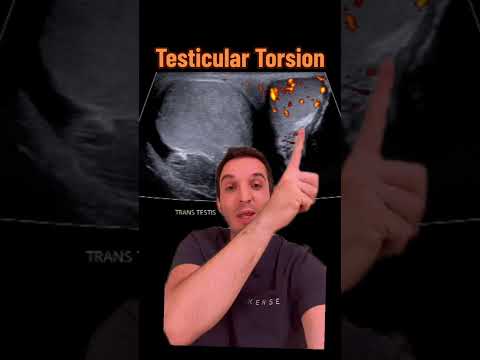
Okay, so picture this: you’re chilling with your buddies, and one of them suddenly clutches his… well, you know. It’s not a scene from a horror movie—it’s actually a real medical emergency! Yep, that’s testicular torsion for you.
Now, you might be wondering what on earth that means. Basically, it’s when the testicle twists and cuts off its own blood supply. Ouch, right? This isn’t just some random thing; it can happen to guys of all ages!
Here’s where it gets interesting. Diagnosing this twisty situation? That’s where radiology struts its stuff with some fancy imaging techniques. Think of it as the ultimate behind-the-scenes detective work on issues down there.
In this little chat about radiological insights into testicular torsion diagnosis, we’ll dive into how doctors figure out what’s going on below the belt. So stick around; you might just learn something that could help someone in a crunch!
Identifying the Key Symptom of Testicular Torsion: A Comprehensive Overview in Urology
So, testicular torsion is one of those medical emergencies where time is super critical. You’ve probably heard of it but might not know what it really involves. So, let me break it down for you.
Basically, testicular torsion happens when a testicle rotates and twists around the spermatic cord. This twist can cut off blood supply to the testicle. When that happens, things can go south really fast—like within hours.
The key symptom of testicular torsion that stands out is severe, sudden pain in the scrotum. It’s usually one-sided and can come on seemingly out of nowhere. A person might describe it as a sharp or tearing sensation. And hey, if you’re feeling nausea or vomiting along with that pain? That’s your body’s way of saying something’s seriously wrong.
Now, to throw some diagnostic tools into the mix: Radiology plays a huge role here! Doctors often use ultrasound to get a peek inside. An ultrasound can help assess blood flow to the affected testicle and check for any swelling or abnormalities. This non-invasive technique helps differentiate between torsion and other conditions like epididymitis (which is inflammation but not nearly as urgent).
But wait! If someone is experiencing that intense pain and maybe even has a swollen scrotum, they shouldn’t waste any time getting help. The clock is ticking since delayed treatment can lead to loss of the testicle.
- Sudden onset of severe pain: The most prominent symptom.
- Swelling: Often noticeable in the affected area.
- Nausea or vomiting: These follow-up symptoms aren’t uncommon.
So here’s an emotional nugget: Imagine being at a friend’s place, laughing and playing games when suddenly you feel this intense pain hit you outta nowhere. It’s scary! But knowing what you’re dealing with makes all the difference in acting fast.
Remember, you should never shrug off pain like this. It’s better to be safe than sorry because quick treatment could save your testicle! If there’s any doubt about what’s going on down there, hitting up Urgent Care or an emergency room right away is key to getting the right care before things escalate too much.
Hope this helps clear things up a bit about identifying that key symptom of testicular torsion! Stay curious and take care!
Understanding the Whirlpool Sign: A Diagnostic Indicator for Testicular Torsion in Clinical Practice
So, let’s talk about the Whirlpool Sign and what it means in the context of testicular torsion. You might be familiar with testicular torsion; it’s when a testicle twists around the spermatic cord. This is no joke—it can cut off blood flow and cause serious damage, like, really fast. The Whirlpool Sign is essentially a radiological indicator that helps doctors figure out what’s going on when they suspect this kind of emergency.
The thing is, diagnosing testicular torsion quickly is super important. If you get to the emergency room after having pain in your groin or abdomen, doctors will jump into action. They often use ultrasound imaging because it’s non-invasive and pretty effective. So here comes the Whirlpool Sign into play.
You see, when an ultrasound shows this sign, it indicates twisting of the spermatic cord which leads to impaired blood flow. What happens is that the blood vessels become engorged due to obstruction, causing this characteristic whirlpool-like effect seen in images taken during radiological exams.
Now let’s get into how this looks on an ultrasound! When looking at a testis with torsion, you might see areas where the echogenicity (which is basically how bright something looks on an ultrasound image) changes irregularly; think of it as having different shades and patterns appearing all jumbled up. This chaotic pattern creates that “whirlpool” effect—hence its name.
- Why’s it important? Because finding this sign early can help differentiate between torsion and other conditions like epididymitis or trauma.
- The timing matters. If treated swiftly (ideally within six hours), there’s a good chance the testicle can be saved!
- What if it’s not there? Sometimes you don’t see the Whirlpool Sign even when there’s torsion—this just complicates things further for doctors!
Now here’s a little emotional anecdote: A friend of mine had this happen to him in college. He dismissed his groin pain as just muscle strain from playing soccer but one night he couldn’t take it anymore and went to the ER. Luckily, they caught it in time due to some classic symptoms that led them to check for torsion. After some scans—including an ultrasound that revealed signs consistent with what we’re calling today—the doctors were able to save his testicle and get him back on his feet pretty quickly!
The key takeaway here? The Whirlpool Sign isn’t just some fancy term thrown around; it’s crucial for making accurate diagnoses fast! Understanding these signs can literally be life-changing for those affected by testicular torsion—so yeah, radiology really steps up its game here!
This whole process just goes to show how vital communication between symptoms and diagnostic tools is in medicine—you know? It’s teamwork at its best!
Advancements in the Diagnosis of Testicular Torsion: Diagnostic Tests and Protocols
It’s pretty wild how medical advancements have changed the way we diagnose testicular torsion. You know, that condition where the spermatic cord gets twisted, cutting off blood supply to the testicle? It can be a serious issue and requires quick action. But thanks to some cool diagnostic tests and protocols developed over time, doctors are getting better at spotting it.
First off, one of the most important tools in the diagnosis of testicular torsion is **ultrasound**. It’s non-invasive and super helpful because it allows doctors to see what’s going on inside without surgery. An ultrasound image can show decreased blood flow to the affected testicle, which is a telltale sign of torsion. The whole process doesn’t take long—often just about 10-15 minutes—and many patients find it less intimidating than other forms of testing.
Another nifty tool is **Doppler ultrasound**, which goes a step further. It measures blood flow, giving doctors clearer insights into whether there’s any compromised circulation to the testicle. If you think about it, knowing how much blood is getting through can really make a difference in deciding what steps to take next.
You might also come across **CT scans** or **MRI**, but they’re not usually the first choice for diagnosing this specific condition due to their exposure time and cost. They can be more useful if complications arise or in cases where surgery needs a more detailed look at surrounding structures.
The protocol usually starts with a thorough patient history and physical exam since symptoms like sudden scrotal pain can be linked to other conditions too. Once that’s done, imaging tests kick in. Quick diagnosis is key here—time is literally everything!
It’s wild how much has changed in just a few years; advancements in training for medical staff have also significantly improved outcomes. For instance, medical professionals are now better trained in recognizing symptoms early on because they understand that every minute counts when dealing with potential torsion.
To sum up:
- Ultrasound allows for fast, non-invasive imaging.
- Doppler ultrasound assesses blood flow specifically.
- CT scans and MRIs may be used but are not common first choices.
- Timely diagnosis relies on an accurate history and physical examination.
These advancements really make you feel hopeful about modern medicine! So many lives can be saved just because we have better ways to diagnose conditions like this one quickly. Next time you hear about testicular issues being treated swiftly, remember that behind it all are some incredible diagnostic innovations!
Alright, so let’s talk about testicular torsion. It sounds super serious, and, well, it is. Picture this: you’re going about your day when suddenly, wham! You experience some really intense pain down there. Like, we’re talking a nine on the pain scale. It could be testicular torsion—basically when the spermatic cord gets twisted and cuts off blood supply to the testicle. Not fun at all.
Now, what’s fascinating (but also kind of scary) is how doctors figure out if someone really has this condition. You see, when that pain hits, it’s critical to act fast—like a “get to the hospital now” kind of fast. Why? Because if it isn’t treated quickly, the testicle can become damaged beyond repair.
That’s where radiological imaging comes in! Doctors often use ultrasound as their go-to tool because it’s quick and effective—sort of like taking a snapshot of what’s happening inside you. They can look for signs like abnormal blood flow or swelling that hints at torsion.
I remember a friend from college who had an experience with this. He was in so much pain that he nearly passed out before making it to the ER. They whipped out that ultrasound machine and diagnosed him right away—it all happened so fast! Luckily for him, they were able to untwist things before any permanent damage occurred.
But it’s not just about diagnosing; radiological insights also help in determining how severe the situation is. Doctors can see if there’s been any blood flow recovery or if surgery might be needed right away.
What I think is amazing is how technology has changed the game here. Just imagine being able to look inside someone without any major poking or prodding! Of course, it’s not perfect; sometimes things may look similar to other conditions like epididymitis (another painful issue), so doctors have to use their brains on top of these images.
In a nutshell, radiology plays such an important role in diagnosing something as sensitive as testicular torsion. And when you think about the anxiety and fear that comes with experiencing such excruciating pain—it really reinforces how vital those insights are for timely treatment. So next time you hear someone mention testicular health or radiological imaging, remember it’s more than just medical jargon; it could truly save someone from a whole lot of trouble!