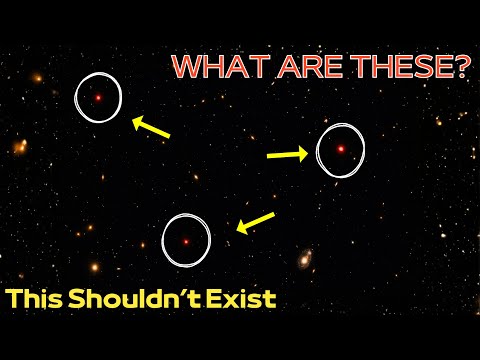
You know, they say black holes are like the universe’s vacuum cleaners. Seriously, everything gets sucked in—light, stars, you name it. It’s like trying to clean your room, but you end up vacuuming up your favorite socks instead.
So here’s the thing: the Webb Telescope is out there peering into these cosmic mysteries. It’s like having a super high-tech pair of glasses to spot what’s happening in deep space. Crazy, right?
Imagine being able to see what happens at the edge of a black hole! I mean, it’s wild stuff. Scientists are scratching their heads while Webb dishes out clues that could reshape our understanding of these space monsters.
Stick around; this journey into black holes is just getting started!
Revolutionary Discoveries: The James Webb Telescope’s Insights into Black Holes and Their Mysteries
So, the James Webb Space Telescope (JWST), right? It’s this amazing piece of technology that’s like the new kid on the astronomy block, super cool and packed with high-tech gear. Launched not too long ago, it’s been doing some pretty mind-blowing stuff, especially when it comes to black holes.
Let’s talk about those mysterious black holes for a second. So basically, they’re regions in space where gravity is so strong that nothing—not even light—can escape from them. Imagine a cosmic vacuum cleaner that just sucks up everything nearby! However, you might think, “Wait, if we can’t see them, how do we know they exist?” Well, what scientists do is look at how stars and gas behave around these invisible giants.
Now here’s where the JWST comes in. It’s like having a detective with some seriously fancy tools. With its super-sensitive cameras and infrared capabilities, the telescope can peer through cosmic dust clouds that often hide objects from our view. It’s already giving us glimpses of black holes forming in regions of intense star formation!
One key discovery linked to black holes is their **mass**—essentially how big and heavy they are. The JWST has been able to observe some of the earliest galaxies that formed after the Big Bang and guess what? Many of these galaxies host supermassive black holes at their centers! By looking at how fast stars are moving around these areas, scientists can estimate the mass of these black holes.
Now picture this: you’re out stargazing one night. You spot a bright star moving really fast around an unseen object. That object? Might just be a black hole pulling it in with its intense gravitational pull! Pretty wild stuff.
Another way JWST helps us understand these cosmic beasts is by studying their **growth**. Sometimes you’ll hear about hungry black holes munching on surrounding material like gas and dust—this process is called accretion. As they feast, they release energy in different forms—like x-rays—that we can detect. The telescope captures this energy as infrared light which gives scientists clues about the environment around those black holes.
So here are some cool things JWST has figured out or will help unravel:
- The Age of Black Holes: Observing distant galaxies can help determine how quickly black holes formed after the universe began.
- Their Role in Galaxy Formation: Understanding how these massive objects influence the growth and evolution of galaxies helps fill in gaps about our universe.
- The Connection Between Black Holes and Dark Matter: Studying their effects might lead us closer to cracking dark matter’s mystery.
Honestly, it feels like we’re just scratching the surface with what JWST can tell us about these enigmatic entities. I mean, just thinking back to when I first learned about black holes—it honestly felt like magic! Now we’re getting closer to understanding why they exist and what role they play in shaping our universe.
In short, if you ever thought space was boring or not full of surprises—you couldn’t be more wrong! The James Webb Space Telescope is turning up all kinds of gems hidden among those stars and dust clouds. So keep your eyes peeled; who knows what secrets we’ll uncover next?
Unraveling the Universe: The Biggest Mysteries Surrounding Black Holes in Modern Science
Black holes are, honestly, some of the universe’s biggest enigmas. Like, they’re these regions in space where gravity is so strong that nothing—absolutely nothing—can escape from them. Picture this: if you were to fall into one, you’d be stretched and squished beyond recognition. Yes, it sounds terrifying, but also super intriguing!
So, what have we learned about them recently? The James Webb Space Telescope (or Webb for short) has been taking a closer look at these mysterious giants. Since its launch, it’s been able to peel back some of the layers surrounding black holes and their behaviors.
One cool thing Webb does is examine quasars, which are super bright objects powered by black holes consuming a massive amount of material. These quasars can outshine entire galaxies! The light from them helps scientists figure out how black holes grow and interact with their surroundings. It’s like using a super-bright flashlight to see into the darkness.
You might be wondering about their sizes. Black holes come in different flavors—there are small ones formed from collapsing stars and those gigantic ones sitting at the centers of galaxies. The biggest ones are called supermassive black holes, and they can pack millions or even billions of solar masses into one tiny point! It boggles the mind, doesn’t it?
Another mystery that intrigues scientists is how black holes **actually form** and evolve over time. Some researchers think they mostly come from massive stars collapsing after burning up all their fuel. But there’s still debate around whether smaller black holes merge over time to create these supermassive ones or if they somehow formed differently right at the start of the universe. You see? It’s just complex stuff!
And here’s something wild: there’s this concept called **Hawking radiation**, proposed by physicist Stephen Hawking. He suggested that black holes can actually emit radiation due to quantum effects near their event horizon—the point where nothing can escape! This indicates that they could eventually evaporate over incredibly long timescales. But you know what? It’s still largely theoretical.
Another thing Webb has illuminated is how black holes influence their surroundings. They can blow away gas and dust from nearby stars and even shape galaxy formation itself through powerful jets that shoot out particles at nearly light speed! Imagine blowing on your birthday cake candles; that’s kind of what these jets do for their galactic neighborhoods.
So yeah, we’re still unraveling these cosmic mysteries one observation at a time. The more we learn about black holes through tools like the James Webb Space Telescope, the more questions pop up! It’s like peeling an onion—every layer you remove reveals something new yet makes your eyes water a bit too!
In essence, while we’ve cracked some codes about black holes thanks to modern science and technology, there’s still so much left to explore—a galaxy full of wonders waiting for us out there!
Unlocking the Secrets of Black Holes: NASA’s Webb Telescope Explores Cosmic Mysteries
Black holes are, like, super intriguing, right? These mysterious cosmic entities are places in space where gravity is so strong that not even light can escape. They’re the ultimate cosmic vacuum cleaners! And now, with NASA’s James Webb Space Telescope peering into the dark depths of the universe, we’re getting some seriously cool insights.
So, what exactly is a black hole? Well, when a massive star runs out of fuel, it can’t hold itself up anymore and collapses under its own weight. The core gets super dense and creates a black hole. Once something crosses the “event horizon,” which is like the point of no return, it’s done for. No going back!
NASA’s Webb Telescope has been busy looking at black holes and their surrounding environments. It’s equipped with some fancy technology that allows it to capture infrared light. This is pretty rad because many black holes hide behind clouds of dust and gas that block visible light. Infrared can cut through all that mess!
One thing Webb has found out about black holes is their connection to galaxy formation and growth. Isn’t that wild? They seem to help shape galaxies by affecting how stars form around them. So basically, without these cosmic beasts, galaxies might not even look like they do today.
The telescope focuses on two types: stellar black holes, which form from collapsing stars, and supermassive black holes, which are found at the centers of most galaxies—including our Milky Way! Supermassive ones pack millions or even billions of times more mass than our sun.
Using Webb’s data, scientists have been able to get a better grasp on how these supermassive black holes evolve over time. One exciting find was detecting light from very early galaxies—like ones formed just a few hundred million years after the Big Bang—that are thought to have had these massive black holes at their cores.
And here’s where it gets emotional for some folks: imagine staring into the heart of a galaxy that’s billions of years old! This kind of exploration fills you with wonder about our place in the universe.
Another fascinating insight from Webb involves how matter behaves as it spirals into a black hole. The energy released during this process creates powerful jets shooting out at nearly light speed! These jets can affect star formation in nearby regions by blowing away gas and dust—kind of like cosmic gardening!
You know what else? The spectral data from Webb has helped astronomers measure how fast gas moves around these black holes and gather clues about their masses and spins. It’s like trying to solve a puzzle while standing on a moving train—complicated but oh-so-rewarding!
Looking ahead, as more data comes in from the Webb Telescope, we’ll keep unraveling these cosmic mysteries one by one. Black holes may seem terrifying or unfathomable now, but thanks to this groundbreaking technology—and your interest—we’re getting closer to understanding them better every day!
In short:
- Black holes: Regions in space with gravity so intense that nothing escapes.
- Formation: They form when massive stars collapse after exhausting their nuclear fuel.
- Nasa’s Webb Telescope: Observes infrared light to study hidden aspects of black holes.
- Connection: Black holes influence galaxy evolution and star formation.
- Stellar vs Supermassive: Stellar are formed from individual stars; supermassive lurk at galaxy centers.
- Energy jets: Matter spiraling in releases energy creating jets that impact surrounding space.
- Data analysis: Helps measure speed and mass dynamics near these enigmatic phenomena.
So there you have it—a peek inside our ever-expanding understanding of those mysterious dark giants roaming through space! How cool is that?
You know, space is like this vast, mysterious ocean, and black holes are some of the most perplexing creatures lurking in its depths. It’s kind of mind-blowing when you think about it. I mean, we’ve all seen those sci-fi flicks where a spaceship gets swallowed whole by one of these cosmic giants. But in reality? They’re even stranger than fiction!
The James Webb Space Telescope has turned out to be a game-changer for exploring these enigmatic wonders. Seriously, it’s like handing a magnifying glass to a curious kid. With its ability to capture stunning images and gather data from way back in time—like, billions of years ago—it’s peeling back the layers of what we thought we knew.
I remember reading about black holes and feeling this weird mix of awe and fear. Like, they can warp space and time itself! There’s something about that concept that really tugs at your imagination. When Webb began revealing striking insights into black holes’ behavior, it felt like opening a door to an exciting yet slightly terrifying new realm.
What’s fascinating is how Webb zeroes in on these celestial bodies without physically touching them—obviously! It measures the light emitted from surrounding gas clouds or stars being shredded by gravity. That light holds clues—like messages from across the cosmos—telling us how these monsters evolve and interact with their surroundings.
Oh, and let’s talk about the supermassive black holes at the centers of galaxies. These beasts hold so much mass that they can influence the entire galaxy around them! Scientists are studying how they formed, what fuels them, and how they shape galactic evolution itself. That kind of knowledge could change everything we think we know about our universe!
But it isn’t just about numbers or theories; it’s also pretty emotional when you think about our place in all this chaos. We’re tiny specks pondering over gigantic mysteries that hold profound implications for existence itself!
So yeah, with Webb peeking into these shadowy corners of space, it’s not just science—it feels like an invitation to dig deeper into understanding ourselves within this cosmic puzzle. It makes you wonder what else is out there waiting to be uncovered!