Alright, so picture this: you’re at a party, and someone insists that pineapple belongs on pizza. This debate could go on forever without any solid proof, right?
Now imagine if you could actually settle this with some science! That’s where z tests come in.
They’re like the scientific version of “I told you so!”—perfect for figuring out if your hypotheses hold up or if they’re just wishful thinking.
Whether you’re comparing two groups or testing a theory, these tests help make sense of all that data swirling around.
We dive into how z tests work and why they matter in the world of stats. So grab a slice of pizza—pineapple or not—and let’s unravel this together!
Understanding the Z-Test: A Crucial Statistical Tool in Scientific Research
Sure thing! Let’s chat about the Z-Test, which is a key player in the world of statistics, especially when it comes to scientific research.
So, first off, what’s a Z-Test? Well, basically, it’s a statistical test that helps you figure out if there’s a significant difference between the averages (or means) of two groups. You know how sometimes you might want to see if one group performed better than another on a test? That’s where the Z-Test comes in handy.
A few things to keep in mind about the Z-Test:
- Normal Distribution: The Z-Test assumes that your data follows a normal distribution. This means that most of your values cluster around an average, kind of like how people line up at a concert—most are gathered close to the front.
- Sample Size: It’s usually used when your sample size is quite big—think 30 or more. Larger samples help make sure your results are more reliable.
- Known Variance: For using this test, you need to know the population variance (how much variation exists in your data). Sounds tricky? It can be! But this is part of why we use it less often for smaller samples.
Here’s where it gets interesting: when you conduct a Z-Test, you’re looking at something called the **Z-Score**. This score tells you how many standard deviations an element is from the mean. Imagine you’re at school; if you got 90% on an exam and everybody else scored around 75%, your Z-Score would be pretty high. That’s good news because it shows you’re performing above average.
Imagine this scenario:
Let’s say you’re studying whether a new teaching method helps students score higher on math tests compared to traditional methods. You gather scores from two classes—the one with traditional teaching and the other using this new method.
Now, suppose after crunching some numbers, you find out that class using the new method has significantly higher scores—and here’s where you’d grab that trusty Z-Test. If your results come back with a Z-Score beyond 1.96 or below -1.96 for a significance level of 0.05, then *bam*! You’ve got evidence suggesting that yes, indeed there’s a real difference between teaching methods!
But remember! Just because you’ve found something significant doesn’t mean it’s practically important or can be applied broadly in all situations—sometimes context matters way more than stats alone.
So yeah, whether you’re conducting experiments or interpreting data from studies, understanding and utilizing the Z-Test can really help in making sense of what those numbers are saying. It gives researchers confidence that what they’re observing isn’t just random noise but something worth paying attention to!
In short: The Z-Test is pretty vital for scientific validation; it helps us understand differences between groups clearly and effectively—so don’t underestimate its power!
Understanding When to Use ANOVA vs. Z-Test in Scientific Research: A Comprehensive Guide
When it comes to crunching numbers in research, picking the right statistical test is kind of like choosing the right tool for a job. If you’re ever stuck between using **ANOVA** or a **Z-Test**, let’s break it down.
First up, what’s a **Z-Test**? Well, basically, it’s used to determine if there’s a significant difference between the means of two groups when you know the population variance and you have a decent sample size (usually over 30). This test assumes your data follows a normal distribution and it’s pretty straightforward to calculate. For example, say you want to see if two different teaching methods yield different test scores among students. You would use a Z-Test if both groups had sample sizes large enough.
Now, let’s talk about **ANOVA**, or Analysis of Variance if you want to get technical. This one is your go-to when comparing the means of three or more groups. Seriously, it shines with multiple samples! Think about an experiment testing three different diets on weight loss; using ANOVA lets you figure out whether at least one diet performs differently from the others without needing multiple individual comparisons (which can get super tedious).
So here are some things to consider when choosing between them:
- Number of Groups: If you’re looking at two groups, grab that Z-Test. But for three or more? Go straight for ANOVA.
- Data Normality: Both tests assume your data is normally distributed. So check that first! If your data isn’t normal, there are non-parametric alternatives.
- Population Variances: The Z-Test assumes equal variances across groups. When you’re dealing with multiple samples in ANOVA, you’ll need to look at homogeneity of variances too—if they don’t match up well, that can skew results.
- Sample Sizes: Again, Z-Tests handle larger samples better (over 30). ANOVA can work with smaller sample sizes but watch out for power issues!
Oh! And remember when reporting results? It’s like telling your best friend what you’ve discovered! Be clear and transparent about which test you used and why it was appropriate for your research.
In practice, let’s say researchers wanted to know whether three brands of coffee had different caffeine levels. Using ANOVA here would allow them to see if at least one brand differed significantly from the others instead of doing pairwise Z-Tests which could inflate errors.
In summary: pick the **Z-Test** for simple two-group comparisons and normal distributions with known variances. Grab **ANOVA** when juggling multiple means; just ensure those populations play nice with their variances! Keep it simple—you got this!
Understanding the Z-Test: A Scientific Approach to Statistical Analysis
So, you wanna understand the Z-Test, huh? Well, let me break it down for you in simple terms. A Z-Test is a type of statistical test that’s used to determine if there’s a significant difference between the means of two groups or between a sample mean and a known population mean. The cool thing about it is that it relies on the normal distribution, which is just a fancy way of saying that when you have enough data, it tends to follow a bell curve pattern.
Now, why do we use this test? Here’s the thing: scientists need to validate their findings scientifically. If you’re looking to say that one group is different from another—like comparing the average test scores of two classes—you’ve gotta have some proof! That’s where the Z-Test steps in.
- Assumptions: For a Z-Test to be valid, there are certain assumptions that should be met:
- The data should be normally distributed. You know, like most natural phenomena tend to cluster around an average.
- The sample size should be large—usually 30 or more—so that we can apply the Central Limit Theorem.
- The standard deviation should be known or at least estimated reliably.
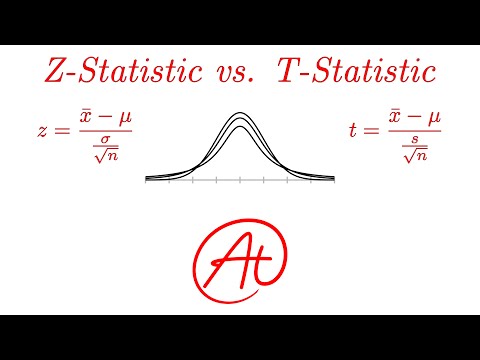
- The Formula: The Z-Test uses this formula:
Z = (X̄ – μ) / (σ/√n)
Where:
- X̄ is your sample mean.
- μ is the population mean.
- σ is the population standard deviation.
- n is your sample size.
- Interpreting Results: After calculating your Z value, you compare it against critical values from a Z-table (which lists how many standard deviations away from the mean you are). If your calculated value exceeds these critical values based on your significance level (often set at 0.05), then boom—you reject the null hypothesis!
- A Quick Example: Let’s say you’re testing if students in one class scored differently than students in another class.
If Class A has an average score of 75 with a known population standard deviation of 10 and Class B has an average score of 80 with 35 students, you’d plug those into your formula:
– X̄ = 80
– μ = 75
– σ = 10
– n = 35
Calculate Z and see what you get!
You know what’s also neat? The use of Z-Tests extends beyond just classroom settings; they’re widely used in businesses for quality control or any area where performance metrics matter. Imagine you’re testing whether new machinery produces parts within specifications compared to what’s already out there!
Simplifying all this stuff isn’t always easy. But once you grasp those core concepts—the assumptions needed, how to calculate with that formula, and what it all means once you’ve got your Z value—you’re well on your way to using statistical analysis meaningfully.
If I could give you one takeaway about the Z-Test: it’s about validating claims with solid evidence rather than just guessing! And isn’t that what science is all about?
Alright, so let’s chat about Z tests in statistics. You know, when you hear the word “statistics,” it can sound a bit intimidating, right? But hang on; it’s not all about dry numbers and complicated formulas. There’s a real purpose behind it all, especially when it comes to validating scientific ideas.
I remember back in college, I was part of this project analyzing the impact of a new teaching method on student performance. We collected tons of data from various classrooms—like, seriously, spreadsheets galore! At one point, we needed to figure out if our results were actually significant or just random noise. That’s where Z tests came into play.
So here’s the deal: a Z test is this cool statistical tool that helps you determine whether there’s enough evidence to support a claim about a population based on sample data. Basically, it tells you if what you found in your little corner actually reflects something bigger out there in the world.
Imagine you’re tossing a coin 100 times, and you want to know if it really is fair—like what everyone says. The Z test can help show whether those results are just luck or if something else is going on. In our teaching method example, we crunched the numbers and used the Z test to see if the improvement in student scores was statistically significant—that meant we could confidently argue that our method was effective rather than just chalking up good grades to coincidence.
Now let’s talk about normal distribution for a moment—it sounds fancy but really isn’t too complicated. It’s like that bell-shaped curve you see in charts; most things cluster around an average value with fewer extreme values at either end. When using a Z test, we often assume that our data follows this distribution pattern. If your sample size is big enough (we’re talking 30 or more), chances are you’ll be safe using that assumption.
But remember! Even with stats tools like this one, there are limitations. Just because something is statistically significant doesn’t automatically mean it’s practically important or relevant in everyday life. That’s where critical thinking comes into play—because science isn’t just about numbers; it’s about understanding context and implications too.
So yeah, using Z tests helped validate our findings and shaped how we saw our project unfold. And honestly? Knowing that there’s a statistical backbone supporting your claims feels pretty awesome! Science becomes more than just guesswork; it’s grounded and reliable on some level.
It’s fascinating how something as seemingly dull as statistics can have such profound implications for real-world decisions and research! So next time someone mentions testing hypotheses or looking into data significance, you’ll be able to nod knowingly and think of those cool tools like Z tests doing their thing behind the scenes!