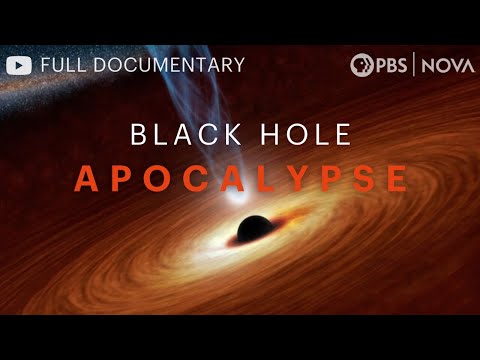
You know, the first time I heard about black holes, I thought it was some kind of cosmic vacuum cleaner! Like, just whoosh, sucking up everything in sight. Pretty wild, right?
But here’s the kicker: there’s a supermassive black hole hanging out at the center of our galaxy. And it’s not just any black hole; it’s called Sagittarius A*.
Seriously, this thing is millions of times heavier than our sun. Imagine that! It’s like the universe’s heavyweight champion.
So what is really going on there? Why do scientists care so much? Well, let me tell you—every time we learn something new about it, we’re peeling back layers of mystery that could change how we see the universe.
Curious yet? Buckle up, because we’ve got a space adventure ahead!
Unveiling the Terror of TON 618: Exploring the Science Behind the Universe’s Largest Black Hole
So, let’s talk about TON 618. Ever heard of it? It’s this mega black hole out there in the universe, and seriously, it’s a bit terrifying. To put it simply, it’s one of the largest black holes we’ve ever discovered. We’re talking about something that has a mass over 66 billion times that of our Sun. Just let that sink in for a moment!
Black holes are like cosmic vacuum cleaners, but they don’t just suck up dirt—they gulp down everything in their path, including light. This makes them super tricky to study since they’re literally invisible! But scientists can spot them by observing how they affect nearby stars and gas. For TON 618, researchers noticed its immense gravitational pull on surrounding material.
The thing is, how does one black hole get to be so massive? Well, black holes can grow by munching on gas and stars around them over millions of years. Imagine if you never stopped eating—eventually, you’d be huge! So for TON 618 to become this colossal beast, it’s probably had a very long time to pile on the matter.
Now, let’s take a brief trip into the science behind this terror. When material falls into a black hole, it forms an accretion disk, where the stuff swirls around at crazy high speeds before it crosses the event horizon—the point of no return. This process heats things up like mad and releases tons of energy, which astronomers can detect as X-rays or other signals.
There’s also something called quasars, which are bright objects powered by supermassive black holes at the center of galaxies. TON 618 is classified as one of these quasars! Quasars shine so brightly from their disks that they can outshine entire galaxies—pretty wild, right?
A cool anecdote: imagine being an ancient astronomer peering through your telescope at night and seeing just a tiny flicker of light from something light-years away. Little did they know that what they were witnessing was particles spinning around at unbelievable speeds near a black hole like TON 618! Makes you feel small in the universe.
If you’re curious about where exactly this giant lies, it’s about 18 billion light-years away from Earth in the constellation Canes Venatici. That’s far enough that even if it decided to snack on our galaxy—which is unlikely—we’d have plenty of time to pack our bags!
This endless fascination with massive cosmic entities helps astronomers understand not just how these monsters work but also gives us insight into galaxy formation and evolution across the universe. So while TON 618 might terrify some folks—and let’s be honest, who wouldn’t be scared?—it also opens up new avenues for scientific inquiry.
In summary:
- TON 618 is one epic black hole—over 66 billion solar masses!
- It grows by consuming surrounding matter through an accretion disk.
- This monster emits energy as X-rays while munching on gas or stars nearby.
- TON 618 shines brightly as a quasar from billions of light-years away.
The science behind these celestial giants is mind-boggling yet oh-so fascinating! So yeah, keep looking up at those stars—you might just stumble across another mystery waiting to be unveiled!
Unveiling the Mystery: Understanding Why 95% of the Universe Remains Invisible
So, here’s the thing: when we look up at the night sky, or even when we peer into the depths of space through powerful telescopes, it turns out that most of what’s out there is, like, totally invisible. About 95% of the universe is made up of stuff we can’t see or directly detect. Mind-blowing, right?
This unseen majority is thought to consist mainly of two things: dark matter and dark energy. So let’s break this down a bit.
- Dark Matter: Imagine this as a ghostly glue holding galaxies together. Although it doesn’t emit light or energy that we can catch with our instruments, its gravitational pull influences how stars move within galaxies. When astronomers look at the speeds of these stars whirling around their galaxies, they notice something odd. The stars are moving way faster than they should be if only visible matter were at play. This suggests there’s more mass—stuff we can’t see—pulling on them.
- Dark Energy: Now this one’s even more mysterious! Dark energy drives the expansion of the universe and is thought to make up about 68% of everything out there. It’s like a cosmic force pushing everything apart. The fact that galaxies are zipping away from each other means something’s making this happen, and dark energy fits that bill.
You know what’s wild? Back in the early 20th century, scientists figured out that the universe wasn’t static; it was expanding! Edwin Hubble was looking through his telescope and noticed distant galaxies shifting toward red light—a sign they were moving away from us. That was kind of a big deal! Fast forward to now, and researchers are still trying to untangle the complexities surrounding both dark matter and dark energy.
The black hole at the center of our galaxy—called Sagittarius A*—adds another layer to this cosmic puzzle. While it doesn’t directly tie into dark matter or dark energy, exploring such black holes helps us understand gravity in extreme environments where typical physics gets wacky.
Bizarrely enough, despite being able to measure some effects around these black holes with great precision using techniques like gravitational waves, detecting anything about their insides remains impossible due to their very nature—they trap everything inside them due to immense gravity!
This all ties back into understanding why we have so little idea about most of what’s going on in our universe. But hey—you’ve gotta admit: it’s thrilling dealing with mysteries like these! They keep scientists on their toes. There’s much left to explore and learn about our cosmos!
This notion that we’re only scratching the surface fuels curiosity in science every day—and who knows? Maybe one day you’ll be part of uncovering its secrets!
Unlocking the Cosmos: The Pioneers Behind the Discovery of Black Holes in Science
Okay, let’s talk about black holes. These cosmic monsters are super fascinating, but they didn’t just pop up overnight. There were some real pioneers who helped us uncover their secrets, especially the one hanging out in the center of our galaxy. So, grab your telescope and let’s break it down!
First off, we need to give a shout-out to John Michell. Back in 1783, this cool English geologist and astronomer was already floating ideas about “dark stars.” He figured that if a star was massive enough, its gravity would be so strong that even light couldn’t escape. Imagine that! Nobody really took him seriously back then, but he was definitely onto something.
Fast forward a bit to the 20th century. Enter Albert Einstein. His theory of relativity in 1915 shook things up big time. Einstein basically said that massive objects warp space and time around them—like putting a heavy bowling ball on a trampoline. This was crucial because it explains how black holes form when massive stars collapse under their own gravity at the end of their life cycle.
But let’s not forget Karl Schwarzschild, who came along shortly after Einstein’s revelation. In 1916, he found a solution to Einstein’s equations that described these mysterious regions of space where nothing could escape—not even light! He used some intense math (like super intense) to describe what we now call the “event horizon”—the point where you’re done for if you cross it.
The real breakthrough came in the late 20th century when scientists started gathering evidence for black holes existing out there in space. Seyfert galaxies, for instance, showed us something strange at their centers emitting huge amounts of energy. It was like they were trying to tell us something! Then came along observations from NASA’s Chandra X-ray Observatory, which allowed scientists to see how certain stars were orbiting an unseen object—the telltale sign of a black hole.
Oh, and let me tell you about what’s happening right now with our very own Milky Way! At its center lies Sagittarius A*, which is believed to be a supermassive black hole (SMBH). This thing has about four million times the mass of our sun! It’s wild when you think about how all those stars are whirling around it without falling in.
To put things into perspective: Imagine being at an amusement park watching people on roller coasters. Some are zipping around fast while others are holding on tight as they spiral close to that dark center—who knows what might happen next!
The quest didn’t stop there though; researchers are still probing deeper into these cosmic enigmas with new technologies like gravitational wave detectors. When two black holes collide? Yeah, that’s serious business and scientists want to catch every detail possible.
The culmination of all this work has led us not just closer to understanding black holes but also our own place in this vast universe. With every discovery made by these trailblazers, we inch closer to unlocking more mysteries while standing awestruck by what lies beyond.
So there you have it! From Michell’s early musings to today’s high-tech explorations—we’re piecing together one heck of a puzzle that tells us just how incredible our cosmos really is!
You know, black holes have this incredible ability to spark our imaginations. I mean, they’re the ultimate cosmic mystery, right? And when you start talking about the black hole at the center of our galaxy, things get even more mind-boggling.
Imagine standing outside on a clear night, staring up at the vastness of space, and realizing that swirling around in there is a massive monster called Sagittarius A*. This black hole is like a cosmic giant that’s millions of times heavier than our Sun. Can you just picture that? It’s wild to think that something so dense and powerful can exist right in our own backyard—a mere 26,000 light-years away! That’s still a pretty far drive if you’re taking a road trip, but in galactic terms, it’s practically next door.
When I first learned about black holes as a kid, I was totally captivated. There was this moment when my science teacher showed us an animation of how they pull everything in around them. It looked so dramatic! Stars getting stretched out and pulled into nothingness—like spaghetti getting sucked into a giant cosmic blender. Seriously! That visual has stuck with me all these years.
What gets me is how much we still don’t know about them. Scientists have been studying Sagittarius A* for decades now, trying to unlock its secrets. We’ve got these amazing telescopes—like the Event Horizon Telescope—that are working hard to snap pictures and collect data to help us understand what’s going on there. They say black holes warp time and space itself! Just think about how insane that sounds: time might pass differently near a black hole compared to here on Earth. It makes every day feel just a little more magical, doesn’t it?
And then there’s this idea people have that if you got too close to one of those bad boys, you’d just vanish without a trace—an endless fall into oblivion! It can be terrifying yet strangely fascinating at the same time.
So yeah, while we might not have all the answers yet about Sagittarius A* or any other black hole out there, it’s kind of comforting to know we’re all sharing this mystery together as humans. It reminds us how small we are in the grand scheme of things while also igniting this curiosity within us—a desire to explore and learn more about our universe.
It makes you think: even if those mysteries feel really far away or even out of reach sometimes, they’re also what connects us all as explorers of life itself—don’t you think?