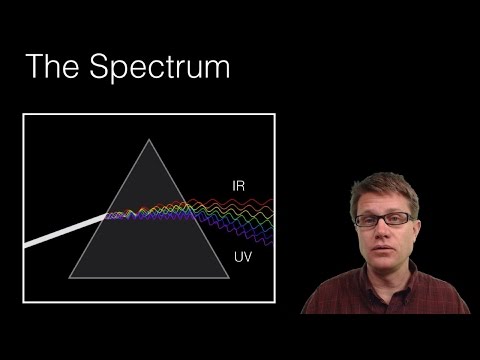
You know that moment when you turn on a neon sign and it just lights up like magic? It’s kinda like how excitation and emission spectra work, but way cooler when you really look into it!
So, imagine you’re at a party and someone shines a laser pointer around. Everyone’s like, “Whoa!”—and boom, you’ve got attention. That’s what happens in the world of science, too! Different materials get excited by light and then release their own colors.
Now, this isn’t just for flashy club lights; it plays a massive role in fields like biology and chemistry. Think about how scientists use this stuff to figure out what molecules are doing—like sneaky detectives shining light on clues.
So, grab a comfy seat because we’re about to unravel the colorful world of excitation and emission spectra together!
Understanding Excitation and Emission Spectra: Key Concepts in Scientific Analysis
Sure! Let’s chat about excitation and emission spectra. It’s a pretty interesting topic, especially if you’re into how scientists analyze light.
So, what are excitation and emission spectra? Think of them as the cosmic fingerprints of different substances. When you shine light on certain materials, they absorb specific wavelengths—this is called excitation. Then, when these materials release energy, they emit light at different wavelengths. That’s the emission part. It’s like a party where substances absorb some tunes (light) and then dance out their own tunes when they’re feeling good!
Now, let’s break this down a bit more:
Excitation: When a molecule or atom absorbs energy, it gets excited! Imagine you just had the best cup of coffee you’ve ever had; you’re buzzing with energy. In terms of atoms or molecules, this means electrons jump to higher energy levels. But here’s the catch: they can’t chill there forever!
Emission: After that brief high from the excitement, those electrons have to come back down to their original spots. It’s like when you crash after that caffeine high—eventually, you need to return to your normal state. When they fall back down, they release energy in the form of light at specific wavelengths.
Now let’s talk about these wavelengths. Each element has its unique set of wavelengths it can emit when excited. This gives scientists powerful tools for identifying substances in samples—think about how detectives use fingerprints to find out who was at a crime scene.
Here are some key points on why these concepts matter:
- Analyzing Materials: Scientists can determine what elements are present in faraway stars by analyzing their spectra.
- Medical Diagnoses: In medical imaging techniques like fluorescence microscopy, doctors can look for certain biological markers based on their emission spectra.
- Chemical Research: Chemists use these principles to investigate new compounds and reactions.
Oh! And let’s not forget about this cool thing called “fluorescence.” Some materials glow under UV light because they absorb that energy and re-emit it as visible light. Ever seen those neon colors in highlighters? That’s fluorescence at work!
In a lab setting, researchers might use spectrometers to measure these spectra accurately. Imagine a karaoke machine that only plays specific songs depending on how well you sing—yeah, spectrometers do something similar but with light waves.
To sum up (not that I’m summarizing—just wrapping things up), understanding excitation and emission spectra opens up so many doors in science. Whether you’re exploring the universe or developing cutting-edge medical technologies, these concepts are crucial for figuring things out.
So next time you see lights or colors around you, think about all those little atoms dancing along with their own tunes!
Understanding Emission Spectra: Applications in Scientific Research and Discovery
Emission spectra are like the fingerprints of atoms and molecules, showing us a little bit about what they’re made of. When you shine light on a substance, it gets excited—kind of like when you sip coffee in the morning. This excitement makes them release energy in the form of light when they chill out again. The cool part? Each element has its own unique emission spectrum, just like you have your own favorite playlist.
When we talk about **excitation**, we’re referring to how an atom or molecule absorbs energy from an external source, which could be visible light or ultraviolet rays. This energy boosts electrons to higher energy levels. But hold up! Electrons can’t stay up there forever. They eventually fall back down to their original state and release that extra energy as light. This is what gives us the **emission spectrum**.
Now, let’s get to some applications! In scientific research, emission spectra are used in so many ways:
- Identifying Elements: Scientists can determine what elements are present in distant stars by analyzing their emission spectra. Each element emits light at specific wavelengths that can be matched up against known data.
- Chemical Analysis: In labs, researchers often use methods like Atomic Emission Spectroscopy (AES) to analyze metals in samples, helping them understand composition and purity.
- Biological Research: Fluorescent markers are used in biology to tag proteins or DNA so researchers can visualize them under a microscope. The emitted light from these labels lets scientists see what’s happening inside cells.
Here’s a little story for you: Once, I was at a science fair where a group of kids had set up an experiment using emission spectra to analyze the composition of different kinds of salt—table salt versus sea salt versus rock salt! They shined different lights through each sample and showed how the colors changed based on what was present. It was so neat seeing how excited they were about something that would usually seem dry or boring.
In astronomy, the importance of spectroscopy can’t be overstated either! It allows astronomers not only to identify elements but also to figure out their temperatures and velocities based on how the lines shift slightly due to motion (this is called the Doppler effect). So basically, looking at these tiny spectral lines gives huge insights into what’s going on millions or even billions of miles away!
You see how vital emission spectra are? They bridge gaps between disciplines—bringing together physics, chemistry, and even biology—all while keeping everything colorful! And hey, next time you see fireworks or even just a rainbow after rain, remember that it’s all about those amazing emissions happening all around us.
So yeah, understanding emission spectra opens doors for countless discoveries and technological advancements. From analyzing stardust to spotting new diseases through tiny biological markers—it all hinges on this fundamental concept!
Unlocking the Secrets of Matter: The Significance of Atomic Emission Spectroscopy in Scientific Research
Atomic Emission Spectroscopy is one of those cool techniques that really helps us understand the building blocks of everything around us. Basically, it’s all about figuring out what elements are present in a sample by looking at the light they emit when they’re excited. You know, it’s like a colorful dance party for atoms.
When we talk about excitation, think of it as giving energy to an atom—like when you drink caffeine and get hyped up! Atoms absorb energy and jump to a higher energy level. Then, when they chill out and drop back down to their comfy level, they release that extra energy in the form of light. That’s where the fun really begins!
Now, this emitted light has specific colors (or wavelengths) that correspond to different elements. Each element has its own unique “fingerprint,” or emission spectrum. So when scientists analyze the light, they can identify which elements are present in a sample based on those unique patterns. Like solving a mystery with clues made out of colors!
Here’s why atomic emission spectroscopy is so significant:
- Element Identification: It’s super helpful for identifying what elements are in unknown substances. For example, if you’re studying a rock from Mars or checking out an old painting, this method can tell you exactly what’s in there.
- Quality Control: In industries like pharmaceuticals or food production, ensuring that products meet certain specifications is crucial. This technique helps verify that correct elements are present.
- Environmental Monitoring: We can use it to detect pollutants in air or water samples, keeping our environment safer.
- Astronomy Insights: Ever looked up at the stars? Scientists use atomic emission spectroscopy to analyze distant stars and galaxies by examining their light. This tells us what they’re made of!
I remember attending a science fair as a kid; some older students showed off their work with colored flames from different salts—just like fireworks! They explained how each color represented different metals through emission spectra, making chemistry seem like magic.
But while it sounds amazing (and it is!), there are challenges too. The technique requires careful calibration and sometimes complex equipment to get those crisp readings without interference from other sources. It’s kinda like tuning a guitar: if it’s off just a little bit, the sound won’t be right.
So yeah, atomic emission spectroscopy isn’t just another lab tool—it’s like having X-ray vision for chemical analysis! It opens up so many doors in research and helps answer questions about everything from tiny atoms to massive celestial bodies floating in space.
In summary: whether you’re hunting down pollutants or unraveling cosmic mysteries, atomic emission spectroscopy is key for understanding the matter around us and beyond!
You know, when you think about the colors we see around us—like the vibrant hues of a sunset or the greens of a lush forest—it’s fascinating to realize there’s so much science behind those colors. Excitation and emission spectra are key players in how we understand light and matter, especially in scientific research.
Let’s break it down a bit. Imagine you’re at a concert, and the band starts playing your favorite song; the energy just lifts you up, right? Well, in the world of atoms and molecules, they get excited too. When these tiny particles absorb energy—say from heat or light—they get all hyped up! This is what we call excitation. The wavelengths of light that they can absorb depend on their unique properties. So far, so good?
Now, here’s where it gets interesting. After this energy boost, things start to settle down. The atom or molecule can’t stay excited forever—it has to chill out and go back to its original state. When it does this, it releases energy in the form of light. That’s emission! And guess what? The color (or wavelength) of this emitted light is pretty specific to what kind of atom or molecule we’re dealing with.
I remember once visiting an old observatory with my friends; we marveled at how scientists could identify distant stars by measuring their light’s spectrum. It was like magic! Each star had its own fingerprint based on which elements were glowing in its atmosphere—all thanks to those exciting and emitting processes.
In research, understanding these spectra helps scientists unravel tons of mysteries—from analyzing distant galaxies to studying biological samples under a fluorescence microscope. It’s like having secret decoder rings for Nature’s own language!
So next time you see something glowing or colorful—whether it’s a firefly lighting up on a summer night or some cool lab experiment remember: there’s a story about excitation and emission happening behind those pretty shades that continues to shape our scientific knowledge every day. Pretty neat, huh?