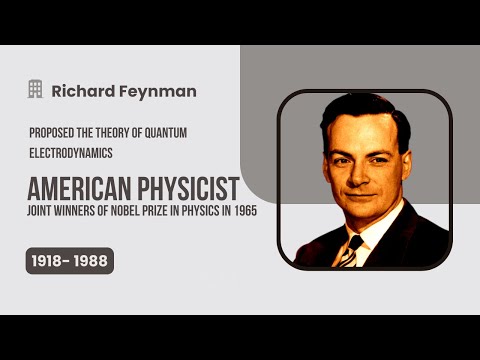
So, you know Richard Feynman, right? That brilliant physicist with a knack for making complex stuff sound simple? Well, there’s this awesome story about him. One time, he was teaching a group of students and decided to use a rubber band to explain quantum electrodynamics. He stretched it out and said something like, “Now imagine the universe is just this rubber band, full of quirks and surprises.” I mean, who thinks of physics that way?
Feynman’s vision changed how we look at light and electrons. It’s wild! He had this way of getting into the nitty-gritty while keeping it approachable.
The thing is, his ideas didn’t just stop at equations in some dusty textbook. They rippled across physics and beyond. Seriously, his legacy is like an ongoing conversation among scientists today.
So let’s chat about what quantum electrodynamics really means and why Feynman’s thoughts still matter so much in our world today. You’re gonna want to stick around for this!
Comprehensive Guide to Quantum Electrodynamics: Download Your PDF Resource for In-Depth Understanding
Quantum electrodynamics (QED) is the theory that describes how light and matter interact. It’s a fundamental part of modern physics, explaining how particles like electrons and photons behave. Let’s break this down together.
What is QED? It’s all about the electromagnetic force, which is one of the four fundamental forces in nature. This force governs interactions between charged particles. Imagine playing with magnets; they push or pull depending on how they’re oriented. That’s kind of akin to what happens with charged particles in QED.
Feynman Diagrams are a key piece of QED. They’re like a comic strip for particle interactions, showing how particles exchange photons, which are basically packets of light. Richard Feynman, a brilliant physicist, introduced these diagrams to simplify the complex math involved in particle physics. You know those flowcharts? Well, it’s like that but for particle interactions.
The Beauty of Photon Exchange is something I find really intriguing. Picture two electrons (charged particles), each repelling one another due to their charge. In QED terms, they exchange virtual photons to communicate this repulsion! Although these photons aren’t seen directly, their effects can be measured quite accurately.
Now let’s talk about Virtual Particles. They may seem odd because they pop in and out of existence really fast—like an illusion magician performing a trick! They help explain forces without being directly observable.
You might wonder about Feynman’s Legacy. He didn’t just impact theoretical physics; he made it accessible and fun! Through his lectures and witty style, he drew many into the realm of science who otherwise may have never ventured there.
When you look at QED today, it has a huge legacy—it paved the way for much of modern physics research and technology we use today. Think lasers or even semiconductors; they all relate back to QED principles!
Let’s touch on some key points surrounding Quantum Electrodynamics:
- Quantum Field Theory: QED is part of this larger framework that merges quantum mechanics with special relativity.
- Coulomb’s Law: This fundamental law describing electric forces can be understood through QED by considering photon exchanges.
- Precision Tests: Measurements in QED have achieved astonishing accuracy—it’s one reason why it’s considered one of the most successful theories ever!
In essence, quantum electrodynamics isn’t just fascinating; it’s crucial for understanding much of our universe’s behavior at a microscopic level. It’s crazy how something so small can have such vast implications! So next time you flip on a light switch or send an email using fiber optics, think about those little electrons doing their dance guided by the principles of QED!
Quantum Electrodynamics: Richard Feynman’s Insights and PDF Resources for Scholars
So, let’s chat about Quantum Electrodynamics (QED). It’s one of those cool branches of physics that really makes you think about the universe in a whole new way. Richard Feynman, a legendary physicist, played a huge role in shaping our understanding of QED. You could say he was like the rockstar of the quantum world!
Feynman was all about figuring out how light and matter interact. Basically, QED is the theory that describes how photons (that’s light particles) and charged particles like electrons deal with each other. The interactions are super complicated but are governed by some neat mathematical rules that Feynman helped develop.
One of his major insights was the idea of visualization through Feynman diagrams. These diagrams are like comic strips for physicists; they help visualize particle interactions in an intuitive way. Imagine drawing lines to represent particles and wavy lines for force-carrier particles. It’s pretty brilliant when you realize you can take incredibly complex math and make it something you can see!
- Interactions: Each line in a Feynman diagram represents a particle, and their connections show how they interact.
- Able to calculate probabilities: These diagrams simplify calculations by letting you focus on visual relationships.
- Pioneering work: Feynman’s approach changed how physicists communicate ideas and strategies in quantum mechanics.
You might be wondering why this matters today. Well, understanding QED has paved the way for advancements in technology—stuff like semiconductors and lasers rely on principles from QED! It’s fascinating to think that all those tiny interactions lead to our smartphones or even advanced medical imaging techniques.
If you’re interested in diving deeper into Feynman’s insights, there are some great resources out there! A lot of his lectures were compiled into books, like “QED: The Strange Theory of Light and Matter.” Plus, many academic papers and lecture notes are available online as PDFs for scholars or anyone curious about the subject.
- PDFS: Look for freely available educational materials from universities; they often share lecture notes that cover QED concepts.
- YouTube lectures: Many videos feature physicists explaining Feynman’s contributions to QED if you’re more into visual learning!
The legacy of Feynman’s work continues to resonate with scientists today. He showed us that thinking outside the box—or rather inside diagrams—could lead to groundbreaking discoveries! So next time someone talks about quantum physics, remember it’s not just gray math; it’s full of fascination waiting to be unraveled!
Exploring Quantum Electrodynamics: The Feynman Approach to Understanding Particle Interactions
Quantum electrodynamics, or QED for short, is a fancy term for the theory that describes how light and matter interact. It’s a big deal in the world of physics because it helps us understand the behavior of particles at the smallest scales. So, let’s check it out together, shall we?
Richard Feynman was a legendary physicist who had this unique way of explaining complex ideas. He came up with something called “Feynman diagrams,” which are like little cartoons that show how particles interact. Imagine you’re watching a superhero movie where heroes (particles) fight villains (other particles). Each line in these diagrams can represent different paths that particles take when they collide or communicate with each other. Pretty neat, huh?
Now, one of the coolest parts of QED is how it incorporates the concept of virtual particles. These are not real particles in the usual sense; they pop in and out of existence during interactions. You might think of them as temporary guests at a party—they show up just long enough to help out but then vanish before you could even say hello! This idea helps to explain forces between charged particles like electrons.
Let’s break down some key points about Feynman’s approach:
- Intuitive Visuals: Feynman believed that seeing is understanding. His diagrams made complex particle interactions more graspable.
- Path Integrals: He introduced a mathematical framework where every possible path a particle could take contributes to its behavior. It’s like saying all routes taken by someone trying to get home count toward their final destination.
- Renormalization: This technique helps deal with infinite results that pop up in calculations. It’s kind of like cleaning up after an unruly party—removing unnecessary messes so you can focus on what matters.
- A Natural Dialogue: Feynman liked to simplify discussions around complicated topics so everyone could join in, almost like engaging everyone around a campfire story.
Feynman’s vision changed how physicists communicated complex ideas about particle physics. His style wasn’t just about equations; it was also about sharing excitement and making others curious.
If you’re wondering why this even matters today, here’s something to think about: QED has led to some practical technologies we use daily, like lasers and medical imaging devices. So when Feynman was doodling those diagrams, he was unknowingly paving the way for inventions that would change lives!
In essence, quantum electrodynamics—thanks to Feynman’s innovative ideas—is all about turning what seems baffling into something understandable and relatable. That kind of clarity doesn’t only illuminate the realm of physics; it also inspires everyone from scientists to everyday folks who are eager to learn more about the universe around us!
So, let’s chat about Richard Feynman and his take on quantum electrodynamics (QED). You know, that flashy part of physics that deals with how light and matter interact? Feynman’s vision was pretty groundbreaking, to say the least. He had this incredible knack for making complex ideas feel more like a cool story than boring math.
I remember the first time I stumbled across his lectures. It’s like he took these mind-bending theories and turned them into a conversation over coffee. He didn’t just throw equations at you; he painted pictures with his words. That’s what really struck me! Like, he introduced this idea called Feynman diagrams—those quirky little sketches that show particles zipping around and interacting. They make it way easier to visualize what’s going on at a subatomic level.
His work on QED wasn’t just theoretical fireworks; it changed how we understand light and electrons. When you think about how light behaves as both a particle and a wave—that duality is mind-boggling! But for Feynman, it was all about embracing the weirdness of the quantum world without getting bogged down by strict rules or old-school thinking. What I find really inspiring is that he championed curiosity above all else. You could see it in his eyes; he had this childlike wonder even when tackling heavy topics.
And here’s the thing: Feynman’s legacy isn’t just about scientific breakthroughs; it’s also about how we communicate science itself. So many of us felt motivated to explore physics because of him—not because we were forced to memorize formulas, but because he made everything feel so alive! His lively spirit still resonates in places like classrooms or popular science shows where they try to break down tough concepts.
But it also makes me think: In a world where facts can sometimes feel distant or mechanical, how do we keep that enthusiasm alive? Are we nurturing curiosity in ourselves and others? That’s a vital question inspired by Feynman’s approach—maybe one that needs answering now more than ever.
So yeah, Feynman’s vision wasn’t merely rooted in equations but in human connection—between us and the mysteries of the universe. And honestly, wouldn’t it be amazing if we all approached learning with even just half of that excitement?