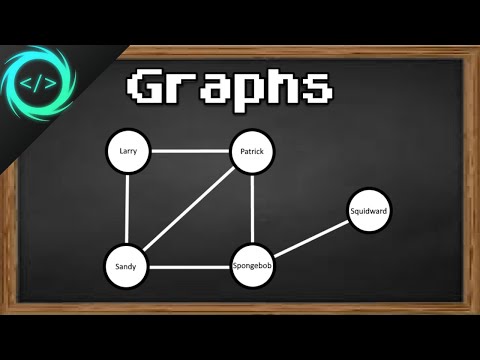
You know what’s funny? When I was a kid, I thought “graph” only meant those squiggly lines on my math test. Like, how did I end up here, geeking out over graphs in data structures? It turns out, they’re way cooler than I ever imagined.
So, if you’re wondering how these little web-like things fit into scientific research and outreach, buckle up! They’re not just pretty pictures; they’re like the superheroes of data. Think about it: every connection, every relationship in your research can be mapped out using graphs.
Imagine being able to visualize complex stuff in a way that your friends actually get it. That’s the magic of graph data structures! They help us connect dots—literally—and make sense of all the chaos around us. Ready to explore how they work their wonders? Let’s roll.
The Role of Graphs in Scientific Research: Enhancing Data Visualization and Analysis
Graphs are, like, super important in scientific research. They’re not just pretty pictures; they actually help scientists make sense of complex data. Think about it—if you have a ton of numbers staring back at you from a spreadsheet, it can be overwhelming. But put that data into a graph, and suddenly, it tells a story. You get to see trends, patterns, and relationships that would be way harder to spot otherwise.
One major role that graphs play is in data visualization. When researchers collect data—like how fast plants grow under different light conditions—it can be hard to analyze all those numbers without some visual aid. A line graph could show how the growth rate changes over time. This makes it super clear which light conditions lead to better growth.
- Comparing Data: Graphs allow for easy comparison of different sets of data. For instance, if you’re looking at two different plant species under the same conditions, bar graphs can show their heights side by side effortlessly.
- Identifying Trends: With scatter plots or line graphs, scientists can easily see trends over time or across different variables. Like when tracking climate change statistics—graphs reveal whether temperatures are rising or falling.
- Highlighting Relationships: You know sometimes you’ll hear about correlations between two factors? Well, scatter plots help illustrate these relationships clearly. For example, the more CO2 in the atmosphere might correlate with higher global temperatures.
The thing is, good graph design matters too! You can’t just slap a bunch of data into any old graph and call it a day. If a graph is cluttered or hard to read—like if the axes aren’t labeled—you risk confusing your audience instead of informing them. It’s like trying to read your friend’s handwriting after they’ve had three cups of coffee—good luck!
Now let’s talk about graph data structures. These play an essential role in research and outreach because they’re used to represent complex networks and relationships among various entities—in biology for instance! Scientists might use graph structures to model how diseases spread through populations or how ecosystems interact with one another.
A cool part is when researchers create what we call “network graphs.” Imagine mapping out social connections on a platform like Facebook; each person would be a node linked by lines showing interactions or friendships. In science too, similar structures help visualize things like protein interactions within cells or even the relationships between species in an ecosystem.
- Simplifying Complex Data: By using graphs, scientists can distill massive amounts of information into something digestible without losing valuable insights.
- Aiding Communication: Graphs make it easier for researchers to share their findings with both other scientists and the public—a crucial step for outreach efforts.
I remember this one time when my friend was trying to convince me about climate change based on tons of data he had collected during his studies. Honestly? I was lost until he pulled out a line graph showing temperature changes over decades. Suddenly everything clicked! It was incredible how such a simple visual made his argument so much stronger than just listing statistics could ever do.
In summary, graphs serve as powerful tools in scientific research by enhancing data visualization and analysis. They simplify complex information into easily digestible visuals and highlight essential relationships within data sets that would otherwise go unnoticed. Next time you look at a graph, remember: there’s some serious science behind that pretty picture!
Exploring Real-Life Applications of Graph Data Structures in Scientific Research
So, graph data structures, huh? They might sound like something that belongs in a math classroom, but they’re actually super important in lots of scientific research. Basically, a graph consists of nodes (or vertices) and edges that connect them. You can think of it like a bunch of cities (nodes) connected by roads (edges). This structure is super versatile and has tons of real-life applications!
One important area where graphs shine is in network analysis. Scientists often study how different entities are connected. For example:
- Social Networks: Here, nodes are people and edges represent relationships. Researchers can analyze social interactions to understand how information spreads or how communities form.
- Bioinformatics: In genetics, graphs help map out gene interactions or pathways. Each gene is a node and the interactions are edges—this helps researchers see how genes work together.
- Epidemiology: When studying diseases, graphs help model how infections spread through populations. Nodes can represent individuals while edges show who interacts with whom.
I remember reading about a researcher who used graph theory to track the spread of an infectious disease during an outbreak. By analyzing social connections between people, she could predict which areas were most at risk. It was amazing to see how something so abstract could have such real-world implications!
Graphs also play a crucial role in machine learning. Algorithms often use graph data structures to recognize patterns or classify information. For instance:
- Recommendation Systems: Ever wonder how Netflix knows you’ll love that new documentary? It uses graph-based algorithms that analyze user preferences as nodes and similarities as edges.
- Predictive Modeling: By representing data as graphs, scientists can model complex relationships and make accurate predictions based on patterns found within them.
You know what’s wild? Graphs help with things like protein folding too! In chemistry and physics, modeling molecular structures often involves creating graphs where atoms are nodes connected by bonds as edges. This way scientists can simulate interactions and better understand chemical reactions.
The beauty of these structures lies in their flexibility across numerous fields—from computer science to sociology to biology—pretty much anywhere you find relationships among items or concepts! So next time you hear about graphs in your favorite research paper, you’ll know they’re more than just numbers on a page; they’re powerful tools for discovery!
The Rise of Graphs in Scientific Research and Development: Enhancing Data Visualization and Analysis
So, let’s chat about the growing importance of graphs in scientific research and development. You know, those visual representations that make sense of data in a pretty neat way? Well, they’re becoming super essential for scientists trying to make sense of complex information.
What are Graph Data Structures?
Basically, a graph is a collection of nodes and edges. Think of nodes as points—like cities on a map—and edges as the routes connecting them. This structure helps researchers visualize relationships between different data points. It’s like having an organized playground where everything is interconnected!
Why Are Graphs Gaining Popularity?
First off, they help in handling massive amounts of data much more efficiently. Have you ever stared at tons of spreadsheets and thought, “What does this even mean?” Well, with graphs, you can zoom out and see the bigger picture. You get to spot trends and connections quickly, without getting lost in numbers.
Enhanced Data Visualization
Graphs allow scientists to present their findings visually. Instead of bombarding us with raw data (which can be boring), they illustrate relationships using colors and shapes. For example:
- A researcher studying social networks might use a graph to show how people are connected based on their online interactions.
- A biologist could depict gene interactions in a way that highlights essential pathways within cells.
This kind of visualization not only makes the information easier to understand but also more engaging!
Facilitating Collaboration
Here’s another cool thing: graphs encourage collaboration among different fields. Scientists from various backgrounds can use these visual tools to communicate complex ideas effectively. It breaks down barriers! Imagine an ecologist working with a computer scientist; they can both grasp each other’s findings without getting lost in jargon.
The Role of Software
You might have noticed that many scientists are now using tools like Python’s NetworkX or Gephi for graph analysis. With just a few lines of code or clicks on these user-friendly interfaces, they can create intricate graphs that help unravel complicated datasets. Plus, they make it easy to share findings visually with colleagues or the public!
Real-World Impact
Let’s not forget how these graphs can influence real-world decisions! For instance:
- The COVID-19 pandemic prompted health officials to use graphs extensively for tracking infection rates.
- Epidemiologists visualize how diseases spread through populations by showing connections between infected individuals.
Those simple-looking visuals are not just pretty; they guide policies and health responses globally.
So yeah, basically, graphs are revolutionizing scientific research! They’re enhancing our ability to visualize and analyze data while making complex information accessible and understandable for everyone involved—even if you’re not an expert in the field. And who doesn’t love some good visuals?
So, let’s chat about graph data structures. You know, those things that sound all techy and complicated? But honestly, they’re pretty cool when you dig into them, especially in the world of scientific research and outreach.
Picture this: you’ve got a huge network of friends on social media, right? Each person you know is like a node, and the connections between you are the edges. That’s a simple graph! Researchers use similar structures to map out complex relationships. Like, they can visualize how diseases spread between people or even how different species interact in an ecosystem. It’s not just numbers and lines; it’s about understanding connections in a very real way.
Sometimes, I think about this one time during a nature walk with friends. We were chatting about environmental issues when someone mentioned how deforestation affects not just trees but the entire ecosystem—animals, plants, even the soil. It struck me that researchers are often using graph data to show these kinds of relationships. They create models that help us see the bigger picture.
But here’s where it gets interesting: outreach! Imagine scientists trying to explain their findings to the public using these graphs. They make it accessible by visualizing data that feels overwhelming at first glance. Instead of drowning in spreadsheets or technical jargon, people get to see beautiful diagrams that clearly show relationships and trends. It transforms cold data into something relatable and easy to grasp.
That said, there are challenges too. Not everyone knows how to read these graphs; sometimes they can look like spaghetti junctions! So we need good storytellers—scientists who can break things down for folks who may not have a background in this stuff.
When it comes down to it, it’s all about connection—whether it’s connecting nodes in a graph or connecting with people through knowledge-sharing. And seriously, creating that bridge between research and everyday life is what makes science feel alive and relevant.
So yeah, while graphs might seem like just another tool in a scientist’s toolkit, they actually play a significant part in unraveling mysteries of our world while making sure everyone stays connected along the way!