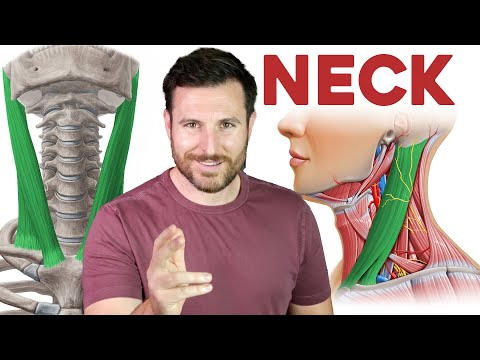
You know that feeling when you accidentally sleep in a weird position and wake up with a stiff neck? Oof! It’s like your body’s way of telling you, “Hey, take it easy!” But, like, have you ever thought about how wild our necks actually are?
Seriously, they’re so much more than just a connection between your head and body. I mean, think about all the stuff happening there: muscles, bones, blood vessels… it’s like a mini highway for everything important!
So let’s take a closer look at the anatomy of the human neck. We’ll break down its components and functions in a chilled-out way. You’ll see just how amazing this part of our body really is! Sound good?
Understanding the Anatomy: The Function and Significance of the Neck’s Lateral Organs
Wow, the neck! It’s a pretty amazing part of our body, don’t you think? It’s more than just something that holds up our heads. You probably don’t even realize how much is happening in that area. Let’s talk about the lateral organs of the neck and their significance.
The neck has some important components, and among them are the lateral organs. These include structures like the carotid arteries, jugular veins, lymph nodes, and the thyroid gland. Each one plays a critical role in keeping us healthy and functioning properly.
First off, we’ve got the carotid arteries. These are major blood vessels that supply oxygen-rich blood to your brain, face, and neck. There are two main carotid arteries—one on each side of your neck. If you ever feel a pulse in this area, that’s your carotid artery at work! Without these arteries doing their job, well, let’s just say things would get pretty serious really quickly.
Then there are the jugular veins, which do the exact opposite—they carry deoxygenated blood back to your heart. They’re like the return path after a fun day out! If you think about it, they play a huge role in helping your body keep its cool by regulating blood flow. The jugular veins have several branches which help drain different parts of your head and neck. Pretty cool!
Now let’s chat about lymph nodes. You may have heard about them when you’re feeling sick or have an infection. They act like checkpoints for your immune system. They filter out bacteria and other unwanted stuff from your lymphatic system, which is like a drainage system for fluids in your body. And when they detect something off—a fever or an infection—they can swell up as they go into action defending you.
And don’t forget about one of my personal favorites—the thyroid gland. This little butterfly-shaped organ at the front of your neck has an enormous impact on how you feel daily. It produces hormones that help regulate metabolism—basically how our bodies use energy! If it’s not working right, you might feel super sluggish or even jittery.
All these organs work together harmoniously (most of the time) to support vital functions like breathing, swallowing food (thank goodness for that!), and even speaking—you know? It’s fascinating how interconnected everything is!
The anatomy of our neck isn’t just cool; it has real-life implications too! For example, if someone gets into an accident or has surgery around their neck area—even minor things—it can affect all these systems simultaneously since everything is so close together.
So next time you look in the mirror or simply turn your head to chat with someone next to you, remember this intricate network of lateral organs at work behind the scenes! The human body was designed with such elegance—and yeah—it totally blows my mind sometimes!
Exploring the Anatomical Structures of the Neck: A Comprehensive Guide in Anatomy and Physiology
The neck is one of those parts of your body that, well, we often take for granted. But it’s super important! It connects your head to the body and plays a huge role in so many functions. Let’s break down the key anatomical structures and their functions, shall we?
Muscles
Your neck’s got a lot of muscles working overtime. The most notable ones include the sternocleidomastoid and trapezius muscles.
- The sternocleidomastoid runs from behind your ear to your collarbone, helping you turn your head side to side.
- The trapezius, which looks like a giant triangle on your upper back, helps with shoulder movements and supports the head.
When I was in high school, I had this friend who was really into wrestling. He’d always be stretching his neck like it was made of rubber—using those muscles to dodge tackles and stuff! It was kind of funny how much he focused on neck strength!
Skeleton
Now let’s talk about bones! Your neck is home to seven cervical vertebrae (C1-C7). These are the little bones that stack up like building blocks.
- The first vertebra, called atlas, supports the skull like a champ and allows you to nod up and down.
- C2 is known as axis. This one lets you twist your head side to side, which is really useful when you’re checking your blind spot while driving!
Nerves and Blood Vessels
Your cervical spine has nerves that radiate out to different parts of your body. The Brachial plexus, a network of nerves in the neck, controls arm movements. Pretty cool, right? And let’s not forget blood vessels; the carotid arteries carry blood up to the brain while jugular veins bring it back down.
And speaking of blood flow—when I used to jog around my neighborhood early in the morning, some days my neck would feel tight from looking around at cars or people passing by. That blood flow is important for keeping everything moving smoothly!
Epidermis and Dermis
The skin covering your neck isn’t just there for looks; it protects all those internal structures beneath it! It has layers—the outer layer is called the epidermis while underneath it lies the dermis where nerves and blood vessels are found.
So next time you think about your neck, just consider everything happening there—a complex mix of muscles, bones, nerves, and skin all working together. You might even find yourself appreciating it more when you look in the mirror or stretch after sitting for too long!
In summary:
Your neck has so much going on—it supports movement with muscles and bones while housing vital nerves and vessels that keep everything running smoothly. It’s way more than just a pretty connector between head and body!
Comprehensive Overview of Human Neck Anatomy: Components and Functions Explained
Sure! Let’s break down the anatomy of the human neck. It’s actually pretty cool when you think about how much is going on in that relatively small area. So, here we go!
The Neck: A Key Bridge
The neck is like this crucial bridge connecting your head to your torso. It’s not just about looking good in a turtleneck, you know? It plays a key role in supporting the head and allowing us to move it around. Seriously, without our necks, we’d be pretty limited.
Major Components
Now, let’s talk components. The neck has several key players:
- Vertebrae: These are the bones that make up your spine in the neck, known as cervical vertebrae. There are seven of them—numbered C1 through C7.
- Muscles: Lots of muscles are at play! Some help with movement, while others support posture. For example, the sternocleidomastoid muscle lets you turn your head from side to side.
- Nerves: The brachial plexus is a major nerve network that branches out into your arms and hands. It starts in the neck!
- Blood Vessels: You’ve got important arteries and veins running through here too, like the carotid arteries supplying blood to your brain.
- Lymph Nodes: These tiny bean-shaped structures help fight infections and keep you healthy by filtering lymph fluid.
The Functions
So what does all this do? Well, lots!
– **Support:** The neck helps hold up your skull—pretty heavy if you’re thinking about it!
– **Movement:** Thanks to those muscles and joints, you can tilt or turn your head easily. Try looking over your shoulder; it’s all thanks to this intricate setup.
– **Protection:** The cervical vertebrae protect the spinal cord running through them—a super important part of your nervous system.
– **Blood Flow:** Those arteries? They’re essential for delivering oxygen-rich blood to vital organs like your brain.
Anecdote Time!
I remember one time I was playing basketball with friends when I went for a layup but ended up falling awkwardly on my neck! Ouch! Luckily I had my muscles and those solid bones keeping everything in place while I recovered quickly. It really made me appreciate how tough yet flexible our necks are.
Total Teamwork
Every part of the neck works together—muscles flexing here while nerves fire off commands there—to let us perform everyday tasks like talking or even just nodding along during a conversation.
In short, if you think about it, our necks are these amazing structures full of complexity and functionality. They help connect everything while allowing for movement and protection; they’re underrated heroes if you ask me!
So, let’s chat about our neck, shall we? You probably don’t give it much thought unless you’ve pulled a muscle or something. I mean, it’s kind of like the unsung hero of our body, right? We use it for so many things—turning our heads to check out what’s happening around us, swallowing food, and even just holding up that heavy noggin of ours.
The neck is made up of bones, muscles, nerves, blood vessels—you name it! It’s a pretty intricate structure. At the top, you’ve got the skull. Then there are seven cervical vertebrae—those are the bones that make up your neck and keep everything stable while letting you move around. Just think about how crazy it is that all that weight is sitting on such a small area.
And oh man, the muscles! There are so many different ones working together to help us move our heads in all sorts of directions. Some are big and powerful; others are smaller but super important for those delicate movements. Like when you look sideways to check if someone’s sneaking up on you (or maybe you’re just pretending to be studying while actually browsing online).
But here’s where it gets really interesting: your neck isn’t just about movement; it’s also about function. Inside there are important blood vessels—like the carotid arteries—that supply blood to your brain. Can you imagine what would happen if those got blocked? Yikes!
Oh, and don’t forget about the nerves! The spinal cord runs through the neck like a major highway for signals going back and forth between your brain and body. Ever had a tingly feeling in your fingers after sleeping awkwardly? Yeah, that’s probably some nerve getting squished in there.
I remember once taking a yoga class where we focused on neck stretches. I was so surprised by how tight mine felt! It made me realize how much tension we carry without even realizing it. It’s like the neck holds not only physical strain but also emotional baggage sometimes.
So next time you’re stretching or turning your head to see what’s happening behind you—or maybe just nodding along at a boring meeting—take a moment to appreciate this amazing piece of anatomy that allows so much flexibility and function in our lives! Your neck deserves some love too!