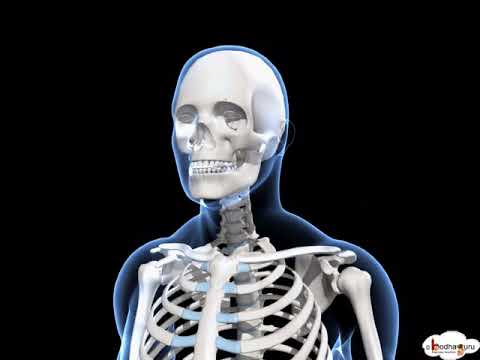
So, picture this: you’re at a party, right? And someone mentions being fascinated by bones. Suddenly, you’re knee-deep in conversations about the human skeleton. Sounds weird? Well, it happens more often than you’d think!
3D models of the human skeleton are like the coolest toys for science geeks and curious minds alike. Seriously, they bring anatomy to life in a way that textbooks just can’t.
Ever tried explaining how your arm works to a kid? You can say “It bends here” all day long, but seeing a 3D model makes it instantly clear!
These models are not just for doctors or anatomy students; they’re helping everyone understand our bodies better. So, let’s dig into how these lifelike representations are shaking things up in scientific outreach!
Top Resources for Free 3D Anatomy Models: Unlocking Science for Students and Educators
When it comes to studying anatomy, especially the human skeleton, having a good visual reference can make a world of difference. 3D anatomy models are super helpful for students and educators alike. They not only enhance understanding but also make learning way more engaging. Here are some top resources where you can find free 3D anatomy models.
- Sketchfab: This platform has a huge library of user-contributed 3D models, including bones and entire skeletons. You can rotate and zoom in on models, which is awesome for detailed study. Just search “human skeleton,” and you’ll find tons of options.
- AnatomyZone: A treasure trove for medical students, this site features free 3D models alongside video tutorials that help you understand complex structures better. It’s like having a mini-class at your fingertips!
- Google Poly: Although it’s now retired, you might still find some cool archived 3D models floating around the web that relate to human anatomy. Seriously, some of these have quite intricate designs. Just keep an eye out if you dig deep into online archives.
- BioDigital Human: With a free account, you get access to numerous interactive tools and anatomical visuals. It allows users to explore different body systems layer by layer—very handy when you’re trying to understand how they all fit together.
- Zygote Body: This resource offers a virtual body experience where you can peel back layers of skin to see what’s underneath—an incredible way to study the skeleton in relation to muscles and organs!
So here’s an interesting thing: I remember the first time I tried using one of these 3D models during my biology class in college. Instead of just memorizing names like “femur” or “tibia,” I could actually see where they fit in the entire structure. It was mind-blowing! Plus, there’s something about being able to rotate the model that really helps those spatial relationships click.
Another great thing about these resources is that they’re not just for students cramming for exams; educators can use them too! Imagine teaching a class and being able to pull up detailed views right there on the screen—makes it easier for everyone involved.
By utilizing free 3D anatomy models, both learners and teachers have access to some amazing tools that transform anatomy from memorization into real understanding. Whether you’re prepping for exams or teaching future healthcare professionals, these resources help bridge those gaps in knowledge effectively.
Ethical Considerations of Utilizing Real Human Skeletons in Medical and Scientific Education
So, you might be curious about the ethical side of using real human skeletons in medical and scientific education, right? Well, it’s a pretty complicated topic. Let’s break it down together.
First off, there’s this thing about respect for the deceased. When you think about human remains, you’re really dealing with someone’s body—someone who lived, had friends and family. That brings up a lot of questions, like how did these skeletons end up in an educational setting? Were they donated willingly? If they were used in research or teaching without consent, that could raise some serious ethical flags.
Consent is key. Many institutions now require proper documentation showing that the remains were donated for educational purposes. It’s like saying “I’ll give my body to science after I’m gone.” This gets tricky with older specimens where records may be incomplete or nonexistent. The thing is, you’ve got to honor the wishes of those who have passed away.
Then there’s cultural sensitivity. Different cultures have varying beliefs about death and how to treat human remains. In some cultures, touching or displaying bones might be seen as disrespectful. Educators need to tread carefully here! It’s super important to consider these beliefs before using real skeletons. Otherwise, it can lead to misunderstandings or even hurt feelings.
Now let’s talk about 3D models. They’re gaining traction as an alternative! These models can be highly detailed and serve similar educational purposes without the ethical baggage that comes with real bones. Seriously! Imagine being able to view a 3D model from any angle on your device—that’s pretty cool, right? You can study everything from bone structure to joint movement while keeping things respectful for everyone involved.
Also, using 3D models can actually enhance learning experiences because they’re often interactive. Students can manipulate them—zoom in on details or rotate them around—making it easier and more fun! And let me tell you; less risk of offending anyone while doing so is definitely a bonus.
It’s also worth mentioning institutional guidelines. Many universities have strict rules regarding how they handle human remains in education settings. They often provide training for students on respecting human bodies while making sure everyone understands the important role these materials play in medicine and science.
So yeah, it all boils down to balancing educational value with respect and ethics. While real skeletons have their place in medical education—and honestly do help students understand human anatomy deeply—3D models provide a way forward that sidesteps many ethical issues altogether.
In essence, whether we use real bones or modern tech like 3D models will always come back to one simple idea: respect for individuals who came before us and understanding their stories as we learn from them. That makes sense, right?
Evaluating the Accuracy of 3D Skeleton Models in Scientific Research
When we talk about 3D skeleton models, you might think of those cool displays in museums or maybe even video games. But in scientific research, these models are a big deal! Evaluating their accuracy is super important since they help us understand human anatomy, diagnose health issues, and even plan surgical procedures.
So, how do researchers figure out if these 3D models are actually reliable? First off, it’s all about comparing them to real-life bones. They might use high-resolution imaging techniques like CT scans or MRIs. This helps them look at the actual shape and size of bones in people and then see how closely their 3D models match up.
You’d think that would be enough, but there’s more! Validation studies come into play here. These studies assess whether the models perform well in different scenarios. For instance, if a researcher is studying how a bone breaks under stress, they need to ensure that their model acts just like a real bone would when pressure is applied.
Another thing to consider: the material used for the model can affect its realism. If scientists are using some sort of plastic or resin to create those 3D prints, it should mimic real bone density and strength as closely as possible. If not? Well, that could lead to inaccurate conclusions down the line!
And let’s not forget about collaboration! When universities or hospitals get together on this stuff, they can share findings and improve model accuracy even faster. It’s like getting all your friends on board for a group project; sharing ideas can really up your game!
Also worth mentioning: the role of technology in making these evaluations easier. Software tools can now analyze 3D models against anatomical databases filled with real-world data from diverse populations. This means researchers can check for variations across different age groups or ethnic backgrounds—super helpful if you’re trying to make sure everyone is represented.
Lastly, remember that these evaluations aren’t one-and-done deals. As new techniques and technologies emerge over time, constantly re-evaluating these models becomes necessary to keep up with what’s happening in the field.
To sum it all up:
- Comparison with actual bones: Using CT scans and MRIs.
- Validation studies: Testing performance under various conditions.
- Material selection: Mimicking bone properties accurately.
- Collaboration: Sharing knowledge between institutions.
- Technology integration: Using software for data analysis.
- Continuous evaluation: Keeping pace with advancements in science.
In short, while 3D skeleton models are incredibly useful tools for scientific outreach and education, ensuring their accuracy requires meticulous methods and constant updating. After all, accuracy matters when it comes to something as important as understanding our own bodies!
When you think about the human skeleton, what comes to mind? Maybe it’s those old-school diagrams from textbooks that looked like they jumped right out of a sci-fi movie. But, seriously, 3D models have totally changed the game when it comes to understanding our own bones. It’s like, who wouldn’t want to explore a virtual skeleton?
Just imagine you’re a kid again, like 10 or so, flipping through the pages of a science book. There’s this cool illustration of a skeleton, but you can’t quite wrap your head around how everything fits together. Now, fast forward to today; with 3D models, it’s like taking a field trip to the inside of your body—without needing a permission slip! You can rotate it around and zoom in on every little detail. That’s so much better than squinting at a flat drawing!
In classrooms and public outreach programs, these models are super helpful for teaching anatomy. You know how sometimes you just need that “aha” moment? Well, having something tangible (well, virtual-tangible) helps people get excited and engaged. They get to see not just where the bones are located but also how they work together when we move—how cool is that?
I remember attending this community workshop where they used 3D models for hands-on learning. People were gathered around, all ages—kids poking and prodding while adults looked on with curiosity. One kid exclaimed, “Whoa! This is my knee!” And there it was on screen—a detailed look at his own anatomy! Those moments really stick with you.
Of course, no tool is perfect. It requires proper context to avoid misinformation; having someone explain what we’re seeing is crucial. Just having flashy visuals isn’t enough if we don’t grasp their purpose within our bodies or biology as a whole.
At the end of the day, 3D models can bridge gaps in understanding that traditional methods might miss. They spark curiosity and encourage exploration in science for everyone involved—from kids dreaming about becoming doctors to adults just trying to learn more about themselves.
So next time you stumble upon one of those impressive skeletons online or at an exhibit, take a moment! It’s not just bones; it’s part of what makes us human—and isn’t that something worth exploring?