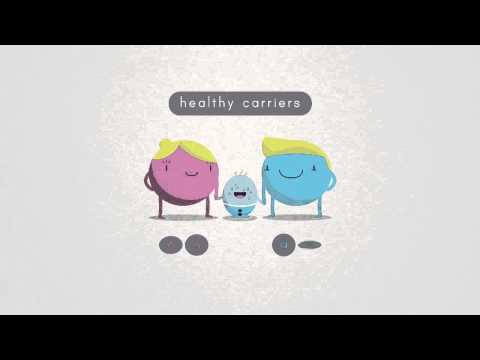
You know what’s wild? There’s a whole set of genetic rules that can make you lose your mind. Like, have you ever heard of the “two-for-one deal” when it comes to genes? It’s called autosomal recessive inheritance, and it sounds complex, but it’s really just a way of saying that sometimes you need two copies of a gene to get a certain trait—or, well, a disease.
Imagine being in high school and realizing you’ve inherited your mom’s love for hot sauce and your dad’s knack for terrible dancing. You got both of those quirks in one neat little package! This is kind of how autosomal recessive traits work. Both parents pass on their version of the gene for something to show up in their kids, which means they might be carriers without even knowing it.
And here’s where things get interesting. Today, with all this fancy genetic research going on, we’re learning more about how these traits affect us. So, like what does this really mean for health or diseases down the line? Well, stick around! There’s a lot to unpack here, and trust me, it gets pretty fascinating.
Understanding the Prevalence of Autosomal Recessive Inheritance in Genetics
Autosomal recessive inheritance is a key concept in genetics that helps explain how certain traits or disorders can appear in families. So, imagine you have two parents who both carry a gene for a recessive trait, like cystic fibrosis. Neither parent shows symptoms because they have one normal copy of the gene and one that causes the disorder. When these two parents have a child, there’s a chance the kid inherits both copies of the recessive gene—one from each parent.
It’s kind of like rolling dice. There are three possible outcomes when it comes to their kids:
- The child could inherit two normal genes (one from each parent).
- The child could inherit one normal gene and one recessive gene—this child would be a carrier but not show any symptoms.
- Or, the child could get two recessive genes, resulting in the disorder.
This means that if two carriers have kids, there’s about a 25% chance with each pregnancy that their child will have the disorder. Pretty wild, right? It highlights why understanding this type of inheritance is super important for genetic counseling.
Now, why is this relevant today? Well, with advances in genetic testing and research, we’re finding out more about how these conditions spread through families. For example, certain populations are more likely to carry specific autosomal recessive disorders due to shared ancestry or small population size. Take Tay-Sachs disease in Ashkenazi Jews; it’s more prevalent there because of historical genetic factors.
But wait! Here’s where things get even cooler: as we develop better screening techniques, such as carrier screening tests before couples decide to start a family, we can help people understand their risks really easily. This proactive approach can change lives and help prevent certain inherited conditions.
You know what else is interesting? Some traits aren’t all black and white. There are compound heterozygotes, which means that a person might carry different mutations on each copy of the gene involved with an autosomal recessive condition. This can lead to variable expressivity—basically meaning that even though they might inherit similar genes as someone else; they might not express them in the same way or at all!
You see how understanding this stuff turns into something vital for families? It gives them insight into what they may face and guides decisions about having kids or knowing how to manage potential health issues early on. Keeping track of these patterns changes everything from health care planning to improving family dynamics around genetic information.
The bottom line is: autosomal recessive inheritance isn’t just some dry topic you skim over in class—it’s a living field that makes real differences in people’s lives every day!
Understanding Autosomal Recessive Inheritance: Key Examples and Implications in Genetics
You know how some traits just seem to run in families? Like, you might have curly hair because your parents do too. Well, when we’re talking about genetics, things can get a bit more complicated. That’s where autosomal recessive inheritance comes into play. Basically, it’s a way that certain genetic traits or conditions can be passed down from parents to kids.
So, what does “autosomal recessive” even mean? Let me break it down for you. The term “autosomal” refers to genes located on the non-sex chromosomes—so not those pesky X and Y chromosomes that determine whether you’re male or female. Instead, we’re dealing with the other 22 pairs of chromosomes that everyone has.
Now, “recessive” means that for a trait or condition linked to a gene to show up in a person, they have to inherit **two copies** of the mutated gene—one from each parent. If someone just has one copy of that mutated gene and one normal one, they’ll be a carrier but won’t show any symptoms themselves. So it’s like having a hidden secret in your DNA!
This is where things get interesting. If both parents are carriers of the same recessive gene mutation, there’s a chance their child could inherit both bad copies. And here’s how the math breaks down:
- There’s a 25% chance the kid will have the condition.
- A 50% chance they’ll be carriers like their parents (but won’t show signs).
- And a 25% chance they’ll inherit two normal copies and be completely unaffected.
Now let’s look at some real-world examples because those really help make sense of stuff like this! One classic example is cystic fibrosis (CF). It’s caused by mutations in the CFTR gene. If both parents are carriers and have no idea about it, there’s that risk I mentioned earlier—25% for their kid.
Another example is sickle cell anemia. This one affects red blood cells and can cause pain and other serious complications when someone has two copies of the mutated gene (called HBB). Carriers often don’t experience any issues and can live totally normal lives.
But here’s where it gets even more fascinating—genetic testing! These days if someone knows there’s a family history of an autosomal recessive condition, they might opt for testing before having kids. In fact, being aware allows prospective parents to make informed decisions about family planning.
The implications of understanding autosomal recessive inheritance extend beyond individuals too; they ripple out into broader society! Genetic counseling plays an important role by helping families navigate these tricky waters with accurate information.
So basically, when we point out how genes work through autosomal recessive inheritance, we unveil layers of possibilities—and challenges—in human health. It reminds us how connected we all are through our shared genetic codes but also how careful we need to be navigating those codes as modern science progresses!
In short? Genetics is as complex as it is fascinating! Understanding autosomal recessive traits gives us insight into heredity while igniting conversations around health decisions among families today.
Understanding the 2:3 Rule in Autosomal Recessive Disorders: Implications for Genetic Research and Counseling
Alright, let’s chat about the 2:3 rule in autosomal recessive disorders. It sounds technical, but it’s pretty simple once you break it down.
So, first off, what’s this 2:3 rule all about? Well, in genetics, when we talk about autosomal recessive disorders, we mean conditions that show up only when a person has two copies of a mutated gene—one from each parent. If just one parent passes down a normal gene, the individual won’t show any signs of the disorder; they become what we call a carrier.
Now here’s where the 2:3 rule steps in. Basically, if you take a look at family trees (we call those pedigrees), you might notice something interesting. If two carriers have kids, there are three possible outcomes for their children:
- About 25% chance they’ll inherit both normal genes and be completely free of the disorder.
- 50% chance they’ll inherit one normal gene and one mutated gene—these kids are carriers too.
- And finally, around 25% chance they’ll inherit both mutated genes and have the disorder itself.
So if we sum it up like this: for every four children from two carriers, you can expect two to be carriers, that’s where that “2” comes from; and “3” indicates two will be unaffected but still carriers. Pretty neat, huh?
When researchers study genetic patterns like this one, they get a clearer picture of how these disorders spread through families and populations. This is super important not just for understanding diseases but also for things like genetic counseling.
Imagine being in a situation where your partner is also a carrier for the same disorder. Genetic counselors can help you understand what this means for your future kids by breaking down those probabilities based on the 2:3 rule. They’d guide you through options—like getting tested or considering reproductive technologies—to make informed decisions.
It’s all kind of fascinating when you think about it! But yeah, it’s also emotional; I mean there are real families out there trying to navigate this genetic jungle. The stakes are high when it comes to health prospectives for future generations.
And don’t forget that beyond individual cases, looking at these genetic patterns helps scientists track diseases in larger groups too. They can find out how common certain traits or disorders are within specific populations. So every time researchers dig into autosomal recessive inheritance and its implications using rules like 2:3, they’re working toward greater awareness and better health outcomes—all thanks to understanding our genetics.
So there ya go! That’s your crash course on the interesting little world of autosomal recessive disorders and why the 2:3 rule matters so much in genetic research and counseling!
You know, genetics can seem like this labyrinth of terms and concepts, but at its core, it’s about understanding how traits are passed down through generations. One really interesting thing is autosomal recessive inheritance. So, let me paint a picture for you.
Imagine a family where both parents are carriers of a genetic condition, but they don’t have it themselves. Sounds tricky, right? Well, with autosomal recessive inheritance, for a child to actually express the condition, they need to get two copies of the faulty gene—one from each parent. If they just inherit one copy, they’re carriers too but usually healthy. It’s like getting your favorite ice cream flavor only if you have two scoops; one scoop doesn’t quite make it.
I remember a friend in school who had a brother with cystic fibrosis—a classic example of this kind of inheritance. The family never expected it because both parents were seemingly healthy; it was like an unseen hand dealt them an unexpected card in their genetic game. That personal touch of unpredictability really drives home how these concepts play out in real life.
Now fast forward to today’s world where genetic research is on fire! Researchers are making leaps and bounds in understanding these patterns. They’re delving into how genes interact and looking for new treatments that could help those affected by these inherited disorders. It’s seriously cool! Plus, with tools like CRISPR popping up (you know, that gene-editing wonder), there’s so much potential for breakthroughs.
But there’s also the ethical side to consider because while altering genes might sound great in theory—like giving everyone superhero powers—it comes with serious questions about implications and morality. You can imagine debates heating up around dinner tables!
In essence, autosomal recessive inheritance isn’t just a dry topic in textbooks; it’s woven into the fabric of family stories and health journeys everywhere. And every time scientists dig deeper into this field, they’re unraveling not only mysteries but also opening doors to hope for families dealing with these genetic puzzles. It’s pretty amazing when you think about it!