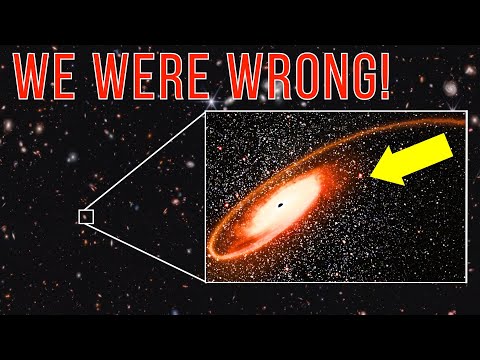
You know, I once thought black holes were just something out of a sci-fi movie. Like, you’d hear about them and imagine crazy wormholes leading to alternate dimensions. But here’s the thing: they’re real, and they’re way crazier than I ever imagined!
Recently, scientists have been making some wild discoveries about these cosmic monsters. Picture this: a massive slice of the universe where gravity is so strong that not even light can escape. Mind-blowing, right?
And it turns out, these findings are shaking up everything we thought we knew about space! Imagine uncovering secrets about time and the destiny of the universe itself.
So grab your favorite snack and buckle up! We’re diving headfirst into what’s new in black hole research and why it totally matters. Ready? Let’s go!
Exploring the Frontiers of Astrophysics: A Comprehensive Overview of Research on Black Holes
So, black holes, right? They’re like the rock stars of astrophysics—mysterious, powerful, and a bit hard to wrap your head around! You might think they’re just theoretical concepts floating in space, but no way! These cosmic enigmas have real implications for our understanding of the universe.
First off, let’s talk about what black holes really are. Simply put, they’re regions in space where gravity is so strong that not even light can escape. That’s why they “look” black—nothing comes out! There are different kinds of black holes:
- Stellar black holes: Formed when massive stars collapse after exhausting their nuclear fuel.
- Supermassive black holes: Found at the center of galaxies, containing millions to billions of times the mass of our sun.
- Intermediate black holes: These are a bit mysterious themselves, sitting somewhere between stellar and supermassive.
When I was a kid, my science teacher once compared them to cosmic vacuum cleaners. Picture it: stuff gets too close and—whoosh—it’s gone! There’s something both terrifying and fascinating about that idea.
Now onto the research front! Recently, scientists made some killer discoveries that have deep implications for astrophysics. For example:
- **Merging Black Holes:** The detection of gravitational waves from colliding black holes has revolutionized astronomy. When two black holes spiral towards each other and merge, they send ripples through spacetime that we can measure on Earth!
- Black Hole Imaging: Remember that famous image from a few years back? The one showing the shadow of a supermassive black hole in the galaxy M87? That was a game changer! It gave scientists visual proof that these things truly exist.
- The Event Horizon Telescope (EHT): This project involves multiple radio telescopes worldwide working together to create higher-resolution images than ever before. It’s like taking an extreme close-up of these cosmic giants.
What does all this mean? Well, it has major implications for our understanding of how galaxies form and evolve over time. Black holes influence star formation and even hold galaxies together with their immense gravitational pull.
But here’s where it gets even cooler: recent studies suggest that there may be connections between dark matter and black holes. Dark matter is this invisible stuff making up about 27% of the universe’s mass—kind of like a hidden ingredient in your favorite recipe! Understanding how these two interact could open doors to new physics altogether.
In essence, exploring these celestial realms gives us insight into fundamental questions about existence itself: What happened after the Big Bang? How do extreme gravitational forces affect time? Crazy stuff to think about!
So yeah, researchers are just scratching the surface when it comes to uncovering the mysteries surrounding black holes. With technology advancing quickly—like routers or your favorite streaming service—you can bet more astonishing discoveries are just around the corner. Just imagine what we’ll learn next!
Unraveling the Mystery: The Pioneers Behind the Discovery of Black Holes in Science
Black holes have this mysterious vibe, don’t they? Like something straight out of sci-fi. But, they’re very much a part of real science. The history of how we discovered them is pretty mind-blowing, so let’s take a trip back in time and meet the pioneers behind these cosmic enigmas.
First off, give it up for Albert Einstein. His theory of general relativity, published in 1915, laid the groundwork for understanding gravity as a curvature of space-time. It was like a light bulb flicked on for astronomers! Einstein’s equations suggested that very massive stars could collapse under their own gravity, leading to regions in space where the laws of physics as we know them just break down—hello, black holes!
Then came Karl Schwarzschild, who took Einstein’s theory and ran with it. In 1916, he found what we now call the Schwarzschild Solution. This was basically the first exact solution to Einstein’s equations that described a black hole’s structure. He showed that if a star collapsed to a certain point called the “event horizon,” nothing—not even light—could escape its pull. Mind blown! Imagine trying to explain that in your high school physics class.
A little later on, people like J. Robert Oppenheimer and his colleague <b;hartland snyder jumped into the mix in 1939. They took Schwarzschild’s work further by studying how massive stars end their lives. They predicted that if a star was massive enough—think several times bigger than our sun—it would go supernova and leave behind an incredibly dense core… which could become a black hole! Talk about cosmic drama!
Fast forward to the 1970s and things started heating up with Stephen Hawking, who introduced some seriously intriguing ideas about black holes. He proposed that black holes aren’t just cosmic vacuum cleaners; they can actually emit radiation—a phenomenon now known as Hawking radiation. This was revolutionary because it suggested black holes could evaporate over time! It knocked our socks off! You’ve got these monster gravitational beasts slowly fading away.
The ’80s and ’90s brought more evidence from observatories like the Chandra X-ray Observatory and Hubble Space Telescope, giving us direct observations of supermassive black holes at centers of galaxies—like Sagittarius A* at our Milky Way’s heart! Researchers started piecing together how black holes might play key roles in galaxy formation.
Look at today! Thanks to initiatives like LIGO (Laser Interferometer Gravitational-Wave Observatory), scientists can detect ripples in space-time caused by colliding black holes. It’s wild to think you’re hearing echoes from billions of years ago, right? Black hole research is now bursting at the seams with new discoveries!
This ongoing journey isn’t just about understanding these celestial giants; it challenges so much about our perception of physics itself. Black holes push boundaries on topics like time travel and quantum mechanics! Researchers are still trying to work out how everything fits together.
The legacy of those early pioneers reminds us that even when theories seem strange or far-fetched—like something outta a movie—they often lead to deeper truths about our universe. So here we are today: on one hand totally captivated by these cosmic vacuums while still trying to fully grasp what they mean for science as we know it!
Understanding the Risks: When Could a Black Hole Impact Earth?
So, black holes, right? They’re one of those cosmic wonders that can totally boggle your mind. The thing is, they’re not just sci-fi props; they actually exist out there in space, and yeah, they can potentially influence Earth in some way. You may be wondering how likely that is and what it all means. Let’s break it down.
First off, a black hole forms when a massive star collapses under its own gravity. Imagine a star way bigger than our Sun going supernova and then imploding to create this point of infinite density. It’s a spot where gravity is so strong that nothing—not even light—can escape. That’s why they’re “black.”
Now, you might think about those horror movie moments where the black hole just swoops in and devours everything in its path. But hold up! It’s not quite that dramatic when it comes to our little planet orbiting the Sun. Most black holes are pretty far away from us—like really far. The closest known black hole, called V616 Monocerotis or A0620-00, is about 3,000 light-years away. So don’t pack your bags just yet!
But let’s consider the risks for a moment. Here are some scenarios where a black hole could have an impact on Earth:
- The passing of a rogue black hole: If a black hole were to drift through our solar system (which is super rare), its gravitational pull could cause chaos with planetary orbits.
- Effects on nearby stars: Black holes can also influence stars close to them through *gravity*. If a nearby star gets too close to one, it might get pulled apart—this could send shockwaves throughout the galaxy.
- Gravitational waves: When two black holes collide or merge, they send ripples through spacetime called gravitational waves. If this happens nearby enough (still very unlikely), we could feel tiny effects here on Earth.
But let’s be real for a second: the chances of any of this affecting us directly are minimal! Scientists have been keeping an eye on things with powerful telescopes and detectors like LIGO and Virgo that can catch those gravitational waves.
Now onto research—it has exploded recently! We’ve got tons of data from different sources like Event Horizon Telescope taking images of black holes directly (pretty wild stuff!). Researchers are also studying their role in galaxy formation and evolution. Black holes might seem scary but they actually play a crucial role in shaping the universe we know.
If we take all these findings into account, you realize there really isn’t something to worry about right now. Our planet is safe… for now! But knowing more helps us understand our universe better, which is always cool.
In short: while black holes are fascinating cosmic beasts lurking out there among the stars, their impact on Earth remains pretty low-risk—at least with what we know today! You never know what new discoveries tomorrow will bring though… but until then? Breathe easy!
You know, black holes have always been this cosmic enigma, right? For ages, they were these theoretical monsters lurking in the universe, sucking up anything that came too close. But lately, astronomers have made some seriously cool discoveries that are shaking things up. It’s like the universe is revealing its secrets, piece by piece.
For instance, just a few years back, researchers captured the first-ever image of a black hole! Can you imagine? It’s like finally seeing a mythical creature you’d only heard stories about. That fuzzy image of M87* was beyond thrilling—it was proof that these cosmic giants really exist. And it wasn’t just a photo op; it opened up doors to understanding how black holes work and their role in galaxy formation. It’s almost poetic when you think of how something so dense and dark can shape light and life in the universe.
Then there’s the whole idea of gravitational waves. You know those ripples in space-time when two massive objects finally collide? Scientists found a way to detect them! It’s mind-boggling—like tuning into a cosmic symphony playing out across billions of light-years! Each wave tells us stories about black hole mergers and the violent dance of galaxies colliding. Just thinking about what those waves could reveal makes me feel this blend of excitement and humility.
I remember sitting under the stars with my best friend one night; we were chatting about life and what lies beyond our little planet. We both kind of fantasized about exploring space—a mix of awe and fear at what we might find. Black holes seemed like this ultimate ‘nope’ zone for us back then, but they’re also gateways to understanding some fundamental questions: how did our universe come to be? What lies at the end of it all?
So yeah, every new discovery feels like we’re peeling back layers on this grand cosmic onion—getting closer to some truths while adding even more questions to ponder over. It’s kind of like life itself—full of mysteries that sometimes take you down unexpected paths as you search for answers. With each revelation about black holes, I can’t help but feel this profound connection between science and our own human experience. We’re just tiny specks in a vast universe trying to make sense of it all.