So, here’s a funny thought. Imagine magnesium oxide was at a party. You know, just hanging out, trying to make friends. It’d be that cool dude who’s both strong and friendly—totally ready to bond with anyone!
Seriously though, bonding is super important in chemistry. And magnesium oxide? It’s like that rockstar of compounds. It plays a major role in everything from fireproofing to medicine.
Ever seen a fire extinguisher? That’s right—magnesium oxide’s got your back there too! Let me tell you, its bonding characteristics are what really make it stand out in the science world.
So stick around! We’re about to unravel some pretty neat stuff about why magnesium oxide is not just another boring compound hanging on the shelf.
Understanding the Bonding Character of Magnesium Oxide in Chemistry
Sure, let’s chat about magnesium oxide and what makes its bonding character so interesting.
Magnesium oxide, or MgO for short, is a compound that forms when magnesium reacts with oxygen. You know, it’s kind of like how fire and wood create ash when they meet. In this case, magnesium is the “fire,” and oxygen is the “wood.” When they come together, they create something totally new.
So, what’s the deal with its bonding character? Well, MgO has what’s called **ionic bonding**. This happens when atoms transfer electrons from one to another. Imagine you’re in a game where you have to share your snacks; you give some to your friend (oxygen in this case), who takes them because they really want them. In return, you get something good—lots of stability for both parties!
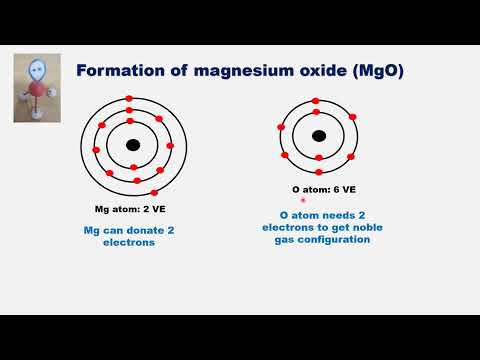
Here’s how it works: magnesium sits in group 2 of the periodic table and has two electrons in its outer shell. Oxygen sits in group 16 and needs two more electrons to feel complete; it’s like wanting a full pizza! So magnesium gives away those two electrons to oxygen. When that happens:
- Magnesium becomes a positively charged ion (Mg²⁺).
- Oxygen becomes a negatively charged ion (O²⁻).
Now that they’ve exchanged those snacks—or electrons—they’re electrically attracted to each other because opposite charges attract like magnets.
This attraction creates what we call an ionic bond. But here’s where it gets super cool: this bond in MgO is particularly strong because both ions are relatively small and have a high charge density—that’s just a fancy way of saying they’re tightly packed together. It’s like trying to squeeze into an elevator with all your friends during rush hour—everyone’s packed in there!
And here’s another fun fact: MgO doesn’t melt easily—it has a pretty high melting point! That stability comes from those strong ionic bonds holding the structure tightly together even when things get hot.
If we think about how these characteristics play out in real life, consider how magnesium oxide is used as insulation material or even as an ingredient in some antacids. This shows just how essential understanding their bonding can be—like knowing why certain things work well together or not.
So next time you hear about magnesium oxide, remember it’s not just some boring compound; it represents a dance of electrons creating stability and utility in our lives! It’s all part of the fascinating world of chemistry that touches everything around us, from nature to products we use daily!
Understanding the Structure and Bonding of Magnesium: Insights from Chemistry
Magnesium is a fascinating metal, and when it comes to its chemistry, there’s a lot to unpack. So, let’s chat about its structure and bonding, especially focusing on the way it forms magnesium oxide.
First off, magnesium is an alkaline earth metal, sitting snugly in group 2 of the periodic table. This means it has two electrons in its outer shell. So, when magnesium interacts with other elements, like oxygen, it tends to lose those two electrons. By doing this, **magnesium becomes a positively charged ion**, known as Mg²⁺.
Now let’s look at oxygen. Oxygen is a non-metal and typically has six electrons in its outer shell. To achieve stability (which is basically what all atoms are after), oxygen wants to fill up this outer shell with eight electrons. It does this by grabbing two electrons from magnesium when they bond together. This transfer of electrons leads us to an interesting point: **the formation of ionic bonds**.
When magnesium loses its electrons and oxygen gains them, they create ions that are attracted to each other due to their opposite charges. You see? Positively charged Mg²⁺ ions are drawn towards negatively charged O²⁻ ions. This attraction creates a strong ionic bond between them.
Now about **magnesium oxide (MgO)**—it’s not just any compound! It forms a crystalline structure that’s quite robust due to these strong ionic bonds we’ve talked about. Think of it as building blocks stacked together tightly; every positive Mg²⁺ ion is flanked by surrounding O²⁻ ions which help maintain that stable structure.
Here’s where things get cooler: the crystal lattice formed by these alternating ions gives magnesium oxide some impressive properties. For one:
- High melting point: Since the ionic bonds are so strong, MgO requires a lot of energy to break apart.
- Electrical conductivity: In solid form? Not really conductive because the ions can’t move around freely. But melt it or dissolve it in water? Boom! It conducts electricity.
Thinking back on my chemistry days, I remember mixing some simple ingredients in class: sodium chloride was pretty easy-peasy compared to trying out something like magnesium oxide! The glowing reaction between metals and non-metals always had me on edge—it showed just how dynamic chemistry can be!
So basically, understanding how magnesium bonds with oxygen sheds light on more than just their individual characteristics; it opens doors to understanding larger concepts in chemistry too—like why certain materials behave the way they do under heat or why they can conduct electricity under specific conditions.
In summary:
- The bonding characteristics of magnesium mainly involve losing two outer electrons.
- Ionic bonding between Mg²⁺ and O²⁻ creates stable compounds like MgO.
- This results in fascinating properties that hold importance in various applications.
That’s just scratching the surface but gives you a good idea! Chemistry really connects so much more than you’d think at first glance—it’s kind of like finding hidden connections between friends; sometimes you need to dig a little deeper!
Exploring the Bonding Characteristics of Magnesium Oxide in Class 10 Chemistry: A Comprehensive Guide
It’s pretty cool when you start digging into the world of elements and compounds, right? One compound that pops up often in school is magnesium oxide. So, let’s talk about what makes this compound tick, especially its bonding characteristics.
First off, magnesium oxide is made from **magnesium (Mg)** and **oxygen (O)**. When they come together, they form an ionic bond. Now, what does that even mean? Well, it’s like a dance where electrons are transferred rather than shared. Magnesium has two electrons in its outer shell that it doesn’t really want. Oxygen, on the other hand, needs two electrons to fill its shell and feel all happy.
So here’s how it goes down:
- Magnesium gives away those two electrons.
- This makes magnesium a positively charged ion (Mg²⁺).
- Oxygen becomes a negatively charged ion (O²⁻) after it grabs those electrons.
This transfer creates an attraction between the oppositely charged ions. Imagine it like two magnets pulling towards each other. That’s the ionic bond at work!
Now you might ask, “What makes ionic bonds different from others?” Good question! Ionic bonds typically involve metals and nonmetals—like our magnesium and oxygen duo here. They usually have high melting and boiling points because of the strong forces holding them together.
But wait—there’s more! Magnesium oxide also has some interesting properties because of its structure:
- It forms a crystal lattice structure. This means that ions are arranged in a repeating pattern.
- This structure contributes to its hardness—you could say it’s tough as nails!
- The strong bonding holds up under high temperatures too.
This is why you find magnesium oxide used in things like refractory materials—that’s just fancy talk for stuff that can withstand really high heat without melting or breaking down.
Now picture yourself in class doing an experiment involving magnesium oxide—maybe you’re heating it up or mixing it with water. It could be eye-opening to see how such a simple compound can be so crucial in different reactions!
And remember those properties we mentioned earlier? Because it’s ionic, molten or dissolved magnesium oxide can conduct electricity. Yeah! When it’s heated enough to melt or mixed into water—where it dissociates into ions—it allows electric current to flow through.
So there you go! The bonding characteristics of magnesium oxide give us insight not only into how this compound works but also why it matters in chemistry and real-life applications. Chemistry isn’t just about formulas; it’s about understanding the connections—and sometimes that’s where the magic happens!
So, magnesium oxide, huh? It’s pretty interesting how this compound works! It’s made up of magnesium and oxygen. What’s cool is that these two elements come together through something called ionic bonding. Basically, in simple terms, ionic bonds are like a handshake between atoms where one gives away an electron to the other. Super dramatic, right?
Imagine magnesium as this kid who really wants to be cool but needs to lose some weight—electron weight, that is. It’s got two electrons in its outer shell that it doesn’t need for its “coolness.” So, it decides to part ways with them and becomes positively charged. On the other hand, oxygen is kind of like that kid who desperately needs a couple of electrons to feel complete and secure. When these two meet up, magnesium gives away those electrons and becomes Mg²⁺ while oxygen scoops them up, turning into O²⁻. They stick together because opposites attract—like magnets!
What really gets me about this reaction is how nature has its own way of balancing things out. When magnesium gives away its two electrons and oxygen gets what it needs, they both become happy in their own ways. And the end product? A crystal lattice structure that’s super strong! This makes magnesium oxide great at withstanding high temperatures and providing insulation.
I remember doing a lab experiment where we mixed some magnesium powder with oxygen gas in a controlled setting. Watching the reaction unfold was like magic; sparks flew everywhere! In that moment, I realized chemistry isn’t merely about formulas—it’s about transformation, connection, and chemistry (pun intended) between elements.
So yeah, when you think about it, the bonding characteristics of magnesium oxide aren’t just boring old science; they tell a story about giving and receiving and finding balance in nature. And honestly? That makes it all so much more relatable!