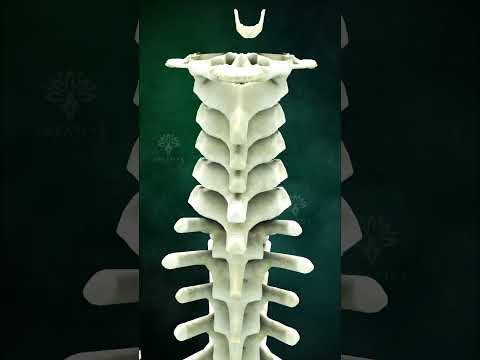
You know those little skeletons you sometimes see in science classrooms? They’re not just there to give students the creeps! I mean, if you’ve ever accidentally knocked one over and watched it hilariously flop onto the floor, you know it’s hard not to chuckle.
But seriously, these mini skeleton models have a ton of potential beyond their comedic value. They’re like the Swiss Army knives of learning tools. These handy little guys help students grasp complex ideas about human anatomy in a way that sticks with them—pun totally intended!
Imagine grasping the concept of joints or muscles by fiddling with a tiny skeleton rather than staring at a textbook. It’s way more engaging, right? Let’s take a closer look at some cool and innovative uses of these models in science education. You might be surprised by how they can bring lessons to life!
Ethical Considerations of Using Real Human Skeletons in Medical and Scientific Education
When we talk about using real human skeletons in medical and scientific education, it brings up some pretty heavy ethical questions. You know, it’s not just about the science but also about respect for the individuals whose remains are being used. So, let’s break this down a bit.
First off, there’s the issue of consent. Many skeletons used in education come from people who lived centuries ago, so figuring out if they would have agreed to this can be tricky. Sure, in the past, things were different, and maybe they didn’t think about it like we do now. But today, informed consent is crucial! It’s all about respecting personal autonomy even after death.
Then there’s cultural sensitivity. Different cultures have various beliefs around death and what happens afterwards. For instance, some might see using human remains as disrespectful or outright wrong. Imagine if someone used your ancestor’s remains without permission; that could feel super violating! Educators need to be aware of these perspectives.
On top of that, consider how these skeletons are treated. Are they displayed respectfully? Or just thrown around like old textbooks? There’s a big difference between educational use and exploitation. When schools or museums treat these remains with dignity—using them for meaningful learning rather than sensationalism—it can make a significant impact on how students appreciate human anatomy.
But don’t get me wrong! Real human skeletons provide invaluable hands-on learning opportunities for students. They offer an authentic experience that mini models can’t quite replicate. The way bones fit together and how they interact gives a deeper understanding—like when you realize just how delicate the wrist bones really are or how strong the femur is.
This leads us to innovative alternatives like mini skeleton models. These can also be super useful without stepping into rocky ethical territory! They offer great ways to teach anatomy without needing real bones. Plus, they’re often more affordable and easier to maintain. And let’s be real; no one has to worry about where those models came from!
In summary:
You see what I’m saying? It’s about balance—embracing the learning potential while ensuring we’re being ethical and considerate at every step.
Unlocking the Secrets of Skeletons: Insights into Human Evolution and Ancient Life in Scientific Research
Skeletons are more than just a bunch of bones; they’re like ancient storytellers. They whisper tales of our origins, evolution, and even the lives of our prehistoric relatives. Imagine holding a tiny skeleton model in your hands—it’s pretty much like having a time machine that takes you back to when humans and other animals walked the Earth.
Understanding Evolution through Skeletons
When we look at skeletons, we’re not just seeing structure; we’re seeing history written in bone. For example, the changes in bone structure can tell us how our ancestors adapted to their environment over thousands of years. Think about it: your own body has features that show how humans adapted from tree-dwelling creatures to those who could walk on two legs and run across open fields.
Mini Skeleton Models in Science Education
Now, here’s where those cute little mini skeleton models come into play. They’re not just toys; they’re educational tools that help you visualize complex concepts.
- Hands-on Learning: Instead of just reading about the human skeletal system, being able to hold a model makes it way easier to understand things like joint movement or muscle attachment.
- Comparative Anatomy: Mini models help illustrate differences between species! You can see how a bird’s skeleton differs from ours – which is pretty mind-blowing.
- Kids Engaging with Science: Kids are naturally curious, right? Miniature skeletons spark their interest and can lead them to ask big questions about life and evolution.
It’s kind of like when I was in school. We once had this awesome project where we made our own models based on various animals’ bones. It was messy but fun! Seeing those structures up close helped me connect with biology on a whole new level.
The Role of Research
In scientific research, these mini models can simulate real-life scenarios without needing an actual full-size skeleton or cadaver. Imagine doctors training for surgeries using these models—that kind of hands-on practice really builds confidence before stepping into the OR!
Researchers also use mini skeletons to study diseases or injuries that affect bone structure over time. They can analyze things like osteoporosis or arthritis—stuff that affects many people today—by looking at smaller scale representations.
So basically, whether it’s understanding how we got here or learning new things about medicine, these mini skeleton models have their place in science education as well as research practices!
When you think about it, each tiny bone holds countless possibilities for discovery, illuminating paths into our past while engaging younger generations in science. It’s amazing how something so small can lead to such huge insights!
So, mini skeleton models in science education, huh? You might think they’re just quirky toys to dangle around or something, but there’s more to them. Seriously! Picture a classroom filled with curious kids. They’re buzzing about, and suddenly a mini skeleton catches their eye. It’s like a little light bulb moment. You know that moment when you realize that biology isn’t just about textbooks but also about real-life applications? Yep, that’s the magic.
When I was a kid, I remember this one time my science teacher brought in a model of a human skeleton for us to explore. Everyone was so engaged! We got to see each bone up close and personal, and it totally changed how I viewed anatomy. Instead of dry facts, it became tangible. We could point at the femur or the skull and see how everything connects. That tactile experience is irreplaceable.
These mini skeleton models are also really handy for visual learners—you know who you are! The anatomy lessons go from abstract diagrams to hands-on exploration in seconds. It’s not just theory; it’s like putting the pieces of the puzzle together right in front of you. And think about how these models can break down complex concepts! Instead of trying to memorize where every bone goes, students can actually touch and manipulate them, making those connections stick much better.
Plus, let’s face it: they bring a bit of fun into the mix too! Learning should be exciting, right? Imagine using these little guys for role-playing or even skits on different body systems. Kids love pretending! And it’s an awesome way to instill teamwork as they explore topics together.
But here’s another thought—diversity in education matters too. Different schools have different resources available. Mini skeleton models can be relatively inexpensive compared to other teaching tools while still providing tons of value in engaging students creatively.
So yeah, innovative uses of mini skeletons aren’t just about having cute decorations in classrooms; they open doors for deeper understanding and ignite curiosity in science subjects that sometimes seem intimidating or boring—like who wouldn’t want to learn more when they can hold a tiny femur? That excitement can lead to lifelong interests—or even careers—in health sciences or biology fields. Who knows what kind of spark one little model might ignite?