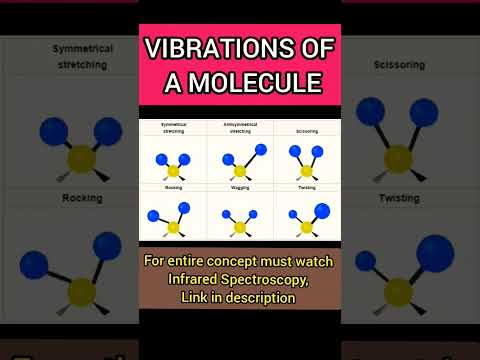
Have you ever stuck your nose in a weird-smelling chemical and wondered what’s really going on? Like, is that just me? Seriously though, the world of molecules is full of surprises. One cool thing is how we can actually “hear” these tiny particles through their vibrations.
Take NH2, the amino group. It’s got a bit of personality! When it vibrates, it gives off signals we can catch using infrared (IR) spectroscopy. Think of it like eavesdropping on a conversation between atoms. Sounds intriguing, right?
In this little journey, we’re diving into how those vibrations tell us stories about molecular behavior. By the end, you’ll see why understanding these frequencies is more exciting than it first seems! So hang tight; let’s get our geek on!
Understanding the NH2 Group in Infrared Spectroscopy: Key Insights and Applications in Science
So, let’s talk about the NH2 group and its role in infrared spectroscopy. The NH2 group, known as the amine group, is pretty common in organic compounds. If you’ve ever heard someone say “these compounds have amino groups,” they’re usually talking about this little guy!
Now, infrared spectroscopy is like having a super cool pair of glasses that lets you see molecular vibrations. Basically, every bond in a molecule vibrates at specific frequencies when you shine infrared light on it. These vibrations can tell us a lot about the structure of the molecules.
When it comes to the NH2 group, there are some key things happening:
- Bending Vibrations: The NH2 group can bend and waggle. Think of it like a dog wagging its tail! In IR spectra, this shows up around 1600 to 1700 cm-1.
- Stretching Vibrations: This one’s like a slinky stretching out when you pull on it. The NH bonds can stretch and usually appear in the spectrum around 3300 to 3500 cm-1.
- N-H Deformation: You’ll also see what’s called deformation vibrations. These happen when the N-H bond changes angle slightly without breaking—the key frequency for this is generally around 1500 to 1600 cm-1.
The presence of these bands in an IR spectrum provides hints about which functional groups are present in that molecule.
This is useful across different fields of science! For example, in pharmaceuticals, scientists use infrared spectroscopy to identify unknown compounds by their unique spectral fingerprints. Imagine trying to find your friend in a crowded place just by their laugh—similar idea!
A cool anecdote I remember was during an organic chemistry lab where we were trying to identify unknown compounds using IR spectra. Someone accidentally mixed up two samples, but we could still figure out what each one was based on the characteristic peaks from their NH2 groups—so satisfying!
The bottom line here is that understanding how the NH2 group interacts with infrared light helps scientists not only identify substances but also explore molecular interactions. It opens up possibilities for research and application in lots of areas like medicine and environmental science.
The NH2 group’s characteristics, revealed through IR spectroscopy, are crucial for making sense of how various molecules behave and interact with one another.
Exploring the Role of Infrared Radiation in Inducing Molecular Vibration: A Scientific Analysis
So, let’s talk about infrared radiation and how it makes molecules dance! Seriously, it sounds a bit wild, but hang tight, I promise it’ll make sense.
Infrared radiation is a type of electromagnetic radiation. You know, like UV light or microwaves? But infrared is just a bit longer in wavelength. Basically, it’s what we feel as heat. When infrared light hits molecules, something really cool happens: the energy from that light can make the bonds between atoms vibrate.
Now, this is where things get interesting. The vibrations in molecules like **NH2** (that’s an amine group) help us learn about their structure and behavior through something called an **IR spectrum**. This spectrum is like a fingerprint for molecules; each one has a unique pattern based on its vibrations.
When we shine infrared light on an **NH2** molecule, it absorbs certain wavelengths of that light. Here’s the deal: different types of molecular vibrations will absorb different wavelengths. There are stretching vibrational modes (like pulling on a rubber band) and bending modes (imagine wobbling your head). For NH2, you can expect to see specific peaks in the IR spectrum corresponding to these vibrations.
Let’s break down some key points
- Stretching vibrations: In NH2, when the N-H bonds stretch apart and come back together, they absorb infrared radiation at particular frequencies.
- Bending vibrations: The molecule can also bend at certain angles. When those angles change due to infrared absorption, it shows up in the spectrum as well.
- Environment matters: Surroundings can change how these vibrations behave—like if there’s water around or other chemical groups nearby!
I remember working with IR spectra during my classes—it was almost like solving a mystery! We’d look for those peaks and try to understand what they meant for our molecule’s structure. It felt awesome when everything clicked into place!
So why does this matter? Well, understanding molecular vibrations helps chemists predict how substances will behave in different situations—like when developing new drugs or materials.
In summary, when you think about **infrared radiation**, just picture tiny waves bumping into molecules and making them wiggle. Those wiggles tell us so much about their secrets! It’s kind of magical how something invisible can give us such deep insights into what makes up our world. Pretty neat, huh?
Identifying Amine Functional Groups in Infrared Spectroscopy: Key IR Absorption Peaks and Their Significance
So, let’s chat about amine functional groups and how you can spot them using infrared (IR) spectroscopy. It’s a handy tool that lets us peek into the molecular vibrations of compounds, helping us identify their structures. When you dig into the IR spectrum of an amine, you’ll notice some pretty distinct peaks that give away its presence.
First off, **amines** are compounds that contain the amino group (-NH2). They’re basically derived from ammonia (NH3), where one or more hydrogen atoms have been replaced by alkyl or aryl groups. You with me so far?
When it comes to the IR spectrum, you can recognize an amine primarily by looking out for a few key absorption peaks. Here’s what to keep in mind:
Aside from these peaks, it’s helpful to remember that amines can also be influenced by their surroundings. Factors such as hydrogen bonding with other molecules can shift these peaks slightly.
Now picture this: I once tried to identify an amine in the lab during my college days—*classic student moment*! I was super nervous but grabbed the IR spectrometer anyway. I saw those N-H peaks showing up loud and clear on my screen! It felt like connecting dots on a treasure map; each peak revealed something new about my compound.
But there’s more! Amine IR spectra can sometimes be tricky when mixed with other functional groups like alcohols or carboxylic acids since they share similar peak ranges. You gotta pay attention to these overlaps.
In summary, if you want to identify amines using IR spectroscopy, keep your eyes peeled for:
So next time you’re analyzing an unknown sample, just remember those telltale signs of the amino group! It’s like solving a molecular mystery—just armed with your trusty IR spectroscopy tool!
You know how when you’re at a concert, you can feel the bass thumping in your chest? Well, that’s kind of what molecular vibrations are like! When we talk about something like the NH2 IR spectrum, we’re diving into the way molecules dance around. It’s all about those little vibrations that happen at a microscopic level, but they tell us so much about the stuff we can’t even see.
So, take NH2 – which is just a fancy way of saying an amine group with nitrogen and hydrogen. These little molecules vibrate when they get hit with infrared light. The energy from that light makes them shake in different ways; some stretch, some twist. And it’s these motions that create unique patterns in the IR spectrum, almost like how each song has its own rhythm.
I remember doing this experiment back in my college days—just me and a bunch of excited students trying to interpret spectra. It was a mix of confusion and curiosity, honestly! Looking at those squiggly lines on paper felt like peeking into a hidden world where every bump told a story about bonding and structure. Like each line was whispering secrets about how atoms are holding hands—or not!
The thing is, understanding these vibrations helps chemists figure out what compounds are made of or how they interact with one another. It’s sort of like having a conversation with nature itself.
But let’s not forget: while this might sound pretty straightforward, it gets complicated quickly! Different functional groups have distinct vibrational modes, which means you really need to pay attention to detail—kinda like listening for specific notes in your favorite song.
So yeah, next time you hear someone talking about IR spectroscopy or NH2 groups vibrating away, just smile and think of all those tiny dances happening right under our noses. It’s wild how much life is packed into those little movements!