So, picture this: you’re at a party, right? Everyone’s mingling, laughing, and then there’s that one person who totally stands out. You know, the life of the party? Well, that’s kinda how sp3 hybridization works in molecules. It connects everything together in a way that makes chemistry not just informative but kinda fun!
You might be thinking: “What on earth is sp3 hybridization?” Sounds super fancy, huh? But don’t sweat it! It’s really just about how certain atoms bond to create cool structures like methane.
Imagine your favorite building blocks all coming together to form something awesome. That’s what I’m talking about! The way atoms mix and match is like them finding their perfect dance partners.
Stick around because we’re about to unravel this gem of molecular chemistry together. You’ll see how sp3 gives molecules personality and, honestly, keeps chemistry from being a total snooze-fest!
Understanding sp3 Hybridization: Key Insights into Molecular Chemistry
Understanding sp3 Hybridization: Key Insights into Molecular Chemistry
When you think about how atoms bond together in molecules, sp3 hybridization is like a cool trick that carbon and some other elements use to make strong bonds. It’s essential for creating the kind of structures we see in organic chemistry, like in everyday stuff—think of sugars, proteins, or even the plastic in your water bottle.
So, what is this sp3 hybridization thing anyway? Basically, it’s a way for an atom to mix its orbitals to create new ones. In carbon’s case, it takes one s orbital and three p orbitals to form four equivalent sp3 orbitals. These are kind of special and allow carbon to bond with four other atoms at the same time.
Now let’s break it down a bit. When carbon gets all hybridized:
- Geometry: The arrangement of these new orbitals leads to a tetrahedral shape with bond angles of about 109.5 degrees. This is why methane (CH4) has such a stable structure.
- Bonds: Each sp3 hybridized orbital can overlap with an orbital from another atom, creating strong sigma bonds. Think about how two kids might hold hands while making a tower out of blocks—they’re working together to create something stable.
- Molecular Variety: This type of hybridization isn’t just for methane. It shows up in various molecules like ethane (C2H6) and alcohols. Each time it pops up, it allows those molecules to have unique properties.
One time I was helping my little cousin with a science project about air quality, and we looked into how certain compounds could help clean the air—some of those compounds had sp3-hybridized carbons! It really made me see how this concept connects to chemistry that’s all around us.
But what happens when things go slightly off course? If you ever get an atom that’s missing an electron or has gained one, that can change its bonding game significantly! This might lead to things like free radicals, which are super reactive because they’re looking for more buddies to pair up with.
In summary, sp3 hybridization is crucial for understanding molecular chemistry because it explains how atoms come together to form stable structures. By allowing certain elements like carbon to bond with multiple partners at once—and keeping everything nicely spaced out—it sets the stage for all kinds of chemical reactions and interactions that define much of what makes life possible.
So next time you see organic compounds—like in food or materials—just remember that behind their shapes and functions lies this nifty little phenomenon called sp3 hybridization doing its magic!
Understanding Sp3 Hybridization: Key Examples and Applications in Chemistry
So, let’s chat about sp³ hybridization. It’s one of those cool concepts in chemistry that helps us understand how atoms bond together to form molecules. Basically, it’s a way atoms mix their orbitals to create new ones that are better suited for bonding. Confused? Don’t worry; I’ll break it down.
First up, what does sp³ mean? Well, the “s” and “p” refer to the types of atomic orbitals involved—specifically, one s orbital and three p orbitals combine to create four equivalent hybrid orbitals. This magical mix allows for a shape that’s super important in building larger molecules.
Now here’s where it gets interesting: when carbon undergoes sp³ hybridization, it creates four sp³ hybrid orbitals that point towards the corners of a tetrahedron. So, imagine holding your hands out in front of you like you’re making a snow angel; that’s kind of how those orbitals spread out! Each orbital can form a bond with another atom.
Think about methane (CH₄)—it’s the classic example of sp³ hybridization. In methane, the central carbon atom forms four single bonds with hydrogen atoms. When you look at its structure, you see that all those bonds are equal length and angle, giving it its tetrahedral shape.
But wait! There are other examples too. Take ethane (C₂H₆), for instance. Each carbon atom in ethane also adopts an sp³ configuration and forms bonds not just with hydrogens but also with another carbon atom. This leads to a typical C-C single bond scenario.
Another thing—sp³ hybridization isn’t just limited to carbon! Other elements can do this too. Consider silicon (Si), another member of the same group as carbon on the periodic table; silicon can also form four covalent bonds by using its sp³ orbitals just like carbon does.
Now let’s imagine a real-life situation: picture sitting around a campfire roasting marshmallows with friends. The way marshmallows squish together when they melt is kind of similar to how molecules made from sp³-hybridized atoms might interact with each other—those attractive forces are super important in chemistry!
In summary:
- sp³ hybridization involves mixing one s orbital and three p orbitals.
- It creates four equivalent hybrid orbitals, which are crucial in forming stable molecular shapes.
- Methane (CH₄) is the most famous example where you see this happening.
- Silicon can also use sp³ hybridization for bonding.
So there you have it! Sp³ hybridization isn’t just some dry textbook concept; it plays an essential role in how atoms connect and form the diverse substances we encounter daily—from fuels to plastics and everything in between! There’s something pretty awesome about understanding how these invisible forces shape our world.
Understanding Carbon Hybridization: Exploring sp, sp², and sp³ Configurations in Chemistry
Carbon hybridization is a super cool concept in chemistry. It helps us understand how carbon atoms form bonds with other atoms to create all the amazing stuff around us. So, here’s the deal: carbon can hybridize in three main ways—sp, sp², and sp³. Let’s break them down.
sp Hybridization
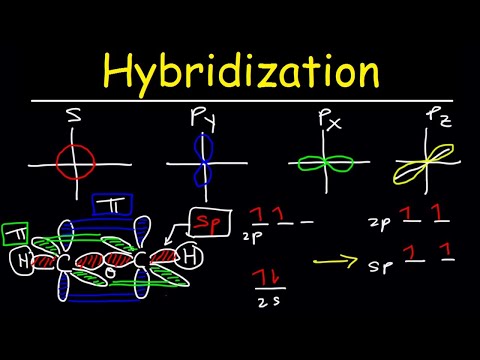
When you have an sp hybridized carbon, think of it as a special arrangement where one s orbital combines with one p orbital. This results in two new orbitals that are shaped like long balloons. They’re 180 degrees apart, which gives you a linear shape.
You can find this kind of hybridization in molecules like acetylene (C₂H₂). Here, each carbon is connected by a triple bond, which involves one sigma bond and two pi bonds. So when you’ve got those straight lines going on, that’s your sp hybridization right there!
sp² Hybridization
Next up is sp² hybridization. In this case, one s orbital mixes with two p orbitals. You end up with three new orbitals that are spread out at 120-degree angles—like the corners of a triangle.
This configuration shows up in things like ethylene (C₂H₄). Each carbon atom has a double bond here—one sigma bond and one pi bond—which explains why they can get cozy with other atoms while still holding onto their own structure.
sp³ Hybridization
Then we have the infamous sp³ hybridization, which is pretty common in organic chemistry. With sp³, one s orbital combines with three p orbitals to create four equivalent orbitals that arrange themselves into a tetrahedral shape—imagine the four corners of a pyramid or something!
Take methane (CH₄), for example. The carbon atom has four hydrogen atoms attached to it. Those bonds are sigma bonds made by overlapping the sp³ orbitals from carbon and the s orbitals from hydrogen. So yeah, each hydrogen gets its own little space!
Anecdote Time!
Okay, let me tell you this quick story: I once tried to make homemade ice cream using liquid nitrogen at a friend’s party—that stuff was so cold! My buddy made some crazy concoction and started mixing everything together really fast—as if he was creating his own version of franken-ice cream! It reminded me so much of how different types of carbon hybridizations blend together to create unique structures.
So every time we see those bonds forming and atoms dancing around each other? That’s just nature doing its thing with its own recipe for life!
The Big Picture
Understanding these different kinds of hybridizations helps chemists predict how molecules will behave during reactions or what shapes they will take on in space—even when we’re talking about complex biological systems or synthetic materials!
The cool part? All these structures lead to an incredible variety of substances—from the simple sugars our body craves to the elaborate proteins essential for life itself.
So there you have it! Carbon’s ability to mix things up through hybridization keeps our world diverse and funky—and who knew chemistry could be such fun?
Okay, so let’s chat about this whole sp3 hybridization thing in molecular chemistry. It sounds super technical, but it’s really just a way to explain how certain atoms, especially carbon, bond with others to create molecules. Think of it like mixing up different colors of paint to get a new shade—sp3 hybridization is about mixing atomic orbitals.
Imagine you’re in a room full of friends, and you’re all trying to figure out how to dance together in the tight space. Each friend represents an atomic orbital from one atom or another. Instead of just doing your own thing and bumping into each other, you find a way to merge styles so everyone can groove together smoothly. That’s sp3 hybridization at work!
So when carbon bonds with four other atoms—like hydrogen or oxygen—it mixes its one s orbital and three p orbitals into four sp3 orbitals. This lets the carbon form four strong bonds that spread out evenly in space, forming this cool tetrahedral shape. Kinda like stretching your arms out wide when dancing—it just makes sense structurally!
I remember once trying my hand at making a simple model for methane (you know, CH₄), which is basically carbon bonded to four hydrogens. I used little balls for atoms and sticks for bonds—totally reminded me of those childhood science fair projects! When I saw how perfectly those hydrogen atoms fit around the carbon without getting too crowded, something clicked in my head. It was like seeing molecular harmony come alive right in front of me.
When you dig deeper into chemistry, understanding sp3 hybridization helps make sense of why some molecules behave the way they do—why they are stable or reactive. You start noticing patterns: look at organic compounds with those nice chains and branches—they’re shaped by these bonding arrangements! It’s fascinating how such tiny things dictate the world around us.
But here’s where it gets even cooler: sp3 isn’t an isolated concept; it weaves into bigger ideas about molecular geometry and polarity. All this plays a part in things like why oil and water don’t mix or why certain drugs can fit perfectly into specific receptors in our bodies. Seriously, it’s wild to think about!
So next time you’re sipping on something fancy or just chilling while scrolling through science stuff online, take a moment to appreciate the wonders that happen at a molecular level—all because of little dances like these!